
BOOKWORM
CLUES IN THE REARVIEW MIRROR TO NAVIGATE A WORLD GONE MAD
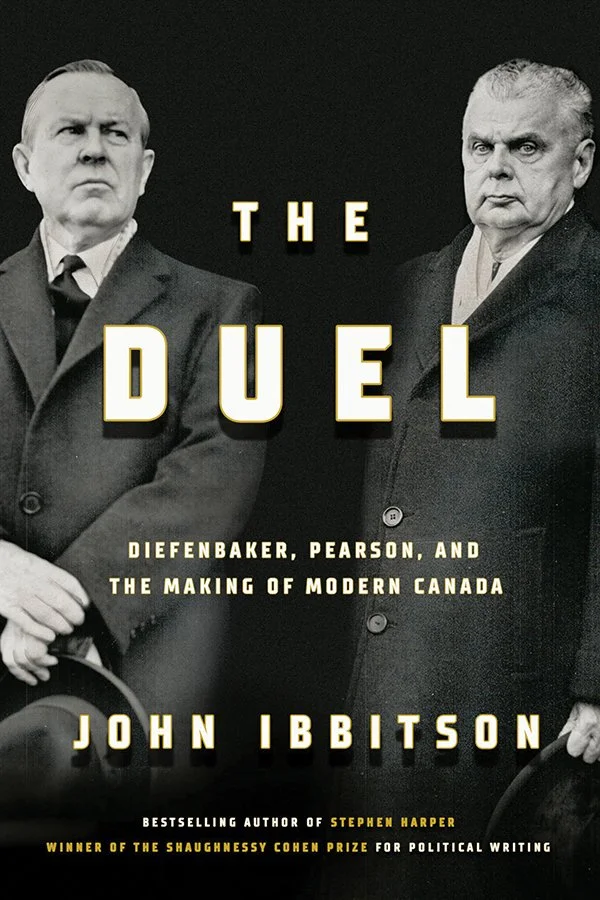
The Duel by John Ibbitson, McClelland & Stewart, $28. The book landed on my desk at a time of great confusion in Canadian minds and hearts. President Donald Trump has made our North American neighbourhood unsafe, and the world as we have known it appears to have ended. History not only offers a refuge from present-day chaos, but also some interesting and valuable lessons to learn from.
In tracing the stories of John Diefenbaker, Canada’s 13th Prime Minister, and his successor Lester Pearson, John Ibbitson offers valuable insights. The key take-away? What’s happening now is neither new nor unprecedented. Canada has been in similar situations before. And come out ahead.
The Duel is about Diefenbaker versus Pearson. It’s also about Canada versus Challenges. How we, as a nation, pull together and find ways to snatch victory from the jaws of defeat.
Long before Trump offended Canada by calling us a “51st state” and Justin Trudeau a governor, Canadians have often had to find the right tone to politely fend off rampaging US presidents.
Diefenbaker had to deal with a situation somewhat similar to that of ours today. The relationship with JFK’s White House was turning increasingly toxic. ‘Dief the Chief’, who was considered an outsider from Saskatchwan even within his own Conservative party, found himself out of step with the American president. Before joining politics, he was a lawyer who championed the causes of the powerless. Kennedy represented power and family privilege and everything Diefenbaker despised. In many of the political events of the day, the two leaders were not on the same page.
Kennedy had a tendency to mispronounce Diefenbaker’s name, calling him Diefenbawker, a significant slight to a man who was inordinately sensitive about his name. The president also scored no points when he declared that he had been nervous about attempting to speak French while in Canada, but that after hearing the prime minister’s French, he felt reassured. A simple tree-planting ceremony at Rideau Hall would have long-lasting repercussions. While shovelling the ceremonial dirt, Kennedy wrenched his notoriously bad back, which required him to wear a brace that he had managed to do without for several years.
When they met, the atmosphere was cordial, but for Diefenbaker “the agenda was disconcerting”. The Americans had a series of asks, and the Canadians had all the wrong answers. Kennedy wanted Canada to join the Organization of American States (OAS), but Diefenbaker preferred to keep Canada out of that regional association, on the ground that disagreeing with the US inside the OAS would cause tensions, while agreeing would make Canada look like a lackey. Kennedy wanted Canada to increase foreign aid to bolster the soft-power front in the Cold War. Our deficit is already high, Diefenbaker responded.
The Americans were unhappy about Canada maintaining diplomatic relations with Cuba, and “very unhappy” about our wheat sales to China. Diefenbaker would not accept nuclear weapons for NORAD and NATO.
The two men found it difficult to find common ground.
Lester Pearson won the Nobel Prize in 1957 for his role in the creation of the UN peacekeeping force and helping defuse the Suez crisis. His decades of experience at External Affairs had prepared him for the role of prime minister. Yet even the Great Diplomat found the going tough with President Lyndon Johnson.
Pearson was concerned about American intervention in Vietnam. He had absolutely “no intention of sending troops to Southeast Asia, though critics observed that Canada was happy to sell weapons to the Americans, including the toxic defoliant Agent Orange.”
When Canada sued for peace by proposing a suspension of air strikes against North Vietnam to encourage Hanoi to be more flexible, Johnson was infuriated. When they met at Camp David, Johnson “strode the terrace. He sawed the air with his arms. With upraised fist he drove home the verbal hammer blows.” According to another account, Johnson grabbed Pearson by the lapels. “You came to my living room and you pissed on my rug!” Relations between John Kennedy and John Diefenbaker had plumbed the depths, but at least they never reached the level of physical assault. From that moment at Camp David, Johnson’s enmity toward Pearson was almost as intense as Kennedy’s toward Diefenbaker.
Sounds familiar?
It must be said that Kennedy and Johnson never stooped as low as Trump has lately– hurling insults at Canada and using America’s Olympic gold medal victory in men’s hockey to demean us as a nation – but Canada has always had to be cautious about its powerful neighbour. Americans are our biggest customers, and we have benefited under their defence umbrella. As Mark Carney does today, Diefenbaker, too, understood that “if Canada was to be taken seriously as a nation, it must develop a stronger sense of self”.
The Duel is as much about how Diefenbaker and Pearson faced each other across the House of Commons and thus helped shape the country in profound ways as it’s about Canada’s fraught, uneasy relationship with the United States.
The Duel is also about two competing visions for Canada, the Liberal and the Conservative.
Trump will be in the rearview mirror in the fullness of time, and current Prime Minister Mark Carney has great lessons in our history to draw inspiration from.
A BOND LIKE NO OTHER
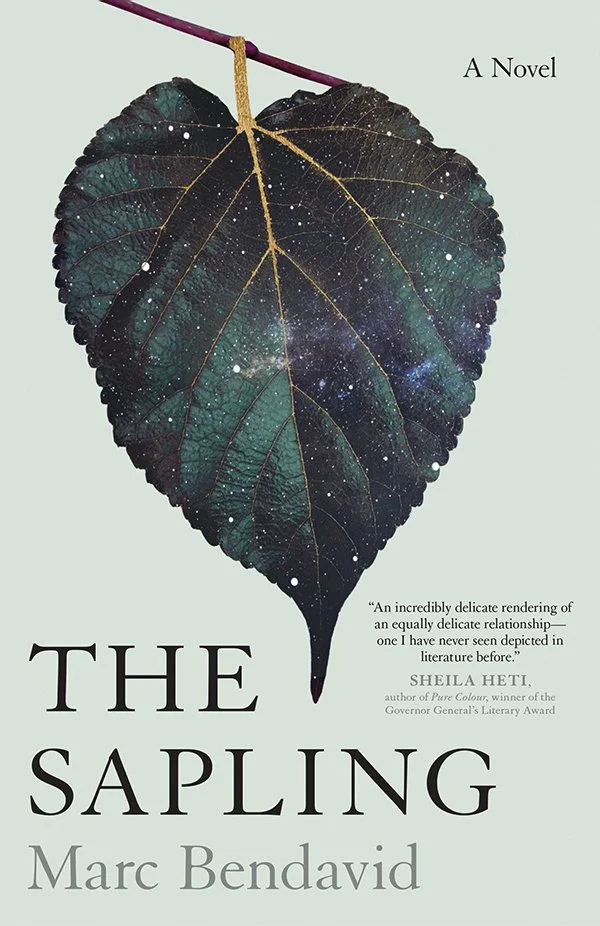
The Sapling by Marc Bendavid, Scribner Canada, $31.99. Marc is an introspective boy experiencing upheavals at home. Klara Bloem, an immigrant from South Africa, is his sixth grade teacher at a special school for arts north of Toronto. Marc takes an instant liking to her, and connects with her at many levels – her attention, her passion for books and art, her keen sense of humour. It’s clear she feels their connection, too.
She is forty-three. He is eleven. She has a family of her own, a career. He, well, is just a boy at the cusp of discovering himself and the world around him.
There’s a glow of unexpressed intensity. Marc and Klara spend hours on the phone. She tells him about art in South Africa. He recognizes that she sees the creative potential in him. She fascinates him.
I had never wanted to be someone’s pupil more. My curiosity went beyond the lessons you taught inside the classroom, and beyond the artists, the music, and the books you pointed me toward outside of it. I wanted to learn you, see the world as you saw it, be more like you were. What made you so unique, so strong, so irreverent? The things you told me about your childhood were always grounded in their foreignness – how different the soil in South Africa smelled, how the light changed in the evenings in spring or right before the rain. These things that you could so readily recall, things that were a part of your origins, mesmerized me, and I nurtured them in my mind as though they were my own.
It’s an unusual bond. Their unusual connection attracts scrutiny, raises questions about its appropriateness.
Marc Bendavid’s prose has a lyrical quality to it. It’s meditative. At times, Marc’s confessional tone of voice and sentimentality might make you, the reader, feel like you are his therapist.
But in the end, Marc and Klara are just two people, he just a boy and she his teacher, who are learning from each other.
FAKE IT UNTIL YOU MAKE IT

The Fake Matchmaker by Sonya Singh, Doubleday Canada, $25. Young South Asian authors who grew up in the West have great fun with the quirks and decidedly desi-speak of their parents’ generation.
Sonya Singh takes it to a new level with divine, div-oon, pig’s style instead of pigsty, checkers cat instead of Cheshire cat. And, “looking like a total VOW!”
But the mom in her book is not your two-dimensional cutout. She’s a lady with a mind of her own, someone who admits readily to not being the provider of endless cups of chai and plates of alu parathas – that would be her husband’s role! She shares stories from her youth when SRK – yes, the megastar – was besotted with her. And she has frank, open conversations with her daughter.
Manisha Patel is 34, and back in her childhood room after an ugly break-up and losing her job. As she tries to rebuild her life, her cousin (and all the aunties and uncles in town) step in to set up dates. Readers might recognize the protagonist of Singh’s debut novel Sari, Not Sari, Manny Dogra, Manisha’s sister-in-law to be, who is supportive and provides thoughtful advice and tips.
But Manisha is feeling the pressure.
“As an Indian woman, there’s always some level of pressure. Pressure to excel in school, to marry by a certain age, and yes, there’s pressure to have a baby,” she tells the fertility doctor her mother persuades her to see.
Raw from her recent breakup, Manisha is unwilling to put herself out there on dating sites.
So her cousin Deena and she create a fake matchmaking site to vet potential dates for their only client, Manisha.
A slew of dates from hell follow – both hilarious and cringe-worthy. But by then Manisha is exchanging messages with Sunil and beginning to fall in love with him, while Rohit Khanna, her father’s friend’s son, misunderstood by everyone in the tightly-knit community, is also on the scene.
Very You’ve Got Mail. But who is Manisha’s true love? Sunil or Rohit?
DANCE WITH JOY

Music of the Bells by Anitha Rao-Robinson, illustrated by Chaaya Prabhat, Viking. This picture book follows Neela, a young dancer who once told stories through Kathak in India but now practices ballet in her new home.
She loves ballet and her new friends, but she misses Kathak and the jingle of the bells she wore around her ankles while dancing. She misses the beautiful ragas her grandmother sang and the bansuri flute her uncle played. Neela decides to take a chance and present a Kathak routine at the school showcase. And then worries her classmates won’t understand it or like it. With Amma’s gentle reminder to stay true to herself, Neela steps onto the stage and lets the music of her bells carry her forward.
This is a luminous celebration of cultural pride, artistic identity, and the way dance can hold our histories while helping us grow into who we’re becoming.
A “hello” to the new world and “I remember you” to the old.
JUST YOUR CUPPA!
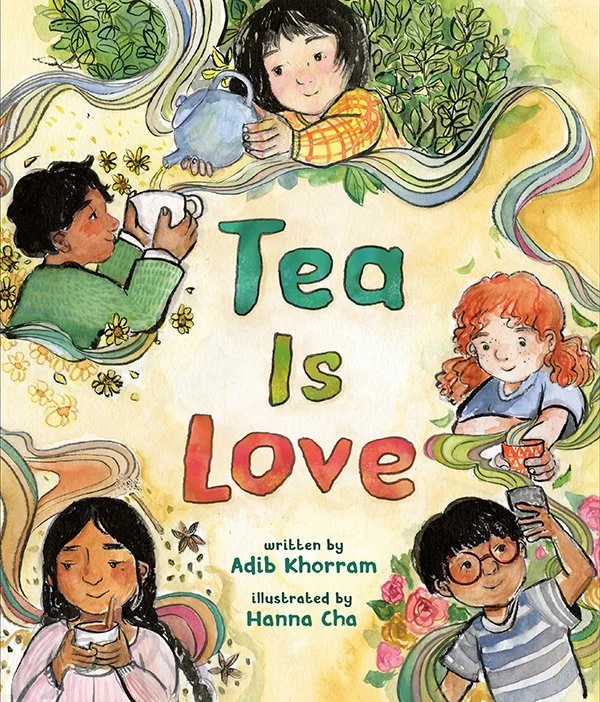
Tea is Love by Adib Khorram, illustrated by Hanna Cha, Dial Books, $24.99. Tea is a plant. Tea is a ceremony. But most of all, tea is love. This beautifully illustrated book introduces little ones to the brew that holds a special place in our hearts.
TEEN REVIEW
By NIHARIKA DILIP
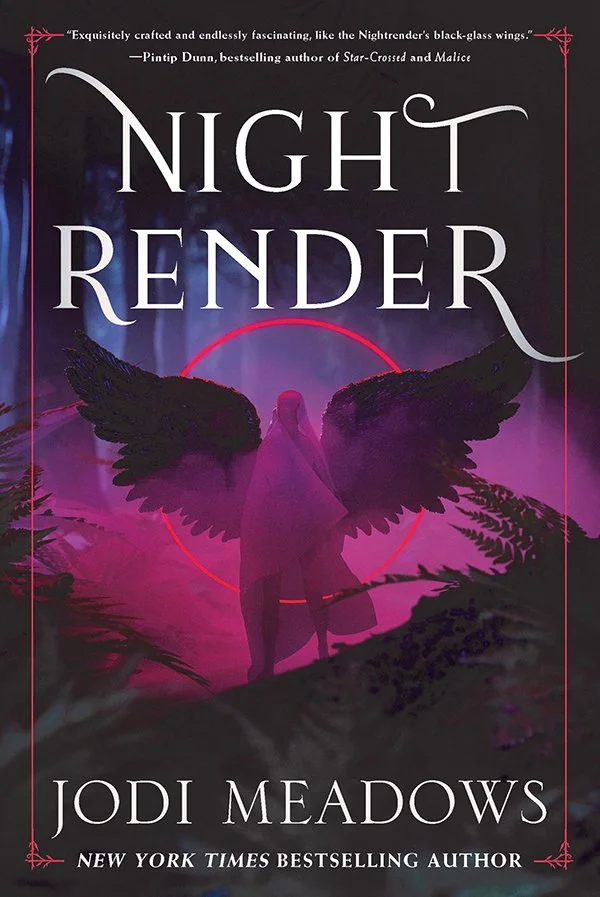
Nightrender by Jodi Meadows, Holiday House, $17.99. Nightrender, written by Jodi Meadows, is the first of a duology called Salvation Cycle.
This book is one that combines the thrill of adventure and the mystery of fantasy.
The story follows three young protagonists who discover a hidden secret buried in the past, leading each of them on dangerous journeys to save their kingdom from an ancient evil.
Jodi Meadows emphasizes the emotion and growth of her characters, creating a captivating narrative that will keep readers on the edge of their seats until the very end.
One of the book’s greatest strengths would be the intricate world-building and the complex plot.
With the many perspective shifts and the immense details, Nightrender is an amazing novel for readers who love connecting the dots in the plot though it may be overwhelming for those who wish for a more straightforward storyline.
I would highly recommend Nightrender to anyone who enjoys magic and unearthly creatures.
With the rich world-building and unexpected plot twists, it sets the stage for an unforgettable conclusion in the duology’s next installment.
• Niharika Dilip is a Brampton Library youth member.