
COVER STORY
THE SECRET TO A GOOD LIFE
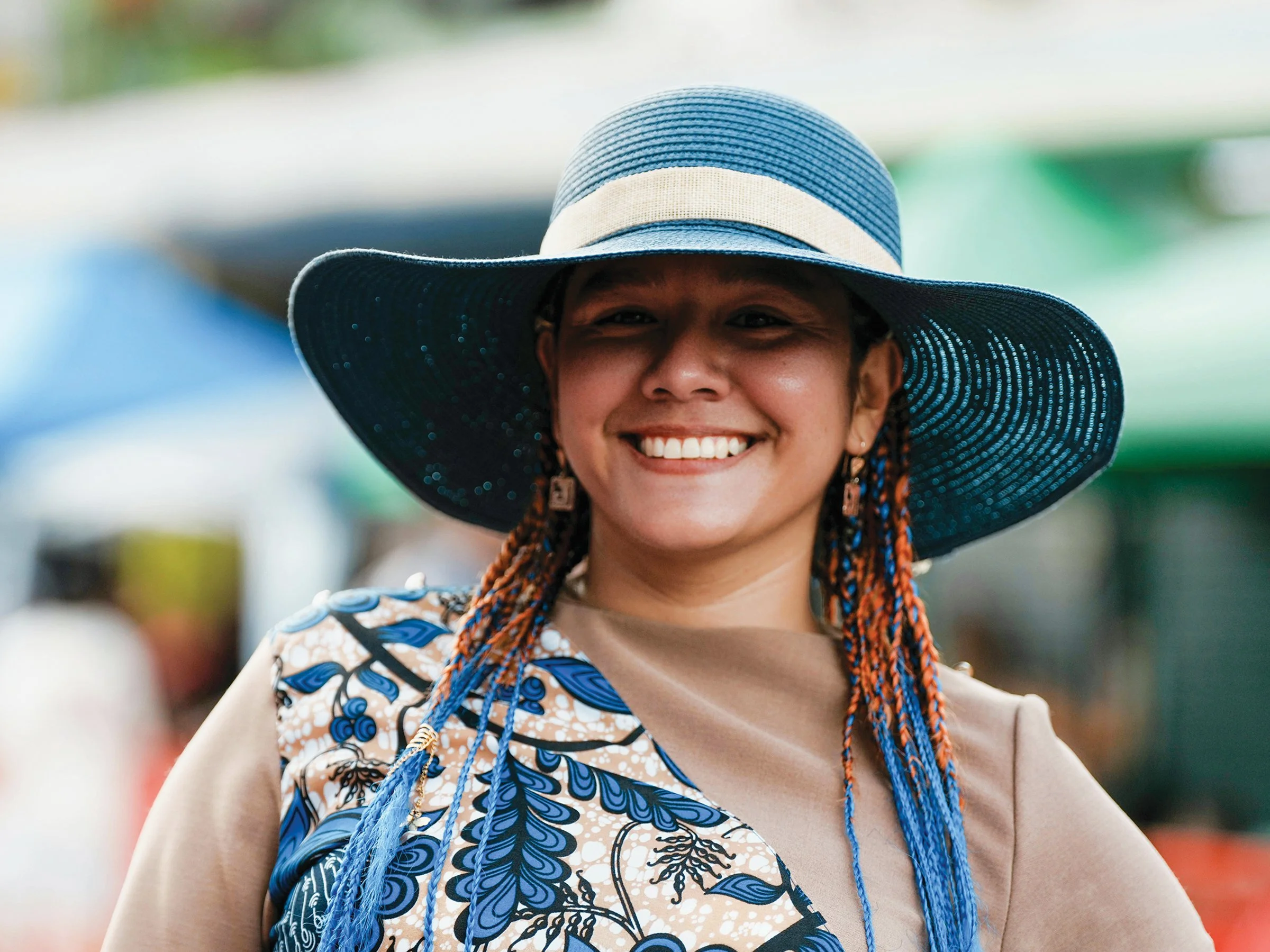
Pura Vida, meaning pure life, is the national motto of Costa Rica, embodying a lifestyle of gratitude, laid-back positivity, and resilience. Costa Ricans use it as a greeting: “Everything is good!” Image credit: MARIO SPENCER on Pexels.
Costa Rica is among the top five happiest places on the planet. On a recent visit, I experienced the Costa Rican philosophy of Pura Vida, pure life.
By SHAGORIKA EASWAR
The warm, humid air that greets us as we enter the airport in Liberia, Costa Rica, envelops us like a hug. A confirmation that we have escaped the polar vortex and “major snow event” that hit us back in Ontario with predictable frequency.
As the long line snakes up to immigration counters, many already in shorts and flipflops – did they change on the flight or did they brave the above-mentioned polar vortex dressed like that on their way to the airport? – we notice the signs.
Dear traveller, avoid losing your money. not be fined! Passenger if you remain irregular in the country, is exposed to the collection of an economic penalty. Check your authorized time of stay in Costa Rica.
The rather brusque welcome is mitigated by laid-back staff in the building. Several passengers in line point to a set of apparently unaccompanied bags and are thanked politely and told to move along.
“Can you imagine if that were in the US?” whispers a lady incredulously.
The immigration process itself is quick and smooth and after collecting our bags, we are informed by the people who run the package that we are waiting for the bus to take us to the resort.
And that the 108-km journey to the resort in Samara will take three hours, maybe more.
“This time of day, traffic is slow-slow-slow, amigos!” says the young man cheerfully.
There are seven of us in the van, all headed to the same resort. All exclaiming at the verdant landscape that we’re passing through. I spot banana trees. Then papaya. And mango, wild almond and coconut. All lining the road and stretching back as far as the eye can see.
And we’re here in the dry season, I think, trying to imagine how many more shades of green would there be in their long and wet season.
There are fruit stalls along the route, laden with water melons and melons, bright lemons hanging from strings. I also spot something I wasn’t expecting – signs for Indian restaurants. Tandoor, Masala, and Naan Stop. Along with the ubiquitous KFC, Subway and McDonald’s in the small towns we pass through.
Giant billboards promise “American style” 30-40 year mortgages.
Darkness falls quickly that close to the equator and we’re soon navigating the single-lane road in complete darkness.
A couple regales us with stories of their experiences from their previous visits – this being their third.
They were once delayed in dropping off their rental car, they said. “We called to apologize and explain and the guy says, ‘No problem, enjoy! You can drop it off tomorrow.’ We went the next day, fully expecting to be charged for the extra day but he waved us off. ‘Enjoy! Enjoy!’ Who does that?”
At check-in, we learnt that the only way to communicate with the reception is via WhatsApp, that there are no physical phones in the rooms.
“No WhatsApp? No problem! You walk to the reception! Pura Vida!”
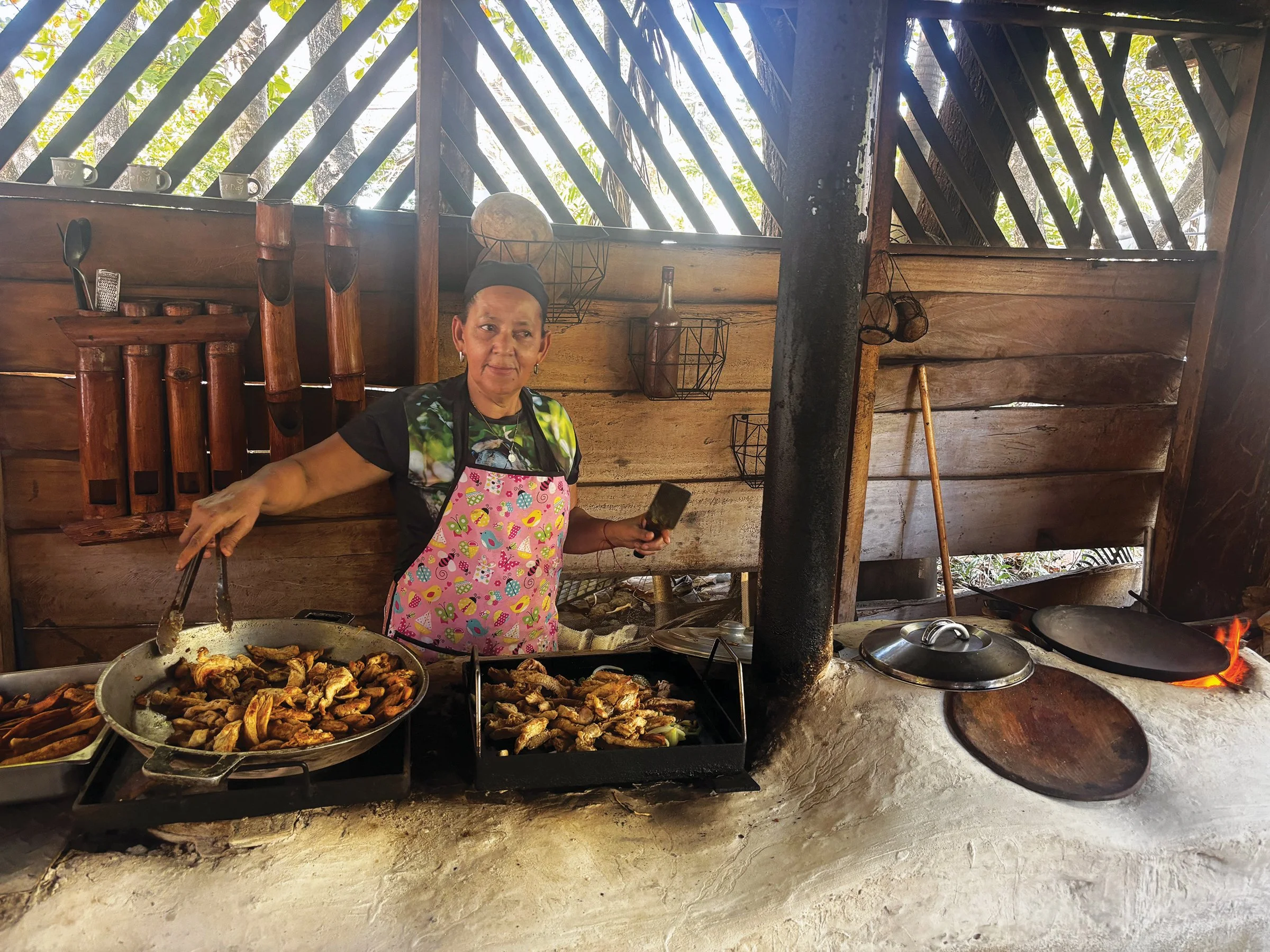
Good food. Good activity. Good attitude. Good life. That’s Pura Vida, pure living.
Pura Vida is the national motto. Meaning pure life in Spanish, it is more than a touristy slogan, it’s a way of life in Costa Rica. We heard it used as a greeting, and in conjunction with everything from “your vegetarian diet is taken care of” to “don’t forget your insect repellent”.
While planning the visit to Costa Rica, I’d read up a little on it, to acquaint myself with more than what one gleans from travel brochures.
I learnt that the rugged, rainforested Central American country with coastlines on the Caribbean and Pacific is known for its beaches, volcanoes, and biodiversity. Roughly a quarter of its area is made up of protected jungle, teeming with wildlife.
Humans have been present in Costa Rica since between 7,000 and 10,000 BC. Various indigenous peoples lived in the territory before it was colonized by Spain in the 16th century. Its constitution, adopted in 1949, granted universal suffrage, provided various social, economic, and educational guarantees for all citizens, and permanently abolished the army, becoming one of the few sovereign nations without a standing military.
About one-fourth of the national budget is spent on education – which has been free and compulsory since 1886 – equal to about 6.2 per cent of the country’s GDP, compared to a global average of 3.8 per cent.
Costa Rica has consistently performed favourably in the Human Development Index (HDI), placing 62nd globally, and fifth in Latin America, in 2023. It is classified by the World Bank as a high-income country and it is the only OECD country in Central America and the Caribbean. It has also been cited by the United Nations Development Programme (UNDP) as having attained much higher human development than other countries at the same income levels, with a better record on human development and inequality than the regional median.
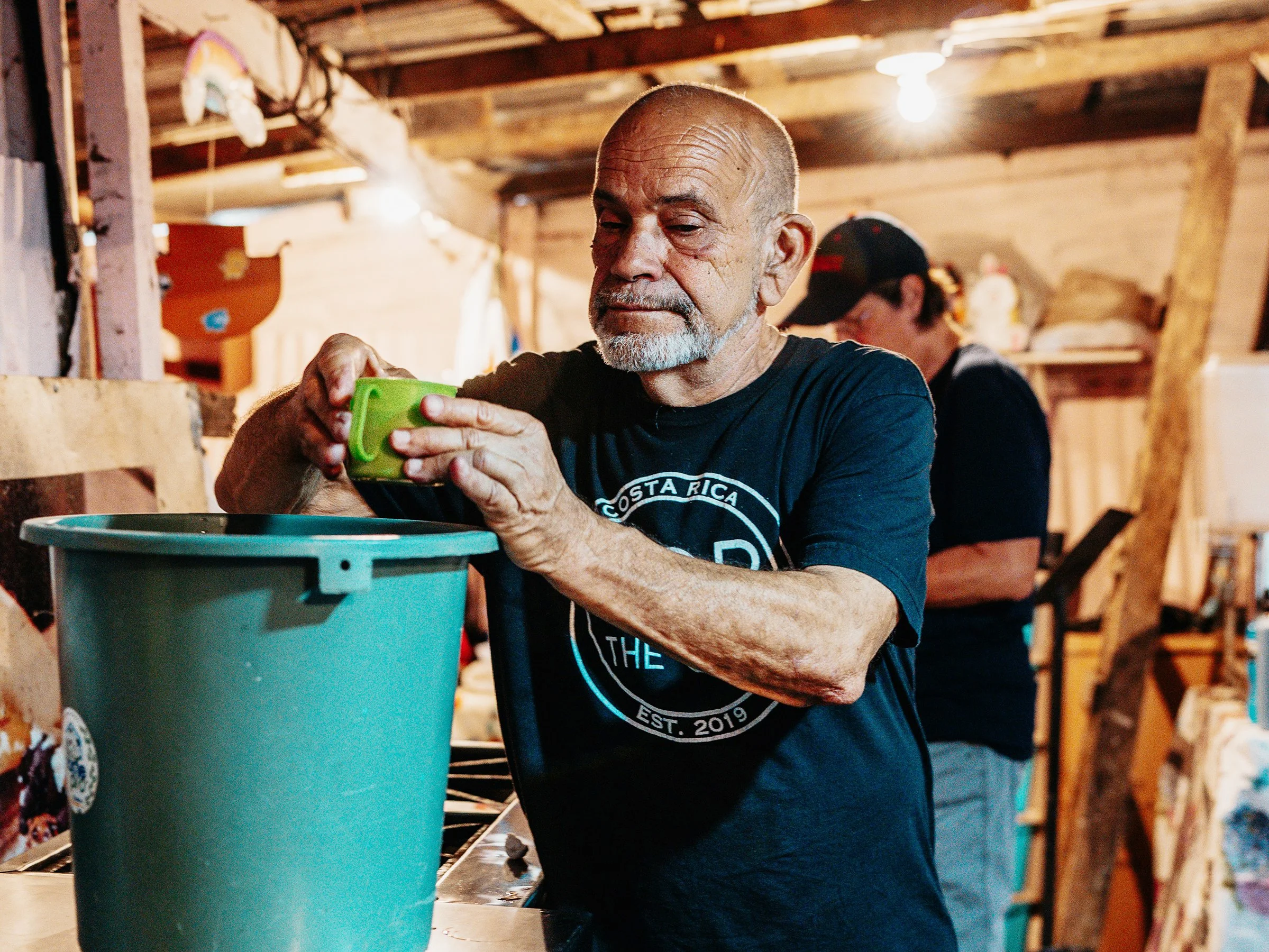
Nicoya Peninsula is one of the five Blue Zones in the world. “Many are 100, even 120. One man was 146!”
It performs well in metrics of democratic governance, press freedom, subjective happiness and sustainable well-being; has one of the highest literacy rates in the Americas, and is considered a regional leader in human rights and environmentalism.
In the depths of our winter, I was thrilled to see Samara described as a “charming, laid-back beach town on Costa Rica’s Nicoya Peninsula in Guanacaste, famous for its calm, golden-sand. Playa Samara is ideal for families and beginner surfers due to a protective reef creating gentle waves. It offers a blend of undeveloped nature, wildlife (stingrays, birds, turtles), local culture with vibrant expat and digital nomad communities, beachfront restaurants, yoga studios, and a healthy vibe, making it a popular, safe, and beautiful destination.”
Though the slow, laid-back vibe should have tipped us off – it was like resetting the frenetic clock we all submit to in our daily routines – there was nary a mention of a Blue Zone. I stumbled upon the fact that Nicoya Peninsula is one of the five Blue Zones in the world by pure serendipity. Expand your reading as I did – later – to Nicoya and you will see it, but we were right there and may not have known it except for a chatty driver.
We called it an early night after a light dinner and awoke to birdsong the next morning. Walking up to the restaurant, we spotted so many brightly-coloured birds flitting around the multi-hued blooms. And the iguanas! Small, medium-sized and huge, they were everywhere. At the restaurant, sunning themselves on the stone walls, chasing each other up and down trees – dropping with a resonant whump! – and into burrows in the sand.
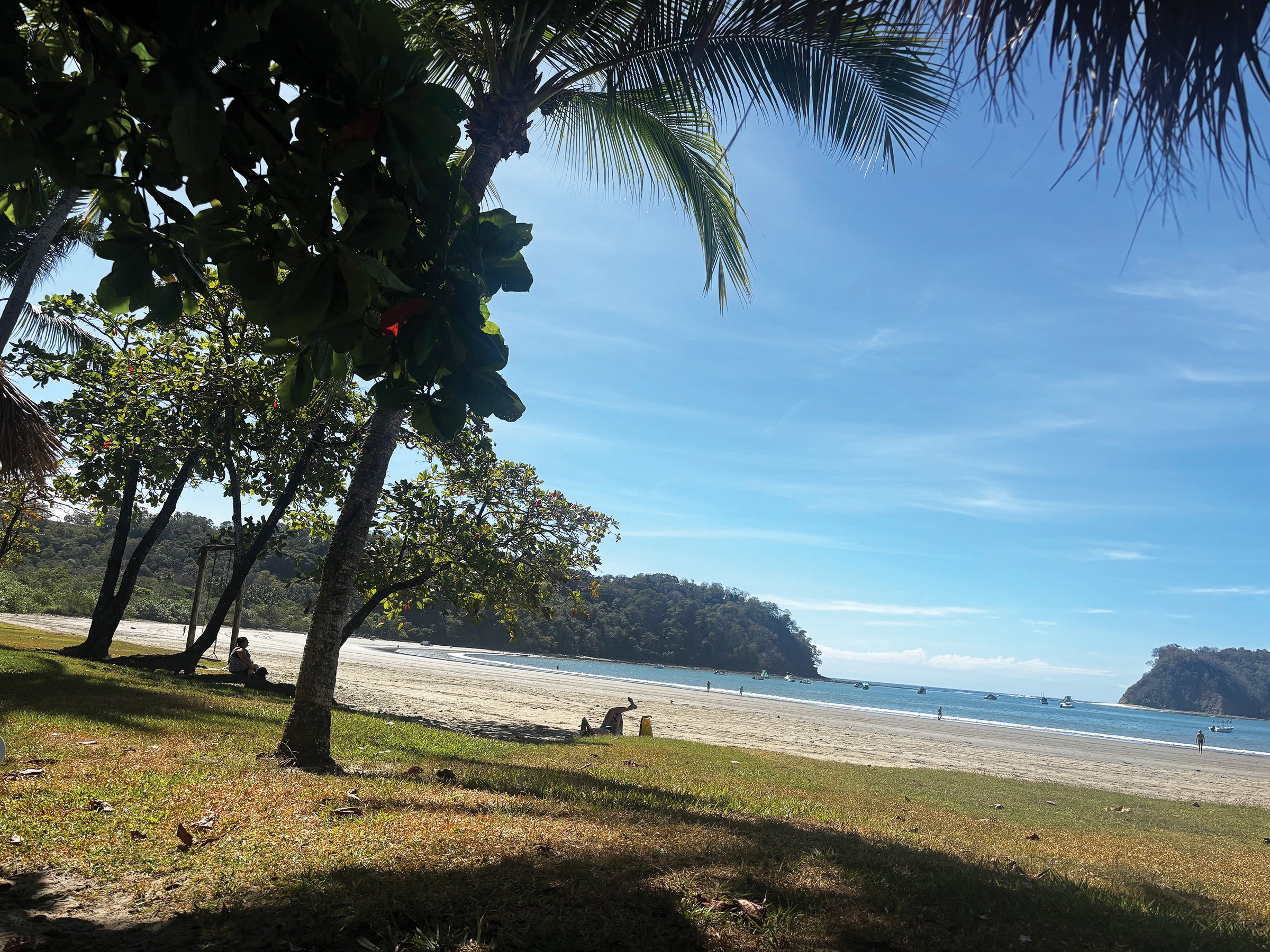
There are many beautiful beaches in Costa Rica. It’s illegal to remove shells or stones from these beaches.
I like my wildlife at a distance, and as not a fan of the lizard family, I was much relieved to learn they are diurnal and come out to play during the day. So at least there was no danger of encountering them on our walks in the evening. I’d didn’t fancy stepping on one as I gazed up at the most spectacular night sky ever. With near zero light pollution, the stars are a sight to behold.
We were treated to giant goblets of fresh fruit juice. Mango, passion-fruit, pineapple... The only other desi at the resort marvelled at enjoying “tree-ripened fruit when it’s minus 30 in Toronto”.
I discovered the delights of baked jicama at the breakfast buffet. And the near absence of English among wait staff. Those at the reception and the ones manning the desk where one booked day trips were fluent enough, one even engaging us in conversation about the weather. “We Costa Ricans start shivering at 20 degrees, when I hear minus 20, my brain shuts down!” But what the wait staff lacked in language skills – and to be fair, we could have also learned a few phrases other than buenos dias and buenos noches – they more than made up in a pally, chatty approach.
It was such a luxury just soaking in the sun (and sharing pictures with friends and family who were shovelling their way out of yet another snow storm!), but after a couple of days thawing out and feeling our shoulders unhitch from our ears, we decided to venture a little farther.
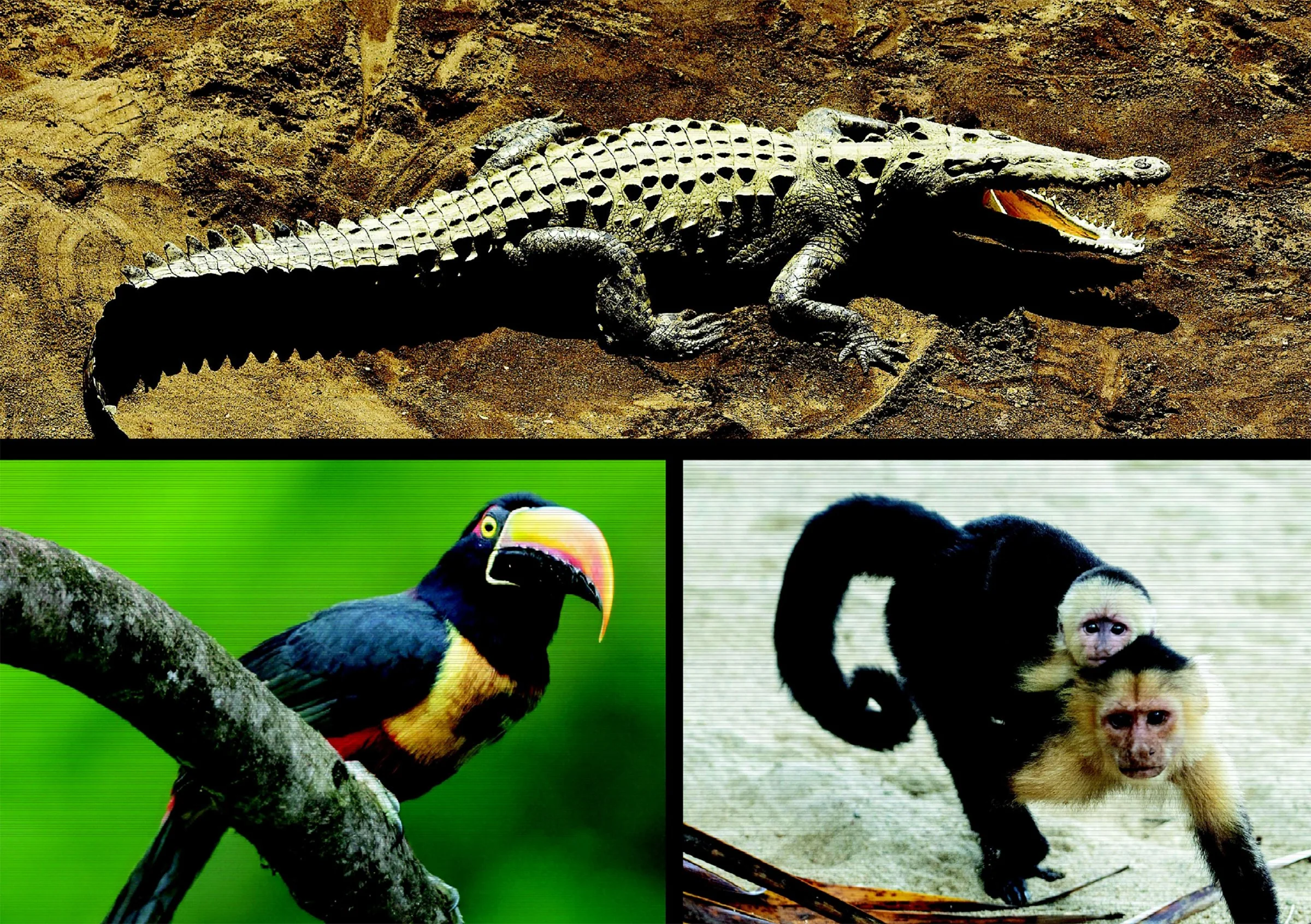
Palo Verde National Park abounds with wild life. Crocodiles, monkeys, little blue herons, cattle egrets, ibis, tiger herons, sand pipers and even grey blue herons from Canada. Bats hanging by the hundreds on the undersides of branches. Image credit: UNSPLASH.
A day trip to Palo Verde that took us on a long drive through the countryside, this time in daylight, began with a stop at a traditional Costa Rican pottery.
An article in Tico Times, Costa Rica’s leading English Language newspaper, describes Guatil pottery thus: “Generation to generation over centuries the artisan pottery traditions have been passed down keeping the primitive techniques of the Chorotega indigenous people alive...”
Jose, at the pottery, wore the name of his people on his t-shirt. After welcoming everyone with a refreshing drink of dragonfruit juice – “No tequila!” he added with a mischievous chuckle – he directed everyone to use the facilities. “Clean, clean washrooms!” And so they were. His family lives on site and a couple of young women came out to greet everyone. They introduced us to an older lady, their mother, who sat surveying the excitement of the visitors with a benign smile.
He then lined up a couple of benches and some chairs in front of a rough-hewn work table, and asked everyone to gather for the demonstration of how this pottery is made. They use local clay, he said, dug out by individuals using shovels. It is then mixed with “iguana sand,” sand in which iguanas lay their eggs. He had samples of the various stages of the ingredients through the process of drying, pounding and sifting using a mortar and pestle and sieve. They use only organic dyes, and he listed the plants they use to extract various colours. The tools are basic. A pick from a whittled corn cob. A tooth brush. And the potter’s wheel? Cobbled together from repurposed bicycle gears and a gas burner!
Jose then sat down to actually make a pot. And just as he “threw” the pot, the shed was filled with a very familiar song, taking everyone by surprise. Delighted laughter broke out as Unchained melody from Ghost played, while he looked up with a huge grin.
“Recognize the song?”
Session over, he led us to a selection of their pottery. Beautiful, one-of-a-kind bowls, mugs, vases and platters in various sizes, starting at USD30.
They were on the expensive side compared to mass produced items, he admitted. But then each took so many hours of work, he said. “You will see people selling pottery in shops and on the beaches, they will tell you it is Guatil pottery, but you know the difference,” he said with a quiet confidence.
Purchasing a couple of small bowls, we made our way back to the van. The river safari at Cipanci National Wildlife Refuge was next.
While booking the tour, Louis at the resort had provided tips on how to dress for the day. Contrary to what I had expected – full-sleeved shirts and jeans for protection from insects – he said to “wear fresh clothes”. Correctly deciphering our puzzled look, he pointed to his shorts. “Like this. So you feel fresh. It will be very hot and humid. But use lots and lots of sunscreen and insect repellent.”
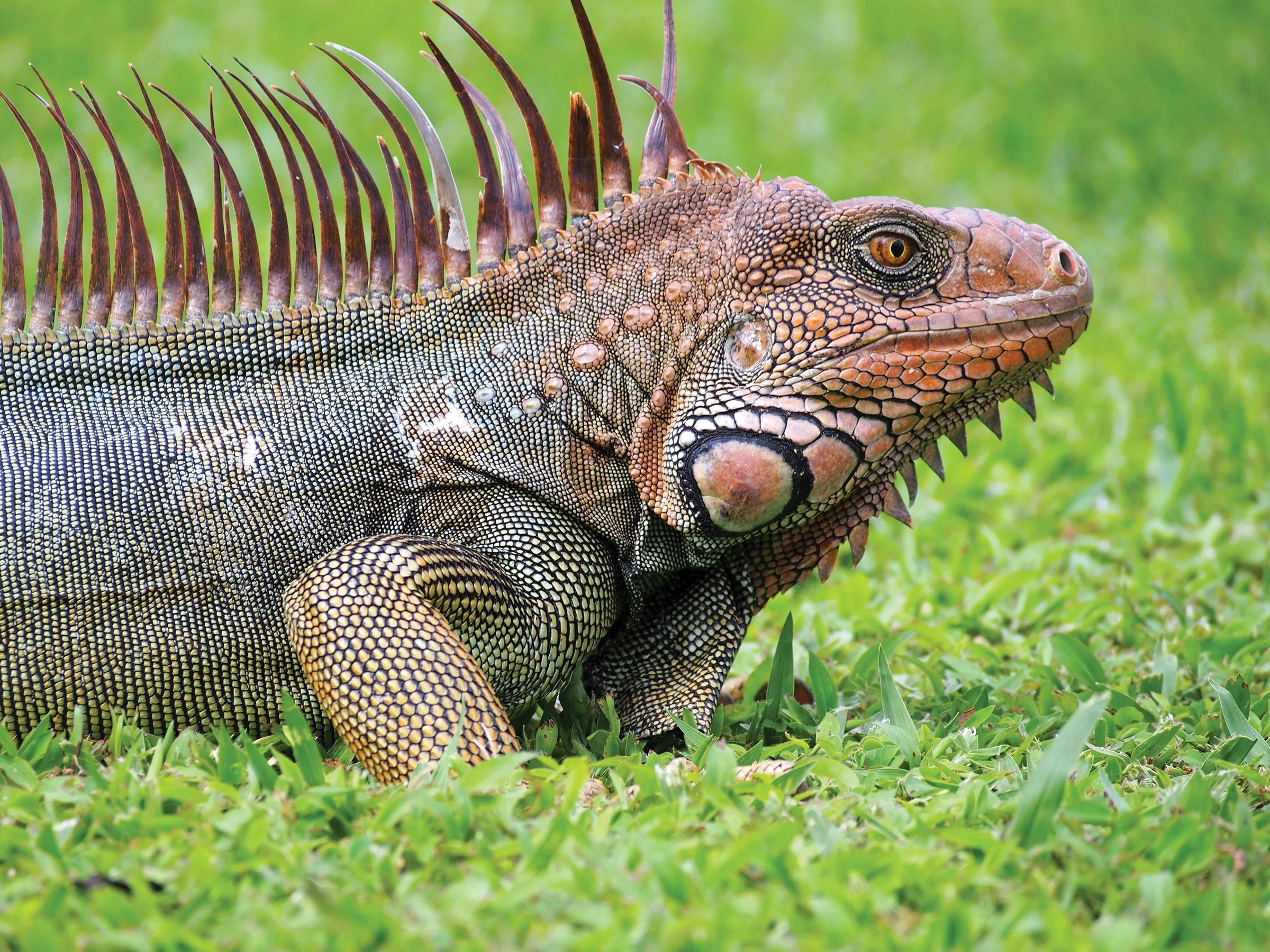
Basking near rivers, on beaches and in trees, colourful iguanas are a common sight in Costa Rica. Image credit: ORLANDO MADRIGA on Unsplash.
How big were the boats, I’d asked, with some trepidation. I wanted to see the crocodiles, not touch them.
“You don’t want to swim with them?” he responded teasingly. “Not unless they were vegetarian like me,” I said, sending him off into peals of laughter.
“Ha! Ha! No!”
Forewarned and suitably dressed, we climbed aboard the boat. And discovered that it wasn’t that big after all. Nor that high off the river. In fact, the water was just barely inches below us. Trying not to think of how close that brought us to inquisitive crocs, I focused on what our guide Angel was telling us. The refuge, he said, along with another refuge, a mangrove and Palo Verde National Park, protects nearly 29 hectares of Bajo Tempisque, or the lower basin region of the Tempisque River. Along with providing “indirect benefits” to inhabitants of neighbouring regions, it is a vital nesting area for endangered, resident and migratory birds.
We saw so many. Little blue herons, cattle egrets, ibis, tiger herons, sand pipers and grey blue herons from Canada. Bats hanging by the hundreds on the undersides of branches.
And so many crocodiles that we lost count. Basking in the sun on the mud banks or sliding into water, ignoring us completely. Except for the one that swam dangerously close, his body soon submerged, just the snout and his eyes above the surface. There’s such a fearsome beauty to the creatures, it’s almost hypnotising.
“They are the fastest creatures in short bursts,” said Angel. And then made cooing sounds, as though calling the one that had swum near. “Venga, venga! Come! We have Canadians for you!”
Talk about black humour.
The captain slowed to a crawl, and then brought the boat to a halt near the bank. We couldn’t quite make out why until it looked like the trees suddenly erupted with life. White-faced monkeys, or capuchins, dozens of them, leaping from branch to branch, the females with babies clinging to them. As Angel was telling us about the unique was in which they drink water, they decided to give us a demonstration.
Monkey after monkey leapt down, dunked his/her tail in the river and was back up in the tree canopy in a flash, where, safely away from lurking crocodiles, it sat and sucked the water from his/her tail. It was a sight to behold.
Adult capuchin eat baby crocodiles, Angel told us. And adult crocodiles eat capuchin.
And so the capuchin have devised this clever way to quench their thirst. They have also learned that with a boat nearby, crocodiles are likely to lay low, and so they use the time well.
A little farther down the river we came upon a bunch of howler monkeys. The captain gunned his engine and they “howled” back, though it sounded more like a bark to me. Angel clapped, and they responded, howling some more.
Angel pointed to a basilisk lizard on the bank – it can run across water, he said.
Each tree providing shelter to so many species of birds, animals and reptiles gave a whole new meaning to the concept of Tree of Life.
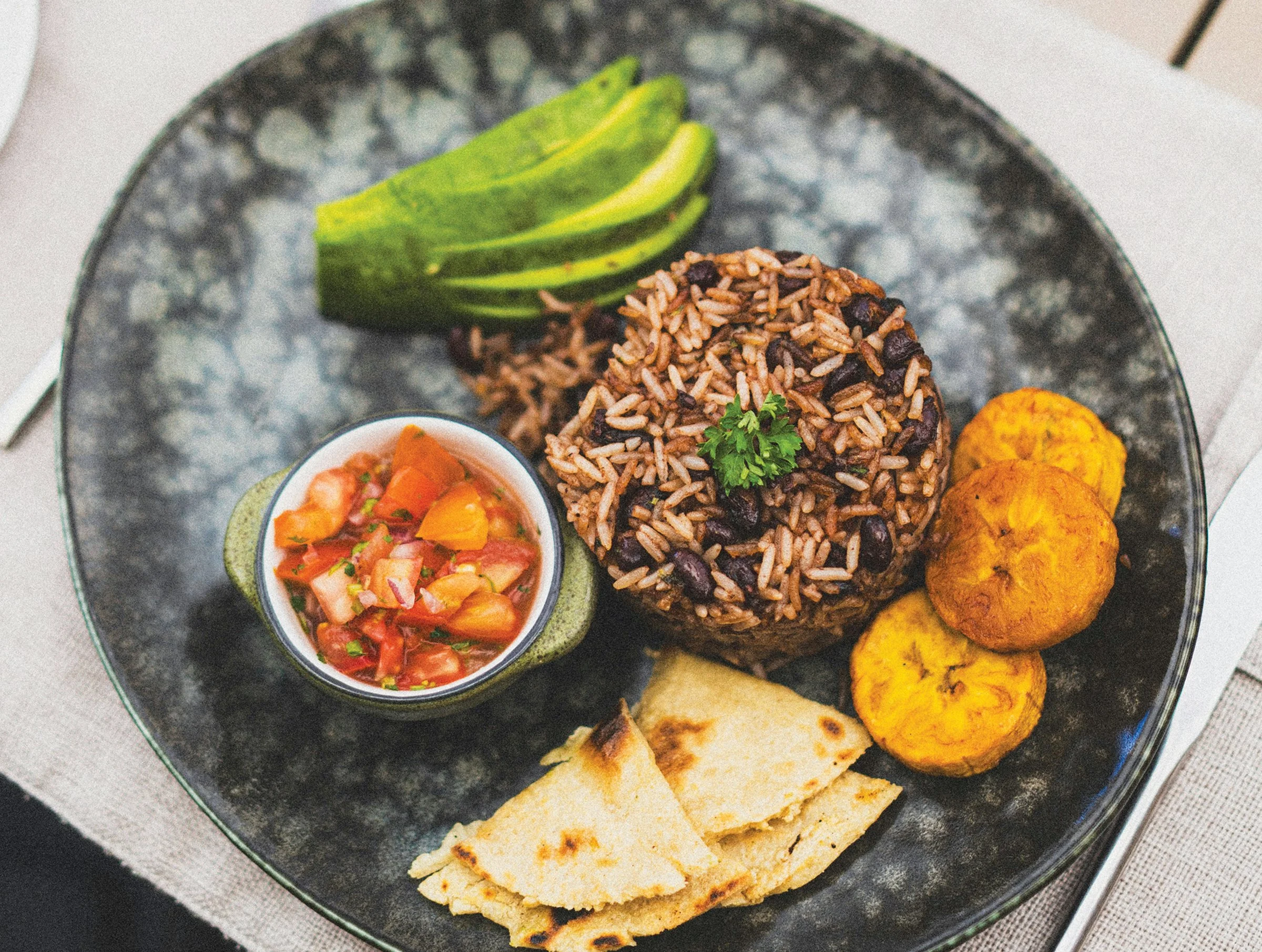
We were served a traditional Chorotega meal, something Nicoyans have been eating for millennia. .Image credit: JONATHAN CALIGUIRE on Unsplash.
At our stop for lunch, a young woman saw me admiring the woven lamp shades hanging over each table. They make them from palm fronds, she said. I told her it was something I was familiar with, that in India, palm fronds are fashioned into a multitude of products including floor and table mats, baskets and lamp shades, too.
“You are from India! Then you will love our tamarind sauce!” she said excitedly. And oooh, did I. Lizano is like tamarind chutney on steroids, with onions and carrots cooked and ground to a paste and spiced with chillies, ground cumin, tamarind paste, molasses and lemon juice.
The ladies rustled up a huge and mainly vegetarian – except for the grilled chicken – spread. Rice, beans, salads with chimichurri sauce, the baked jicama I so enjoyed and fried plantains. The star of the spread, though, was the platter of woven palm fronds with corn tortillas one of them baked right in front of us in a clay oven. Exact same principle as a tandoor.
And back home, on re-reading Dan Buettner’s The Blue Zones Kitchen, I learned that what been served was a traditional Chorotega meal, something they’ve been eating for millennia. Buettner writes that “the bodies of Nicoyans “may be a decade younger than their chronological age would suggest”.
Back at the resort, we spent another very pleasant evening listening to local musicians play the guitar, saxophone and mouth organ and sing under that star-filled sky.
There were many Costa Ricans at the resort, unlike at the ones we’ve been to in other countries in the Caribbean which tend to cater to only international visitors at what are, essentially, gated communities.
Here, it was lovely to see people pop in from nearby towns for the weekend. Two expat families with several dogs, walked on the beach every day.
A gentleman greeted us with a big smile one morning on the beach. He was a physician from Liberia, he said, holidaying in Samara.
“I’m going for a run, I run 5 kilometres every day.”
When we expressed admiration for his athletic prowess, he smiled some more. “How old do you think I am?” I’ve yet to figure out how to safely answer such a question.
“I will be 90 next week,” he announced. All I could think was, darn it, I should have answered his question. Because I had him pegged at late 60s, max 70.
And there it was, another pointer to the Blue Zone.
We ventured into Samara town one morning. It’s a pretty little town, but touristy. Full of made-in-China souvenirs, which, the shopkeepers are happy to bargain over.
While reading up on Costa Rica, I had come across a blog that mentioned that it’s illegal to remove shells or stones from the beaches. There was a report of even sea glass, which, as the blogger helpfully pointed out is essentially garbage, being confiscated. Any other beach, I would have picked up a few shells, because that’s what you do on a beach, right? Not like the ocean is about to run out to stuff it deposits on the shores. I picked up a small piece of coral. It was beautiful, and I would have loved to bring it home for the littlest member of the family who brings me shells and stones, even sticks in interesting shapes from his school trips. But cognizant of the post, I put it back on the sand. And a man walking by gave me the thumbs up.
We also spotted people walking with bottles of oil and folding tables offering a massage, just like you might on a beach in Goa. And others with baskets filled with colourful ware. I approached one for a closer look and saw the “beach pottery” that Jose had cautioned us about. But the toys were so cute and bright (okay, so the colours were obviously not organic dyes) I picked up a few. Later justifying giving in to temptation with the logic that they were less than half the price of our earlier purchases.
On our last day, we said our goodbyes to people we’d met at the resort. A young woman who was holidaying with her mother came up to exchange phone numbers and emails.
The journey back was a little shorter. In real terms, because we were doing it in non-peak hours, and it felt shorter because the driver, Adrian, chatted about his country all the way.
He told us about how he grew up on a farm, helping his father milk their 20 cows “by hand!”, waving them in the air for our benefit.
About how for Costa Ricans, life follows a simple order. God. Family. Job. “From this comes Pura Vida, you know!”
How it was his “honour to look after” the van he drove for his boss because it helped him feed his family.
And how he loved his job because the greenery around him changed with every season. “My office changes location!”
About the education system and the healthcare.
How hunting of any sort was “100 per cent banned”.
How after the floods in 2016, the river rose so high, crocodiles were swimming in the drains that run along the streets.
How the owners of a mango orchard that we were driving by laid out the fruit on plastic sheets for anyone to take for free.
And then this, which made me sit up:
How people live long in Samara and Nicoya. “Many are 100, even 120. One man was 146.”
“Adrian!” I asked, finally cluing in. “Are we in a Blue Zone?”
“Yes, right here, we are in one. You know why? Good food. Good activity. Good attitude. Good life. And I am your good driver-philosopher!”
At the airport, we thanked him for sharing so much information and knowledge. He waved us off saying he looked forward to welcoming us back next year.
That’s something I think all of us in that van would enthusiastically sign up for.
In the departure terminal, there were repeated announcements about shells, plants and animals not being allowed to be taken out of Cost Rica. I do think it would have made a lot more sense had they done so when we arrived. I was picturing people who had not stumbled upon the blog on the subject frantically removing shells and stones from their bags on hearing the stern announcement.
For who wouldn’t want to bring home a little piece of paradise?