
BOOKWORM
A HIMALAYAN TREK IN SEARCH OF MYSELF
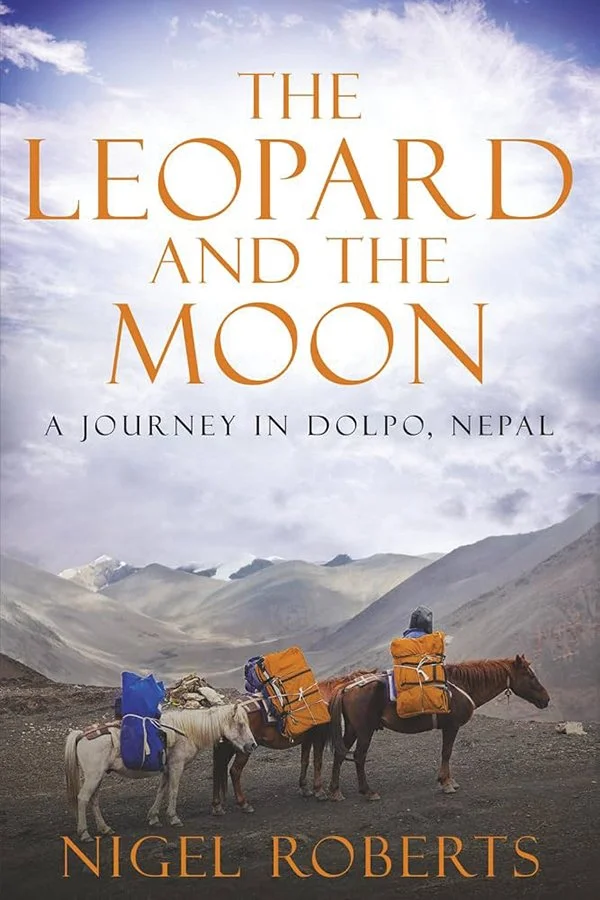
The Leopard and the Moon by Nigel Roberts, Imperfect Books, $24.99 for paperback edition on Amazon. Former World Bank executive Nigel Roberts went on a two-month trek through Dolpo, one of the most remote regions in Nepal, to clear his mind and to make sense of traumatic events in his life. At age 65, he followed the route taken over forty years ago by Peter Matthiessen (The Snow Leopard) and George Schaller (Stones of Silence).
Having lived and worked in Nepal on World Bank projects, he finds the country and people familiar. He even speaks Nepali fluently.
I grew up in India and I think I understand Nepal’s history, geography and politics fairly well. Yet, Roberts is able to take me on a journey that I could not have made with all my armchair knowledge of the country and its culture. His vivid description of the physical and the emotional price that Nepal’s intimidating terrain extracts is moving. As he walks and climbs and descends and climbs again in the slow-moving mountainous roller-coaster, Roberts reflects on the unspeakable losses in his life, the passing of his wife and daughter, and his own role in how things came to pass.
Nigel Roberts doesn’t present himself as a wilderness-conquering hero. He is just weighed down by the heavy load on his mind.
On his way to Shey, he’s is so exhausted, he feels he can’t go any further. At first, I have no energy at all...My legs are tired, though, and my lassitude is such that I think for a moment of calling the whole journey off and going back to Kathmandu.
And then, at Choila La, a flash of awareness:
...you could tell by the cutting wind and the mess of prayer flag strips and stones. I was at 5,050 meters, or 16,570 feet. It was truly desolate. I wasn’t sure which way I was facing or what I was looking at, but I was transported.
Now I understood why great religious revelations arrive in such places: mountain, desert, wilderness. The private intoxication you get from physical hardship and isolation; the illusion of possessing a landscape empty of all others. I could imagine God speaking to me here. Telling me – me personally – that I was special, that I had only to exercise that power we all possess. A few stunted juniper bushes edged the pathway; if I looked at them long enough they might burst into flames. I could almost hear the rustle of a dark angel’s wings, up there behind my shoulder in the twisting wind.
Brief moments of ecstasy are all that are granted to the sane, the normal, the conventional among us; and this one duly passed. It left a warm hand on me, though, making today exceptional.
At the end of the book, Roberts offers a brief political history of Nepal, “a summary of its fascinating history”.
A fascinating memoir that resonates at several levels.
IN HIGH PLACES
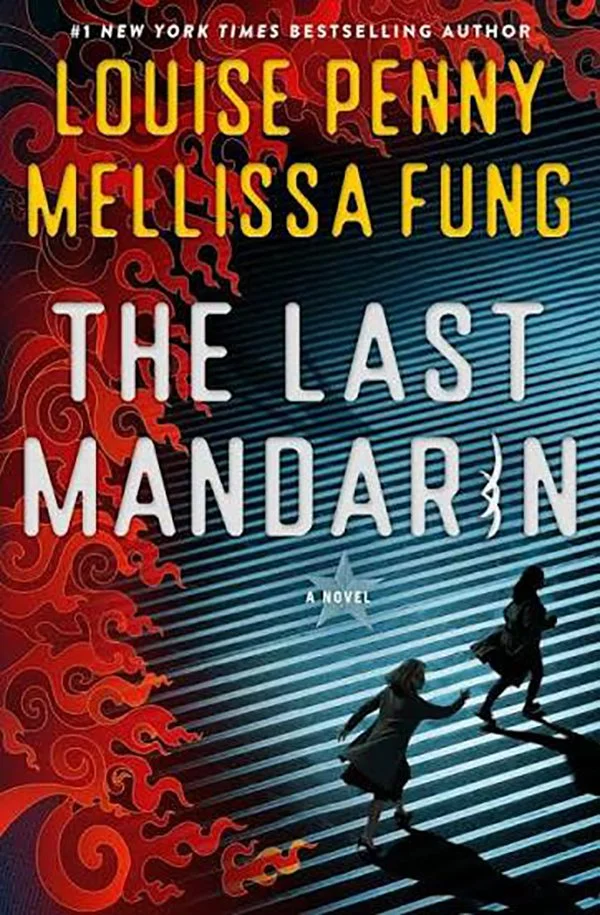
The Last Mandarin by Louise Penny and Mellissa Fung, Minotaur Books, $42. How do two writers, both phenomenally talented but in polar opposite genres and with polar opposite styles, write a book together?
Louise Penny, the #1 New York Times bestselling author of the Gamache series, and Melissa Fung, award-winning journalist and bestselling author, present a sweeping thriller in which global politics play out against two unlikely heroines – a mother and daughter and their fraught relationship.
Alice Li is a first-generation Chinese American and a food blogger.
Her mother, Vivien Li “had escaped the tyranny and oppression of Communist China, only to place herself in her own prison. Built by the expectations of others”.
When security and fire alarms go off simultaneously across the world, the signal is traced back to China. The assumption being that malware planted in hardware made in China and sold internationally triggered the alarm.
But Vivien believes that the only thing worse than the Chinese government being behind it is if they are not. Because that would mean some clandestine element within China is calling the shots. But who is capable of pulling off such a massive operation? How far has the rot spread – both in China and the US?
Vivien and Alice are uniquely placed to stop the next cataclysmic attack if they can figure out how to work together. The increasingly frantic search takes them from the White House to noodle shops in Hong Kong to the necropolis of the first emperor. Does the clue lie in an old language invented by women for women?
There’s commentary on human behaviour. When taxis refuse to take Alice as a passenger at the airport, a Pakistani driver lets her in.
“9/11” as all he said.
“Pandemic” said Alice, comparing wounds.
And a reference to MAD, or mutually assured destruction. What a Canadian Prime Minister had described in an address to the UN as the “balance of terror”.
That would be Pierre Elliott Trudeau in 1983.
The Last Mandarin is a masterclass in collaborative work as Louise Penny and Mellissa Fung weave ancient lore and current politics together.
WHAT’S ON YOUR MIND?
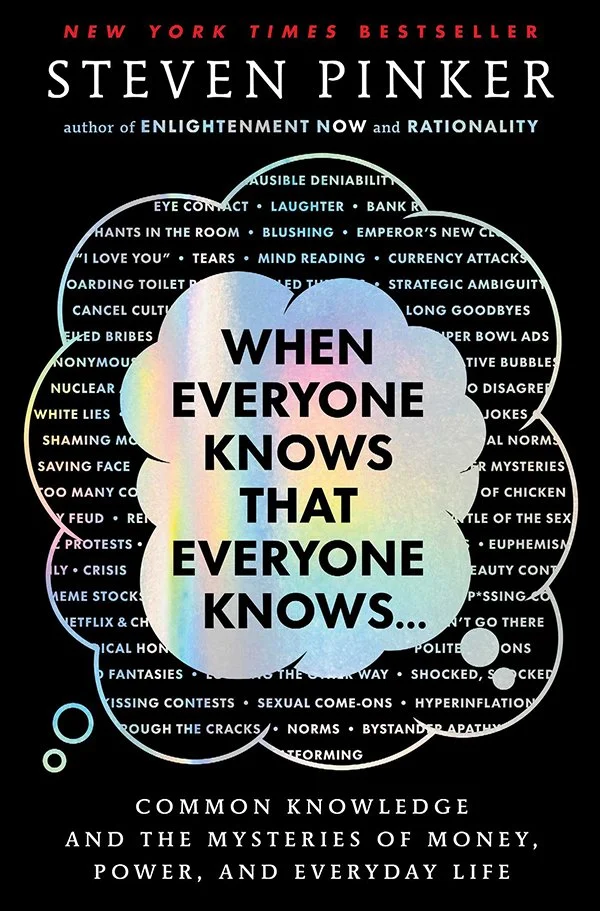
When Everyone Knows That Everyone Knows by Steve Pinker, Scribner, $42. Everyone’s favourite professor of language, cognition and social relations, who guided us to better writing, tongue firmly in cheek, with The Sense of Style, is back with a book in which he explains how we think about each other’s thoughts about each other’s thoughts, ad infinitum.
This awareness which we experience as something that is public, or “out there,” is called common knowledge, and impacts our social, political, and economic lives.
It is necessary for coordination – driving on the right or coalescing behind a political leader – and for social coordination, for forming bonds. But then people also tend to avoid common knowledge to ensure that even if everyone knows something, they can’t know that everyone else knows they know it.
And so we get benign hypocrisy, veiled bribes and threats, sexual innuendo and pretending not to see the elephant in the room.
He illustrates this in many ways, including studies in which participants were placed in potentially embarrassing situations. How did they act when they were caught in the act? When they knew everyone knew vs when they thought no one knew or everyone knew but wouldn’t tell? And so on.
Sounds awfully like a current scandal involving files that is ensnaring the rich and powerful across the globe, doesn’t it? No one saw/heard anything and yet everyone knows it happened.
Using examples from novels, jokes, cartoons and films, Pinker shows us how the hidden logic of common knowledge can make sense of many of life’s enigmas.
HER STORY
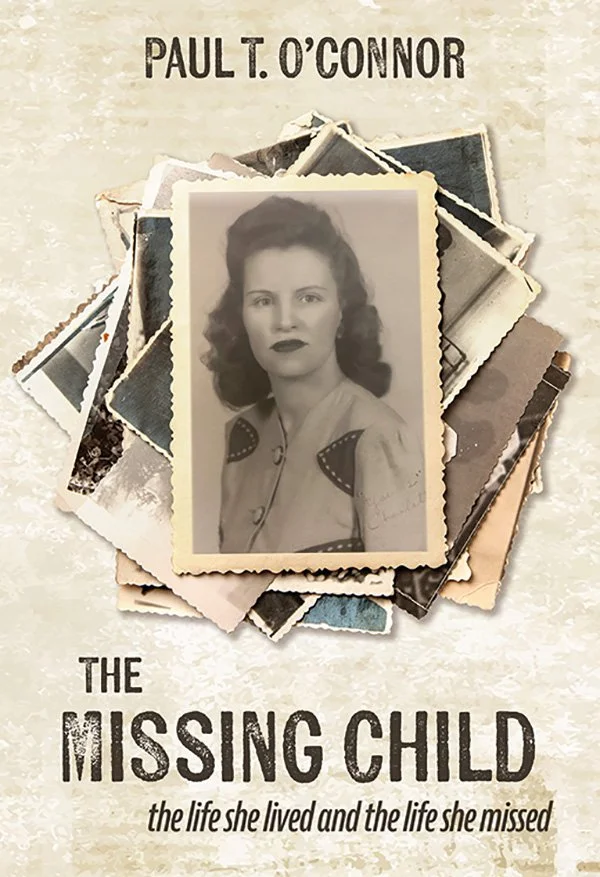
The Missing Child by Paul T. O’Connor, Torchflame Publishing, $19.99. Imagine finding an envelope marked “burn without opening” among your late mother’s papers. Would you open it?
Paul O’Connor did. With his sister. So he had an accessory to the act – and could write, “Blame my sister” in the dedication!
The result is The Missing Child: The Life She Lived and the Life She Missed – part memoir, part genealogical detective story.
The retired journalist and former journalism professor reconstructs his mother’s hidden past with a years’ long investigation and extensive research using records, DNA and family research. When these failed to yield satisfactory results, O’Connor turned to his familiar journalistic research methods – making phone calls. And when all else appears to fail, to good old Facebook!
Long-lost information – and cousins – surface, only raising more questions. Including the ones about the ancestor who travelled to India. Was he there as a spy?
His search was complicated by the fact that his mother was given in adoption twice, records from the time aren’t the best-kept, and her birth parents’ “impossible to pronounce” Polish names were later Anglicized.
He pieces together his mother’s hidden past, a life shaped by secrecy, instability and quiet resilience.
Charlotte Frazier O’Connor was the everywoman, he writes, but one with a remarkable story. A woman who cleaned her house and paid the bills before quietly passing away. The story that is precious to her family is also a window into the lives of immigrants and refugees who made their way to America in the early 1900s.
Though the army of characters is vast, the family trees O’Connor shares help navigate the connections.
He employs a pally, chatty style, and all of the information popping up from various people is reminiscent of a multigenerational family reunion in which everyone must have their say.
In the course of the search, a cousin discovers she has Greek genes.
“Her new nickname is Zorba (mild insults of this kind are considered signs of affection in my family),” he writes, cementing this feeling.
In retracing his mother’s life, O’Connor also explores questions of identity, ancestry and “found family” – and the truths people sometimes conceal to protect the lives they’ve built.
With precious photographs culled from family albums, The Missing Child is a reminder to listen to the stories our parents and family members have to share as a way to preserve family histories.
HITS THE NAIL ON THE HEAD
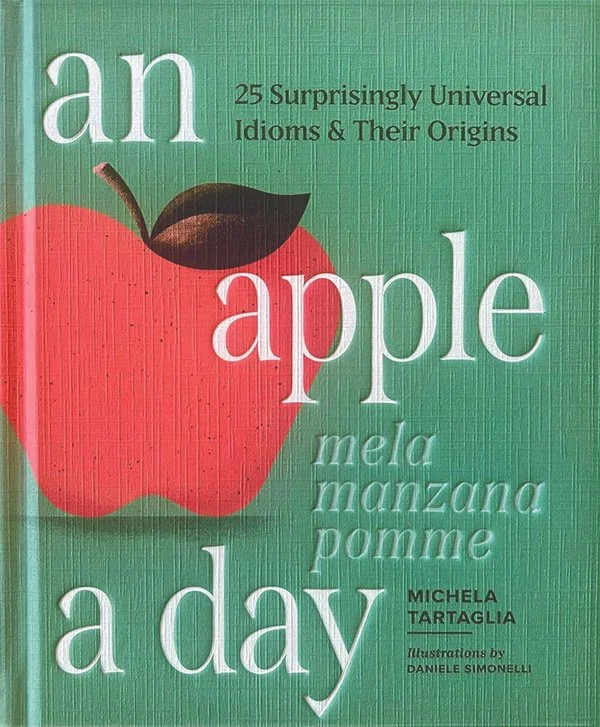
An Apple A Day by Michela Tartaglia, Sasquatch Books, $25.95. It’s raining cats and dogs, There’s no smoke without fire... and the many, many more idioms and sayings we use every day, without actually knowing much about the origins.
This little book is a treasure trove of 25 universal idioms and their origin stories – compared and contrasted in English, Italian, Spanish and French. A fun way to learn how different cultures see the world.
SPLASH!

Good Night Beach by Adam Gamble, illustrated by Harvey Stevenson, Good Night Books, $9.95. Spend a beautiful day at the beach with your little ones, pointing out and greeting everything from sand and sea shells to everyone from surfers and lifeguards, seagulls and crabs.
LIKE A HUG

Love Like River and Sky by Julie Kim, Little Bigfoot, $14.99. A magical adventure with a grandma and her grandchildren. Brimming with tenderness and love. And old stories that a grandma knows.
TEEN REVIEW
By SAMAIRA DSOUZA
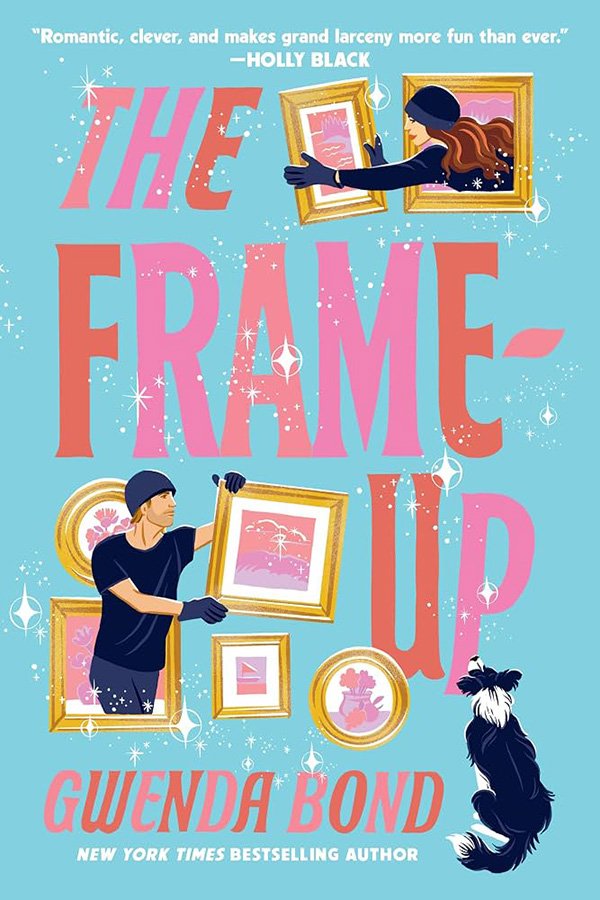
The Frame-Up by Gwenda Bond, Del Ray, $24.95. The Frame-Up by Gwenda Bond is a fantasy mystery that blends art, magic, and crime into one exciting story.
This intriguing novel follows the main protagonist Dani Poissant, a teenage art forger raised by a family of skilled criminals. The family is in the business of sneaky art schemes. When one of these family art schemes goes wrong, Dani finds herself caught between being loyal to her family, or following her desire to do the right thing.
This book explores themes of identity, trust, and self acceptance. Bond uses the art world as more than just a setting. It has become a symbol of how people are able to create new versions of themselves to fit in. Her writing is fast-paced and energy-filled. The book blends clever dialogue and detailed descriptions that make the magic come to life. Sometimes, the story moves too quickly where emotional moments feel rushed, but still keeps the reader hooked.
What makes The Frame-Up stand out is how it connects crime and morality. It showcases how even people who make mistakes can change.
The creative and thought-provoking novel combines fantasy and emotion. It shows that everyone has the ability to rewrite their story, just like Dani learns.
• Samaira Dsouza is a Brampton Library youth member.