
PURPOSE PORTRAIT
“WE ARE ALL WORKS IN PROGRESS”
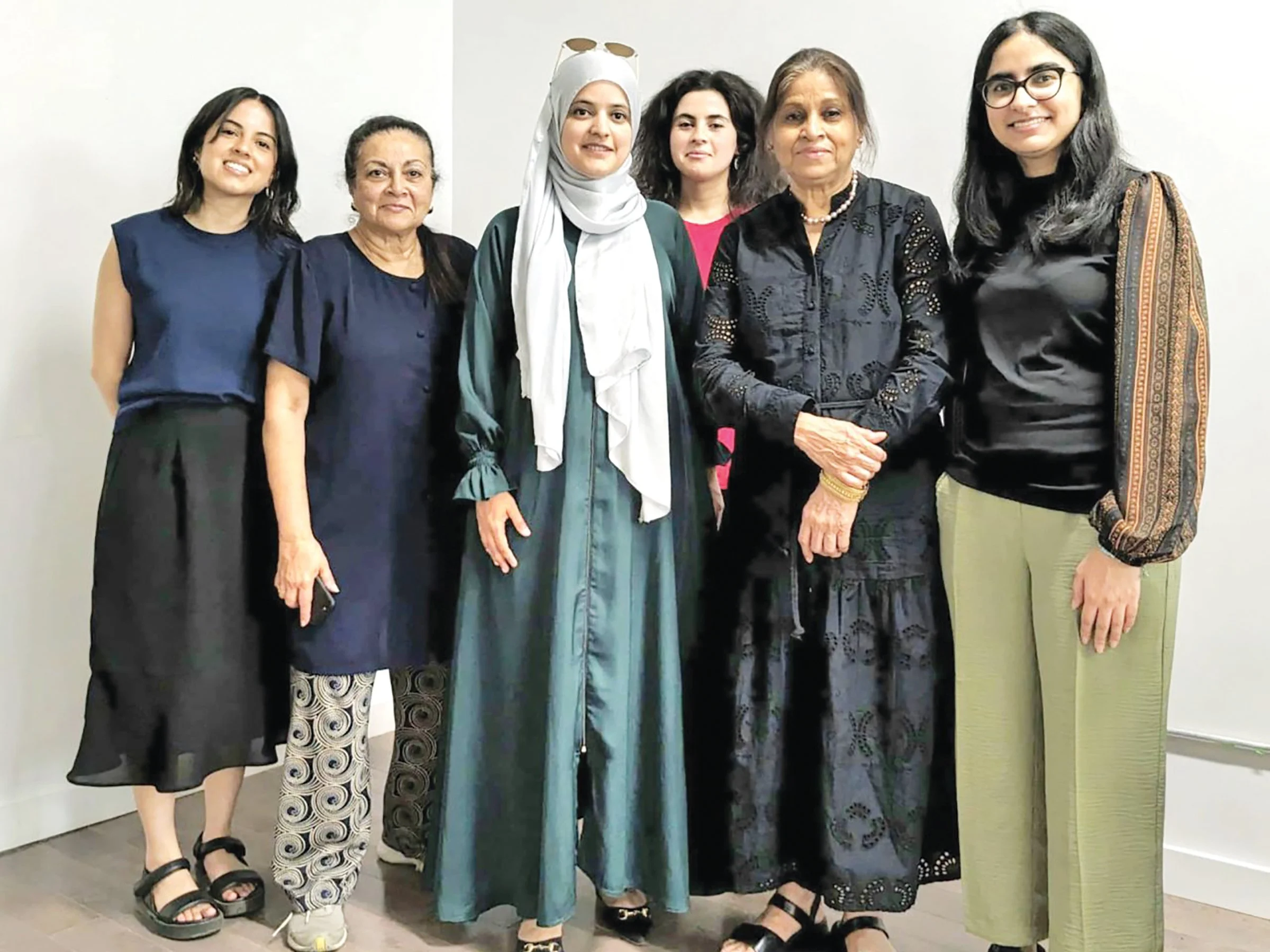
Samya Hassan, third from left, with members of the CASSA team.
By RANA KHAN
Samya Hasan arrived in Canada when she was eight and saw first-hand the structural barriers that first-generation immigrants face as her parents worked long and hard to establish themselves.
She says the seeds of her belief in systemic change were perhaps planted while growing up. She studied public policy at the University of Toronto, worked briefly with the City of Toronto, and has led Council of Agencies Serving South Asians (CASSA) as its ED since 2017.
I caught up with her recently.
You were an Urban Fellow at the City of Toronto, but left the fellowship halfway, and later, joined CASSA. Why and how did that happen?
At the City, I was doing things like a byelaw review of housing standards when really I wanted to get into social justice. Around that time I also had my first child to look after, so I quit. In 2015, I joined CASSA as a project coordinator and was promoted to a managerial role three months later. I was supervising others besides doing my own projects. In 2017, our ED Neethan Shan won a municipal byelection and asked if I could take his place. I was then expecting my second child and agreed to an interim position as I felt I had no formal training for it. At the time, I thought I would do this for two years and go back to work for the City!
What were your priorities when you took over the reins in 2017?
At the time, CASSA was a small, struggling grassroots organization. We had only two full-time staff, and our operational reach was quite limited. My public policy background and methodology skills helped me identify some gaps in our work. My vision for the organization was for it to be a research hub which could impact policies, and I wanted academics, researchers and policy makers to come to us. I had sustainability as a goal too, and I put in new project ideas and applied for grants and whatever funding we could get. During COVID, as a smaller organization we could pivot, we had an office base and we did get a lot of attention from government agencies regarding support for the South Asian population. We created an anti-hate network, as there was a lot of racism during that time towards South Asians, particularly Muslims and Sikhs.
What were your leadership strategies in order to turn your vision into reality? And how do you address the challenge of funding which is endemic at non-profits?
I think it is very important for community-based organizations like CASSA to do research. We provide front-line services and address so many issues that affect our communities: gender-based violence, racism, mental and sexual health, precarity, gender equity, to name a few, but what helps us is that we have the proof, by way of data and numbers, that our projects do make a difference in real terms. We needed that validation – that we, as an organization, have the knowledge, skills, and the capacity to advocate effectively for our communities. Funding then comes a bit more easily. As a strategic priority, I have also taken CASSA beyond Toronto, and we now have ongoing projects in Quebec, Alberta, and BC, and it’s interesting to see how we can navigate around regional issues through our networks in those places.
Overall, the funding landscape is bleak as government priorities keep changing. We became a charitable organization in 2024 as donations are important, we cannot rely solely on grants.
What does leadership mean for you? And what is a challenge at work these days?
My concept of leadership is based on my own personal values as well as the core Islamic principles of leadership viz. consultation, respect, safety, accountability, and empathy towards not just fellow staff members but all stakeholders. I believe that we are all works in progress, and for that reason I try not to jump to conclusions but instead try to extend my own understanding.
I’m currently trying to create policies and standards to manage the risks of using AI in the social justice field. We are trying to cope with the level of hate being directed at South Asians in general. We are trying to help seniors and youth protect themselves but we are quite under-resourced. I’m also busy putting together ethical policies for collecting private donations.
With responsibilities at home and at work, how do you manage the balancing act? Can women really have it all?
Well, it certainly is not easy! Luckily, we have this tradition of support in South Asian culture. My parents, my husband, and my in-laws realize that this isn’t just a job for me, and they are my biggest cheerleaders. I do have my challenges though as a mother: there is a lot of social pressure regarding parenting and children’s activities. My husband and I let the children follow their passions – currently martial arts, hockey, and swimming – rather than what is ‘in fashion’. I try to outsource chores like cooking and cleaning which helps, but then these are expensive. It is also a sectoral issue, as there are more women working in non-profits, and salaries have to become better for all of us. I also believe in doing things that interest me, for example I have completed another master’s degree despite the constraints on my time.
Do you have any role models, or people who have inspired you in your career?
When I started out, I knew very little about what social justice meant, but I learnt a lot from Neethan and my peers and I understand now that it’s a gradual process, that there’s trust and accountability involved. And I admire Debbie Douglas (a leading housing policy expert), Shalini Konanur (of the Law Society of Ontario) and Amira Elghawaby (journalist and human rights activist) for their resilience, grace and courage.
• Samya Hasan and CASSA can be contacted via its website: www.cassa.ca.
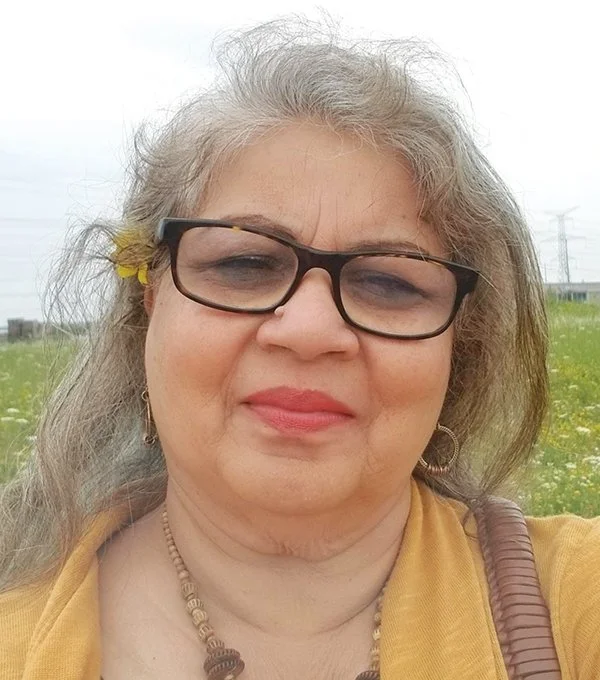
Rana Khan is a LINC instructor whose work is rooted in social justice and human rights. She volunteers as a creative writing facilitator for the Writer’s Collective of Canada and has published The Stories Around Us, on mental health issues amongst South Asian women.