
GRANT'S DESI ACHIEVER
ACTING TOUGH
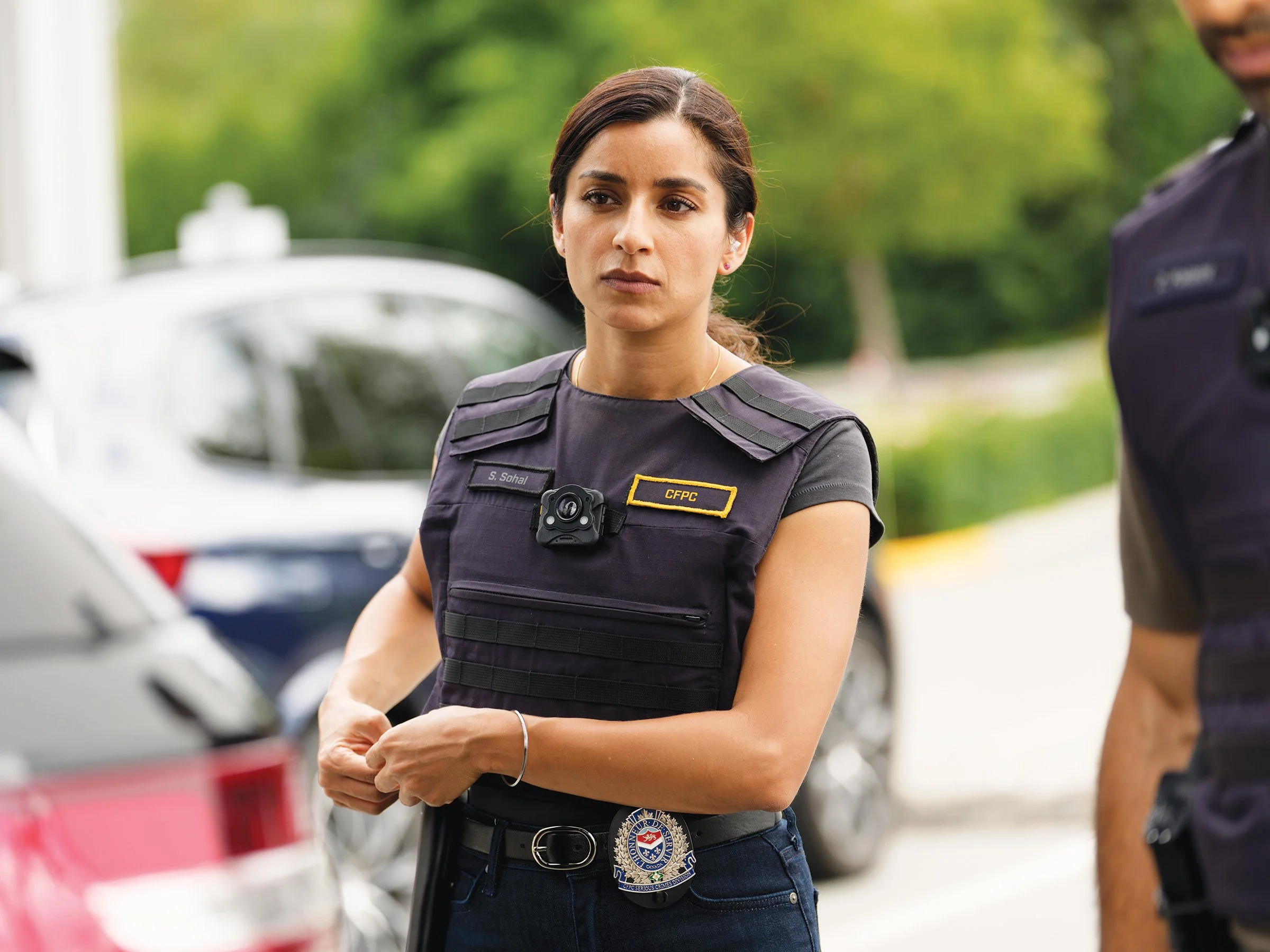
Supinder Wraich, the star of CBC’s hit police drama Allegiance.
By SHAGORIKA EASWAR
At the very beginning of the pilot episode for Allegiance, a new batch of police officers is at their investiture ceremony. One asks the other, “Does this feel real to you?”
With the CBC’s hit police drama having been renewed for the third season and earning accolades from critics and audiences, this might be the moment to ask lead character Supinder Wraich, who plays officer Sabrina Sohal, does it feel real?
“It does, now!” she says. “In the beginning, one never really knows. In terms of the tone, the characters, how it will land. After season 2, the strength of the story, all the other actors, knowing the talent behind the show, it doesn’t feel like a fluke! I know how much people have put into it. I’m proud of it, I can stand behind it.”
In the show, Sabrina has to work harder than the rest, fight to be seen and heard, and when she succeeds, there’s the insinuation that it’s because she checked the boxes.
Wraich’s journey as an actor was similar.
“The brilliance of the show is that it mirrors our day-to-day lives. I auditioned for so many roles and wasn’t seen as suitable even for a supporting role. The CBC is so diverse now, but would this show have been possible ten years ago? I don’t think so. The show is truly a mirror of our times. A result of the desire for our society to see ourselves reflected. The pressure we put on the organizations that represent us when we demand change.”
Speaking about colour-blind casting – Brown, Black and Asian actors in everything from Bridgerton and Sense & Sensibility to Dev Patel playing David Copperfield – Wraich admits to it being a tricky thing.
“One is grateful for the opportunity, but you wonder if you’re here because you check the boxes. Is it because of my talent or is it because I’m a woman of colour? It comes up in different ways, it permeates.”
But the possible reversing of DEI policies doesn’t faze her.
“I’m not seeing it personally, and not so much in Canada. I’m not completely equipped to comment on this because I’ve not been looking for work, I don’t exactly have my finger on the pulse, but I believe there will always be room for talent.”
If the narrative were flipped, how would she respond to a blonde, blue-eyed actor playing Supinder in an Indian show?
“Well, they could make it, I just hope no one watches it!” she says with a laugh. “Because it would take you out of the show.”
Wraich earned a Canadian Screen Award as the lead in the Emmy Award-winning digital series Guidestones. Her series, The 410 was nominated for three Canadian Screen Awards. She has guest-starred on ABC’s The Good Doctor and recurred on several series including The Expanse, Private Eyes, Crawford, The Beaverton, and the award winning CBC/HBO Max series Sort Of.
She is navigating the Canadian/North American entertainment industry, challenging societal norms.
And yet, the actor says she’s never not tied to her gender and ethnicity.
“I’ve been lucky enough to get a wide variety of roles,” she says. “The character of Aqsa in Sort Of, I had never seen that before.
“I have just wanted to present myself as we are, not hide any parts. In Allegiance, Sabrina really walks the line, presenting the model minority, but in order to protect herself and her family, she has to work against the law. She carries the shame the family is experiencing. The things we say privately to ourselves but are afraid to say in public, we all know this feeling. My challenge was how do I bring the embarrassment of this as an actor? If I am challenging the system in any way, it’s by showing us as a whole. I truly believe if I didn’t show the bad, the hurt, the anger, I wouldn’t be doing justice to the role.”
When she created and starred in The 410, a series about a young Indo-Canadian woman who is drawn into a life of crime after her truck driver father is arrested for smuggling cocaine, the initial response was that they didn’t want to show a South Asian truck driver as the villain.
“We could have Ozark and we could have Breaking Bad, but not the brown guy in such a role?” she asks. “Earlier it used be that brown characters were either taxi drivers or terrorists, now they play doctors or the IT nerd, but it’s still one-dimensional. I wanted to play the anti hero, not just the model minority I was getting to play.”
Does her starring role in Allegiance which continues to break stereotypes and redefine how South Asian women are represented on-screen in North American media come with its own pressure?
“I wouldn’t say pressure, exactly. In season 1 I was conscious of being a lead character representing a Sikh Punjabi family. I wanted to be grounded, honest, authentic. It was a standard I held myself up to. That standard exists for me personally. I want to be seen on par with all Caucasian actors who lead shows.”
We see more Black actors in shows now, The Diplomat being just one, but not so many South Asians. Wraich says her historical/personal analysis is that the Black community has had different experiences tied to the entertainment industry. It was hard for her to break the news that she wanted to be an actor to her parents.
She recalls her conversation with them on the subject. It was never really a fight, but she had to ease into it, she says, with a laugh.
Her family had moved to Canada when she was four years old from Mahauli near Chandigarh in Punjab, India. Her parents had the immigrant mindset. She knew there wasn’t going to be the grand proclamation about her chosen path, so she was “strategic”. She went to university for Business, and transferred to Communications, and her parents didn’t catch on. They started to get suspicious, though, when she joined film school.
“I said I was studying advertising and they relaxed, oh, a business, then! Then I was in a commercial for TD Bank which got a lot of airtime, aunties were calling and saying they’d seen me on television, and my parents were like, ah, a bank, very solid, very respectable!”
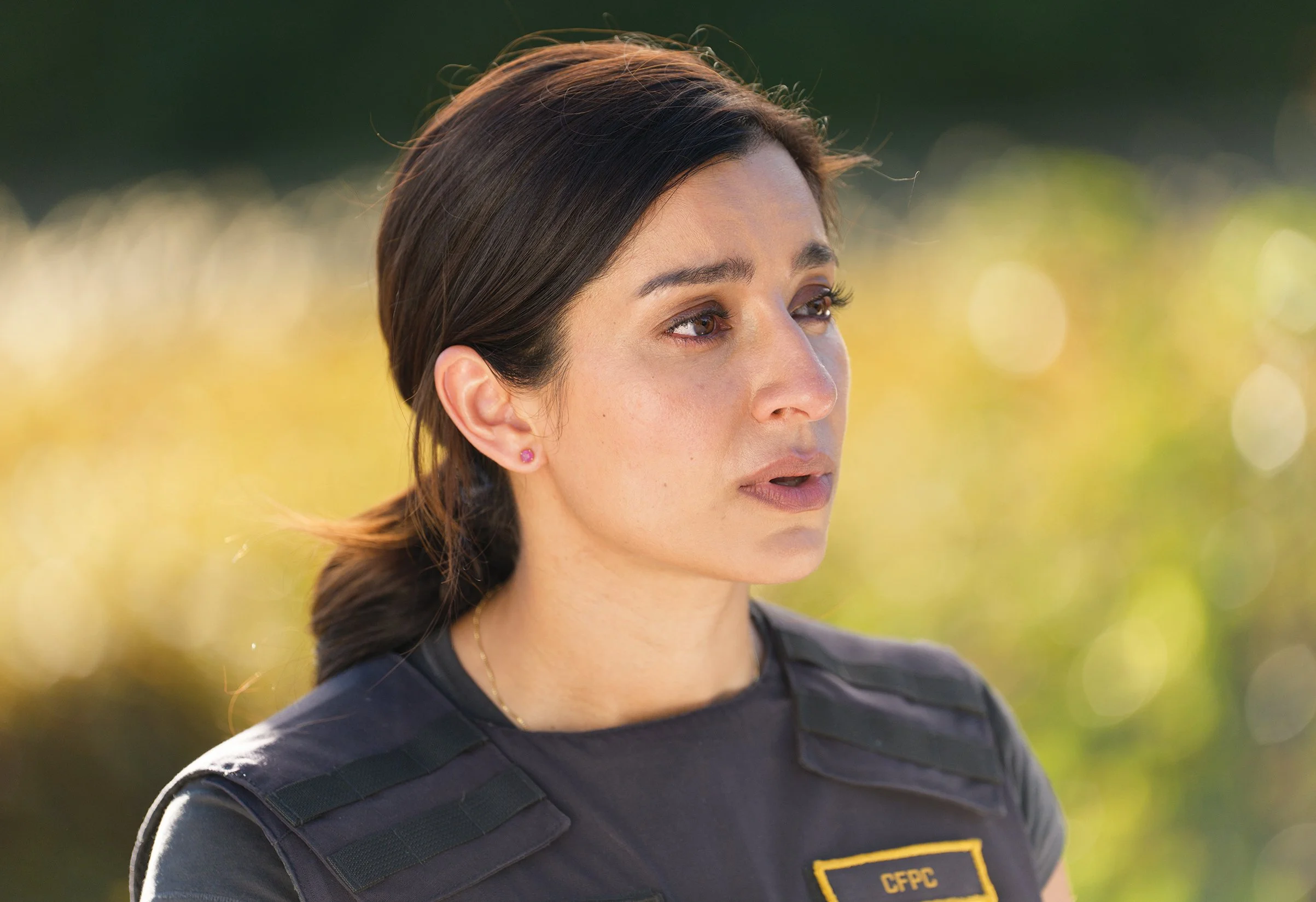
“It takes talent, grit and perseverance. I faced a lot of rejection. I took a lot of parts I wasn’t excited about to build a resumé.”
But she understands where they were coming from. They had moved to Canada for better opportunities for their children and the early years had not been easy. The family settled in Scarborough, living in a one-bedroom apartment.
“It must have been pretty gruelling for them. My sister and I shared the bedroom, our parents slept in the living room. I have a brother and a sister eight and ten years younger – born when we were more settled, had moved into a house, when my parents felt they could have more children. But it’s like we had two different sets of parents, my sister and I, and our younger siblings. In terms of grit and survival skills, I feel I have so much more. I was enrolled in ESL because we spoke Punjabi at home, and I often didn’t follow what they were saying at school. Now I have a two-and-a-half-year old son, Jashan, and I see how our environment changes our behaviour. I was living in two worlds. Speaking Punjabi at home and eating rotis. At school, it was English and the peanut butter-jam sandwiches I requested. And no braids! Until I realized it wasn’t serving me.”
That realization didn’t come overnight. A Jewish teacher in an acting class said “he couldn’t see what was behind” her, and though she was confused by that and somewhat angry at first, that was the beginning. And it really gelled when she made The 410.
Wraich was working at the trucking school her parents ran, but all she wanted was to be an actor. “I thought, ten years of this and I’ve failed,” she says.
Ten years later, she knew that she had to look at all who she was.
“There’s the white collar ideology, parents yearning for their kids to become doctors or lawyers, but factory workers and truckers, that’s also a reality. When The 410 was so well received, I felt I had an audience for the stories I wanted to tell and portray.”
Losing her father four years ago was a big heartbreak, she says, because he’d have been proud of her success. Her mother has Allegiance posters all over her home.
Every experience is so difference in terms of what’s asked of you, says Wraich, when asked for tips.
“It takes talent, grit and perseverance. I faced a lot of ejection, I took a lot of parts I wasn’t excited about, just to work to build a resumé.
“The days are long. When I was shooting for season 1, Jashan was just eight months old. I think I got by on pure adrenaline and excitement! But seriously, I couldn’t have done it without my husband Manu’s support. We’re different personalities, but we lead very cohesive, compatible lives. Also, I think people forget talent meets muscle. You’ve done it for years, you know how to work 12-14 hours a day and go home to learn your lines for the next day.”
She also stresses the importance of seeing opportunities where they are, even if they don’t look like what you are seeking.
Rejected for a role she had auditioned for, she enquired about any other jobs on the sets. She needed experience, she wanted to be a part of that world.
All they had was the job of cast driver and so that’s what she did, picking up and dropping off cast members. Two new opportunities came her way from this.
The Director of Photography suggested she join film school and another cast her in a small film he was making.
Wraich references the movie Sliding Doors.
“I often think about that movie, how our choices impact our lives. If my parents had not moved to Canada when they did, how would my life have played out?”
Wraich just shot for a short film in Ireland, and she also wants to get back to writing,
“I’m looking forward to diving back into a world I create.”
• Grant’s is proud to present this series about people who are making a difference in the community. Represented by PMA Canada (www.pmacanada.com).