
TRUTH BE TOLD
MANY WAYS TO SHARE A LOVE OF READING
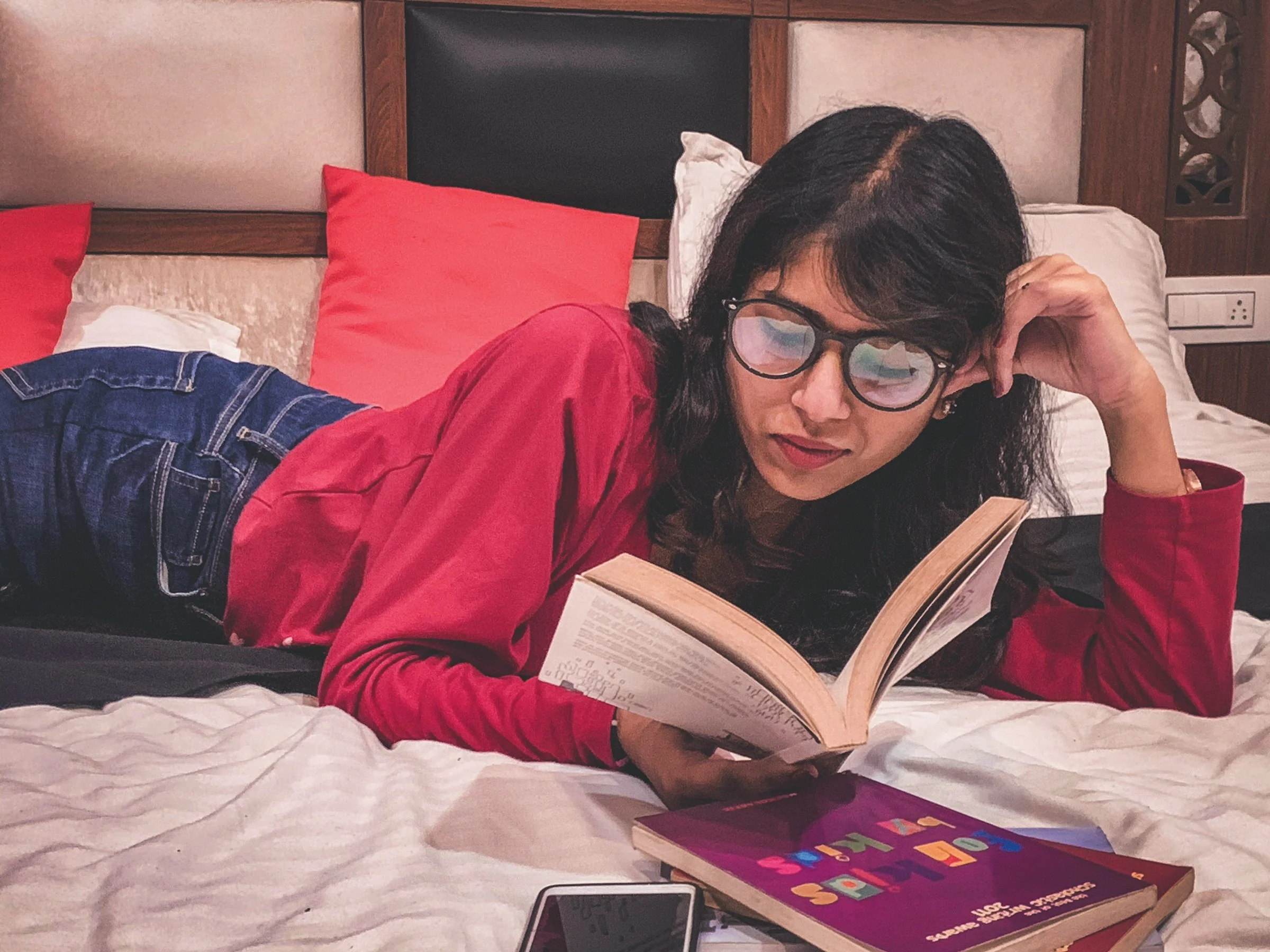
A worthy New Year’s resolution might be to read a book a month. Image credit: PRASHANT GUPTA on Unsplash.
By DR VICKI BISMILLA
I was in my favourite second-hand bookstore in a charity shop where I buy novels, read them, and then return them so they can resell them.
I had put several John Grisham novels into my cart and was looking through the shelves when a gentleman approached me and said he was looking for detective stories. Since I had already taken the Grishams I said there were some James Patterson books on the shelf that he might like.
He asked, “Where are they? Can you show me?”
So I pulled out two and gave them to him. He said, “They’re not for me, I’m buying them for someone who likes detective books. Can you tell me the titles and what they are about?”
I read out the titles and scanned the back cover and gave him a summary. He then took another book from his cart and said, “What is this one called? It looks like a good one.”
I read him the title and scanned the back cover and said, “Yeah, it looks interesting.”
He put that one into his cart and also one of the James Pattersons. I realized that this tall, middle-aged, kind gentleman might not have been able to read and it tugged at my heart as he continued into other departments of the shop.
How does an adult end up not being able to read? So many life circumstances impact literacy. In many countries schooling is a privilege denied to poor and rural communities.
In many cultures girls are not allowed to go to school. And in certain countries children who have cognitive impairments or learning difficulties are not given the support they need to learn.
And don’t forget, in our own beloved Canada, not so long ago, our indigenous and aboriginal children in residential schools were brutalized by colonizers which impacted their learning. They are well versed in their vernacular and their profound spiritual literacy but never had a chance to overcome pain in order to learn what we call literacy.
In all of these cases the result would be children who grow into non-literate adults.
When we were teachers in elementary classrooms we loved teaching little children to read and most of our little students took to reading like ducks to water! They learned to phonetically decode words in order to read and encode sounds to put together to spell. They used picture clues to figure out sequential story lines and built up their comprehension skills. Their formative years in school were like watching petals gently opening up to reveal the blooms of readers and writers.
But we were so very busy meeting the learning needs of thirty little students in each of our classrooms, we did not have time to wonder how literate their parents and other adults in their families were.
Fortunately in Canada there are free in-person adult literacy programs offered by public libraries and community centres. Making that first move by adults wanting to learn is the first step toward opening literacy doors for them. There are also specific literacy learning organizations like abcliteracy.ca that will tailor learning specifically to the learner’s need. They offer reading and writing lessons but also a whole range of literacy such as financial literacy, civic, cultural, digital, health literacy and so much more.
Provincial governments’ free literacy classes can be found on government websites such as ontario.ca/adult learning. Here adults have access to a range of free learning programs such as reading, ESL, computer and digital skills and also free classes to achieve a high school diploma, admission requirements for college or apprenticeship programs, and bridge training for skilled immigrants and refugees who want to continue their careers here in Canada.
There are other donor-supported programs like unitedforliteracy.ca in various provinces that offer adult literacy as well as academic tutoring for students and a complete range of literacy programs spanning adults, children, families, seniors and youth. They are eager to have volunteers to help in their work.
There are even health organizations like www.centraleasthealthline.ca that offer a very wide range of programs that help adults with limited formal schooling to acquire basic reading, writing, math and problem solving skills. It is really worthwhile to look at the large list of services on their website.
So learning opportunities do exist for adults like the gentleman I met at the bookstore but it’s up to his family and acquaintances to bring those opportunities to his attention and then, depending on his circumstances, help him access those opportunities.
One needs to look no further than the pages of this Desi News magazine that you are holding in your hand (or palm) and at the book review pages to know the unadulterated joy that reading brings. To give yourself up to the invisible hand that pulls you into a story, deep into the folds of its pages, leads you into castles or hovels, histories or constellations, mysteries or romances so that you become mesmerized, that is the beauty of reading. I watch children, teenagers, adults, senior citizens in different places, from homes to libraries to parks or on public transit, bent over their books, transported far away into another world that is their own special place between themselves and the book they are reading. It’s not even between them and the author but the special place and story that the author has created especially for them. That is the power of reading.
A worthy New Year’s resolution might be to read a book a month? Or to volunteer to teach someone to read? Or to lead the children in your life to the love of books? Or maybe you have other experiences with the written word that you’d like to share with us?
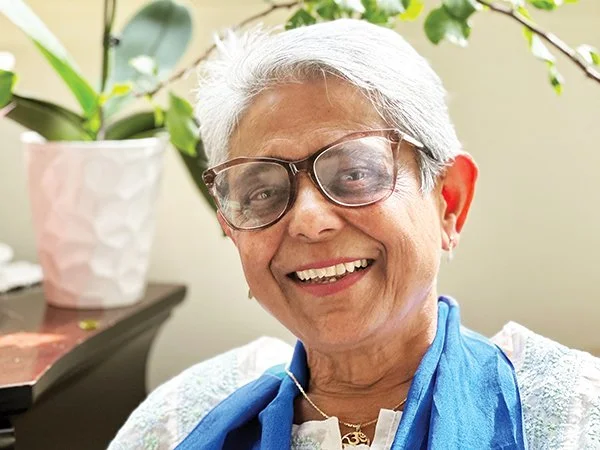
Dr Vicki Bismilla is a retired Superintendent of Schools and retired college Vice-President, Academic, and Chief Learning Officer. She has authored two books.