
COVER STORY
BREAK THE SILENCE! ASK FOR ANGELA
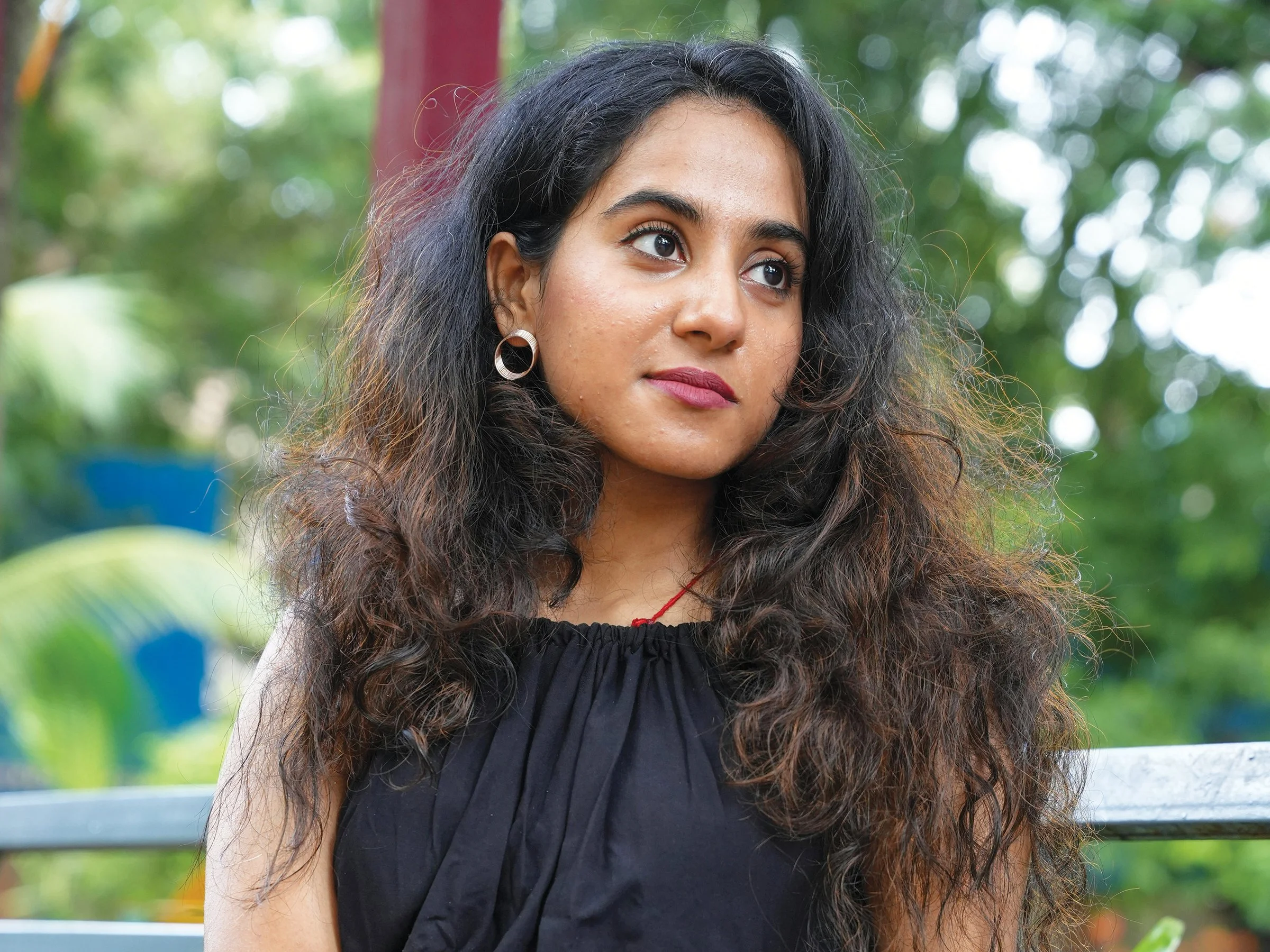
As the world marks yet another International Women’s Day on March 11, Desi News dedicates this issue to all the yet-unresolved challenges women continue to face, even in the emancipated West.
By SHAGORIKA EASWAR
The numbers tell their own story. A story of fear, pain, and violence. And the silence surrounding intimate partner violence, or IPV.
York Region Centre for Community Safety (YRCCS) served 548 survivors and 759 of their children in 2022.
657 survivors; 978 of their children in 2023.
845 survivors; 1205 of their children in 2024.
Jaspreet Gill, executive director of YRCCS, points to the increase from 2022 to 2023 and then the significant increase from 2023 to 2024.
“Women don’t know safety in the very place they are supposed to be safe. Instead of a sanctuary, homes become places of terror.”
The largest piece of her role as ED is financial sustainability.
“We’re seriously under-funded and I believe that’s because it’s considered a ‘women’s’ issue,” states Gill unequivocally. “We’re a small non-profit that is women-led, staffed by women and serves this demographic – survivors of domestic violence. People will say we’re doing this great work. Yes, we’re driven by passion, but this work cannot be sustained by passion alone. My personal piece is that for every survivor we know, we also know an abusive man. We need to hold men accountable. That means education, awareness, involving more men who are allies. IPV also affects children who witness it. This is incredibly generic, but boys can replicate the behaviour because they don’t know any other way and girls learn to take the abuse and to hide it. The cycle continues. We need to disrupt it in the beginning.”
Gill’s role also encompasses advocacy, so people understand just what IPV and gender-based violence or GBV are. And then there’s the mundane part, the HR aspect, administration, ensuring that operationally things are running smoothly.
YRCCS partners with 28 other agencies and serves all survivors of violence. Women, of course, but also seniors, children, and though 99 per cent of their clients are women, also men. While women of all ages access their services, the majority are between the ages of 25 and 40, with some as young as 16.
Their services include safety planning, risk assessment, referring clients (with their consent) to other services they may need.
“We’ve made receiving support seamless, at one place” says Gill. “We do regular check-ins, make sure the referrals to our partners are working.”
In August 2024, YRCCS took a significant step in addressing IPV by partnering with Loblaw Companies Ltd. to launch the Ask for Angela campaign.
This innovative initiative is a local adaptation of the highly successful campaign first established in the United Kingdom in 2016. It aims to provide discreet support to individuals in unsafe situations through a simple yet effective approach.
“We are excited to have Ask for Angela in York Region, a geographically vast area, where support can now be accessed at any Loblaw location,” said Gill. “This outreach creates easier access for individuals, allowing us to connect them to the services they need. Our message is simple: You are not alone. Help is available, and no matter what kind of abuse you are enduring, it is not your fault.”
By partnering with Loblaw stores – including Real Canadian Superstore, Loblaws, Shoppers Drug Mart, No Frills, Valu-Mart and Your Independent Grocers – YRCCS has extended the campaign across York Region. Survivors can now seek help at numerous locations, ensuring safety and protection for them and their children.
The program revolves around a discreet code-phrase: individuals who feel unsafe can approach trained staff at participating stores and ask for “Angela”. This signals the need for help. Staff members then guide the person to a private location, assess their needs and connect them with YRCCS. Through its extensive network of community partnerships, YRCCS provides survivors with comprehensive wraparound services.
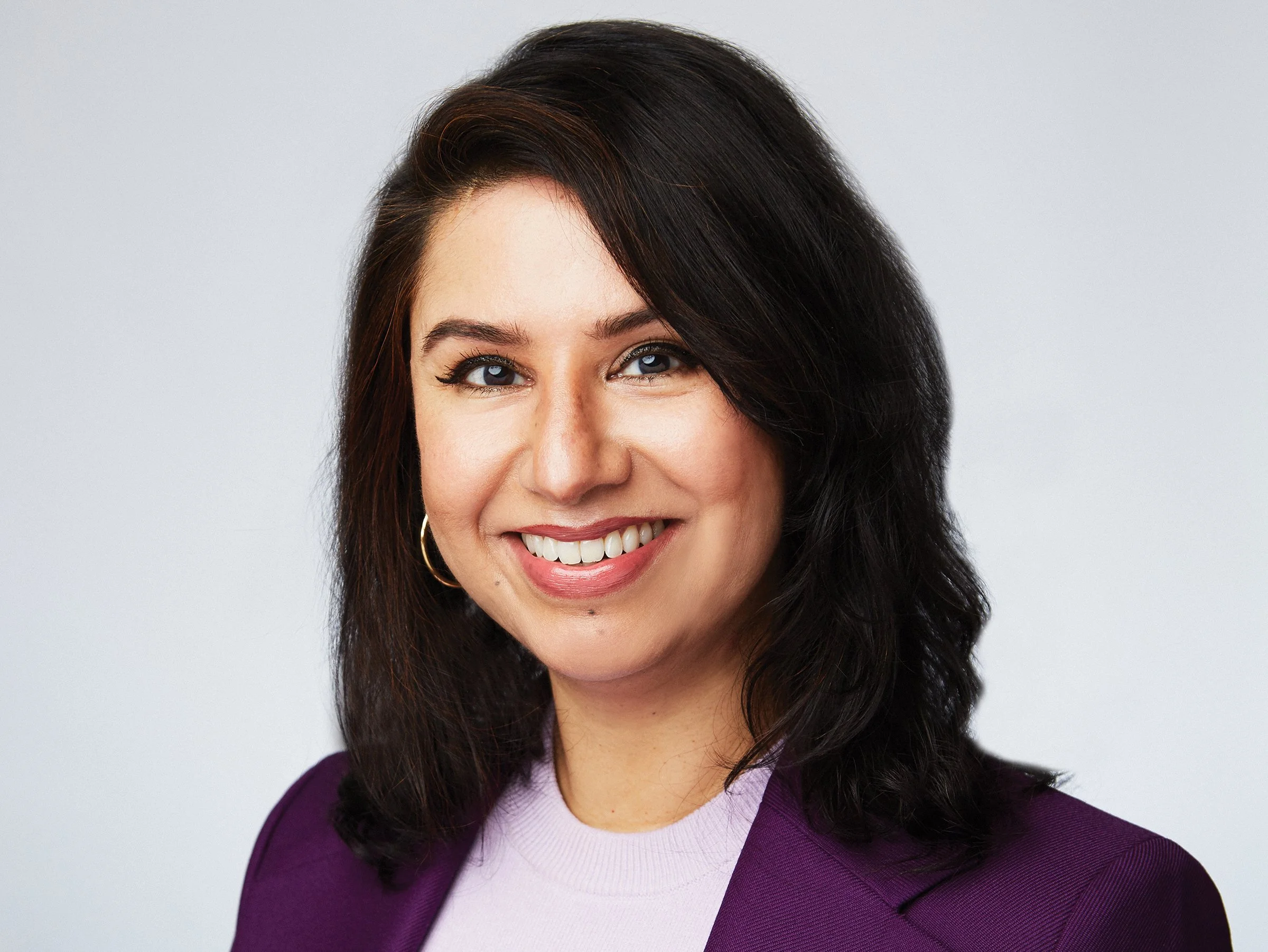
“Women don’t know safety in the very place they are supposed to be safe.” Jaspreet Gill, Executive Director, York Region Centre for Community Safety.
And yet, as Scarlett Liu reported in Newmarket Today, despite the program’s promise, its initial impact was limited. Over 100 days since its launch, no one in York Region had accessed the service. Things hadn’t changed much at the time of this interview.
Are all staff at every location trained? It takes an abused woman time to gather the courage to seek help and she has to wait for an opportune moment. She may not get another chance if the first encounter led her nowhere.
“Loblaw is responsible for training staff and making sure they are aware,” says Gill. “Before launching, we did an audit at all the locations – I did several myself as I am very passionate about this project – to provide feedback if anything was lacking.”
To her knowledge, no one has accessed the program yet.
She sees this as a challenge of awareness rather than effectiveness.
“We can’t do giant billboards, for obvious reasons, and enough community members don’t know, the women don’t know. We’re going to launch a social media campaign to raise awareness that this program, this help, exists.”
I couldn’t help wondering if signs advertising the initiative were the problem. No billboards, as Gill points out, but there are signs in the washrooms that say to ask for Angela if you need help. However, these signs are also in men’s washrooms.
Think about it, a woman entering the stores alone could ask for help without resorting to codes. And a woman with someone, perhaps the perpetrator, wouldn’t risk asking for Angela because what are the chances he hadn’t seen the signs too?
But no one accessing this help doesn’t mean no one needed the help. Quite the opposite, as Gill says. “The issue of IPV is critical in York Region, and the numbers are rising.
“They shot up during the pandemic, and as we came out, they continued to rise. We’ve seen this over and over again, that GBV rises during natural disasters or war, and then keeps climbing. The economic impact of such disasters, mental health issues, addictions and substance abuse, all these contribute towards creating an environment where abuse continues to rise in severity and frequency.”
In 2024, YRCCS launched its Taking a Breath Away Campaign, highlighting the risk of strangulation.
“A woman who is strangled by her partner just once is 750 per cent more likely to be murdered by that partner,” says Gill. “Strangulation, cutting off someone’s air flow and blood flow within intimate partner violence is the ultimate manifestation of power and control. That man is telling his partner, ‘I can kill you if I want to’. He is practising killing her. We have resources and information on our website: https://yrccs.ca/strangulation-awareness/ that readers can access.”
They also relaunched their Not All Love is Safe in February.
You Are Not Alone are the first words that greet visitors on their website.
Survivors are not required to report their abuse to police in order to access culturally and linguistically responsive services. On-site staff currently speak several languages including Hindi, Urdu and Malayalam, and translation services are available for many more.
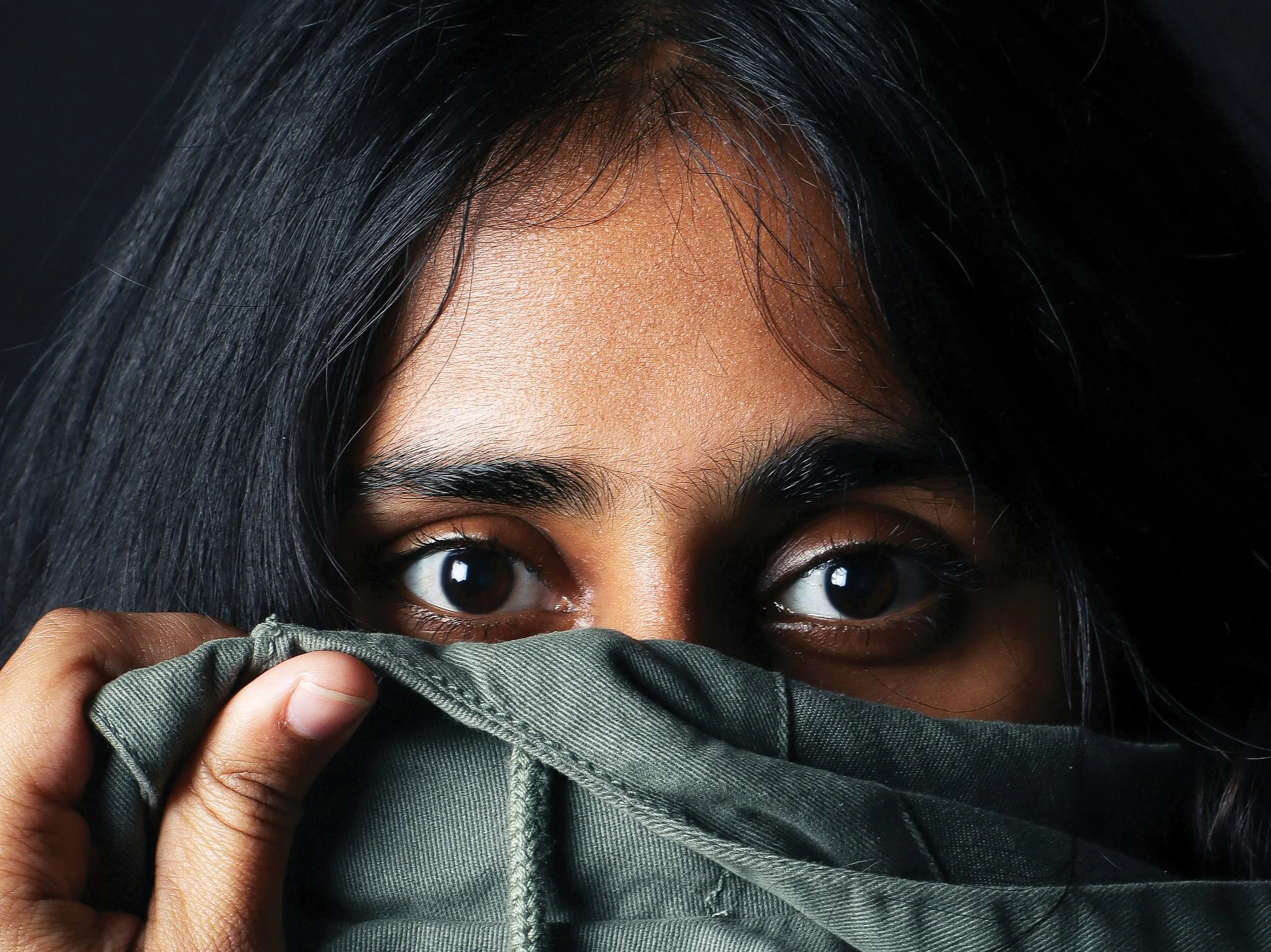
“We need to pull away from this shroud of silence.” Image credit: HARSHIT SOLANKI on Unsplash.
“The goal is to reduce barriers to services,” says Gill. “We also have childminding services. There are so many women who don’t seek help because they don’t know where to leave their children while speaking to someone at an agency.”
Does providing “culturally responsive” services also include educating the victims themselves about everything that constitutes abuse? And helping them overcome the stigma associated with reporting abuse? Because many South Asian women don’t recognize verbal or emotional abuse and are reluctant to report abuse that their extended family might be saying will bring shame to them.
“We see a lot of that,” concurs Gill. “When it comes to South Asian culture, it is deeply connected to patriarchy and verbal and emotional abuse is normalized. Because of this, by the time victims come to us, the abuse has escalated, it is much more severe and police are usually involved.
“We respect the cultural background and beliefs of the victim. We’re not here to say, ‘You need to do this,’ to someone under the power and control of her partner. We’re here to gently educate, to show that it’s a part of a pattern of behaviour. When I worked on the front-lines I’d pull out the Power Control Wheel and show research to help them see they are not alone, they are not to blame.
“What is really hard on us, the staff, is when she goes back. We know that in many cases the violence can be worse when she returns, it can erupt without warning as the men double down, knowing there’s no recourse for the woman. But if she makes that decision – not to go forward with seeking help – we ensure she knows that we’re there for her.”
Coming to the “Why didn’t she just leave?” question, as though financial insecurity, threats of violence against children and family members, and manipulation aren’t huge factors, Gill says that is a common response outside of the sector.
“We need to shift that narrative, to ask why does he abuse? Why is her intimate partner, someone she’s supposed to love and trust the one she fears the most? Why does he say things to decimate her self confidence, to strategically isolate her?”
Sex trafficking is one of the most misunderstood – and one of the most extreme – forms of gender-based violence in Canada and the reality is far more complex than the public realizes, wrote Monika Rekola in Newmarket Today.
Contrary to popular misconceptions, sex trafficking rarely begins with kidnapping by a stranger. A staggering 92 per cent of victims knew their trafficker beforehand. That statistic is devastating – but not surprising.
“What is sex trafficking can present as IPV,” says Gill. “She believes she’s in a relationship with him, but he is trafficking her. And we’re seeing it at a younger and younger age. We had a case where he was so manipulative that he had her charged. We were able to work with child welfare and police to have the charges dropped and she was reunited with her baby. Children are pawns, collateral to punish the woman. Not because he wants them, but because it will hurt her, or because fighting for custody will rack up legal costs.”
She talks about the time she had just done an interview with City TV and everyone went for breakfast after. They were still discussing the topic, and recognizing Gill from the interview playing on television screens at the restaurant, a waitstaff approached her. That was exactly her story, she shared. She had had to move back with her parents and was $150,000 in debt, just to have custody of her child.
“They take second mortgages, get a line of credit, do whatever it takes to survive and to keep their kids. Honestly, these women are incredible. Their resilience, their bravery, it’s amazing.”
There’s a book, Looking For Jane by Heather Marshall, in which “Jane” is code for a group of daring women who operated an illegal underground abortion network in Toronto in the 1970s.
The network includes activists, physicians and nurses, all fighting for the right to choose.
It was inspired by true stories.
If a woman asks for Angel Shots at a bar, that’s a way of letting the bartender know she feels unsafe, I learnt recently.
Then there was the sign language developed by Canadian Women’s Foundation that alerted others to a woman in distress or in an unsafe situation.
Why do women have to hide to seek certain services or help and protection? It’s a rhetorical question, because the answer is evident – in a large number of cases, they are seeking protection from danger within their own four walls.
Or from people they know.
When will things change?
Jaspreet Gill’s response is calm, matter-of-fact.
“Not in my lifetime, no. That’s the honest answer. We need seismic change. If we were taking all the steps we need to disrupt violence against women, to end misogyny... This needs to be a mainstream conversation, not a hidden one. Because these women are never free of control. Men manipulate the children against their mothers who are not saying anything to protect their kids.
“And it’s widespread. When I was growing up, I didn’t know this, but three aunties were being abused. I realized this only when I became aware of the signs. So wherever I go, I don’t shy away from talking about what I do, about our work. Whether it’s with waitstaff at restaurants or with my dental hygienist. We need to raise awareness. To pull away this shroud of silence. We can’t conflate ‘cultural practices’ with abuse, can’t risk women’s lives in the name of tradition. We can’t compromise the safety of countless women and children.”
Every 48 hours in Canada, a woman or girl is killed because of gender-based violence.
Contact the Women’s Support Network, York Region Centre for Community Safety and York Regional Police human trafficking team at 1-866-876-5423, ext. 6800 or humantrafficking-team@yrp.ca. Call the national human trafficking help line at 1-833-900-1010.
If there is immediate danger, call 911.
SIGNS TO WATCH FOR AT WORKPLACES
From NEWS CANADA
For many young Canadians, the workplace is their first step towards independence. Unfortunately, it can also be a place where they might experience gender-based violence (GBV) for the first time.
GBV in the workplace might look like:
• Inappropriate comments or discriminatory jokes.
• Requests for “dates” from a supervisor, manager or coworker, sexual comments, touching, or invading personal space.
• Harassment from supervisors, coworkers or even customers.
What you can do to help. Trusted adults play a critical role in supporting youth through these experiences. If a young person confides that they’re dealing with harassment or abuse at work, the most important thing you can do is listen, believe them and remind them that they aren’t at fault. Encourage them to document what’s happening to them and help them connect with resources that can help protect their rights and safety.
More info at canada.ca/itsnotjust.
SHE’S NOT JUST A VICTIM, SHE’S SOMEBODY
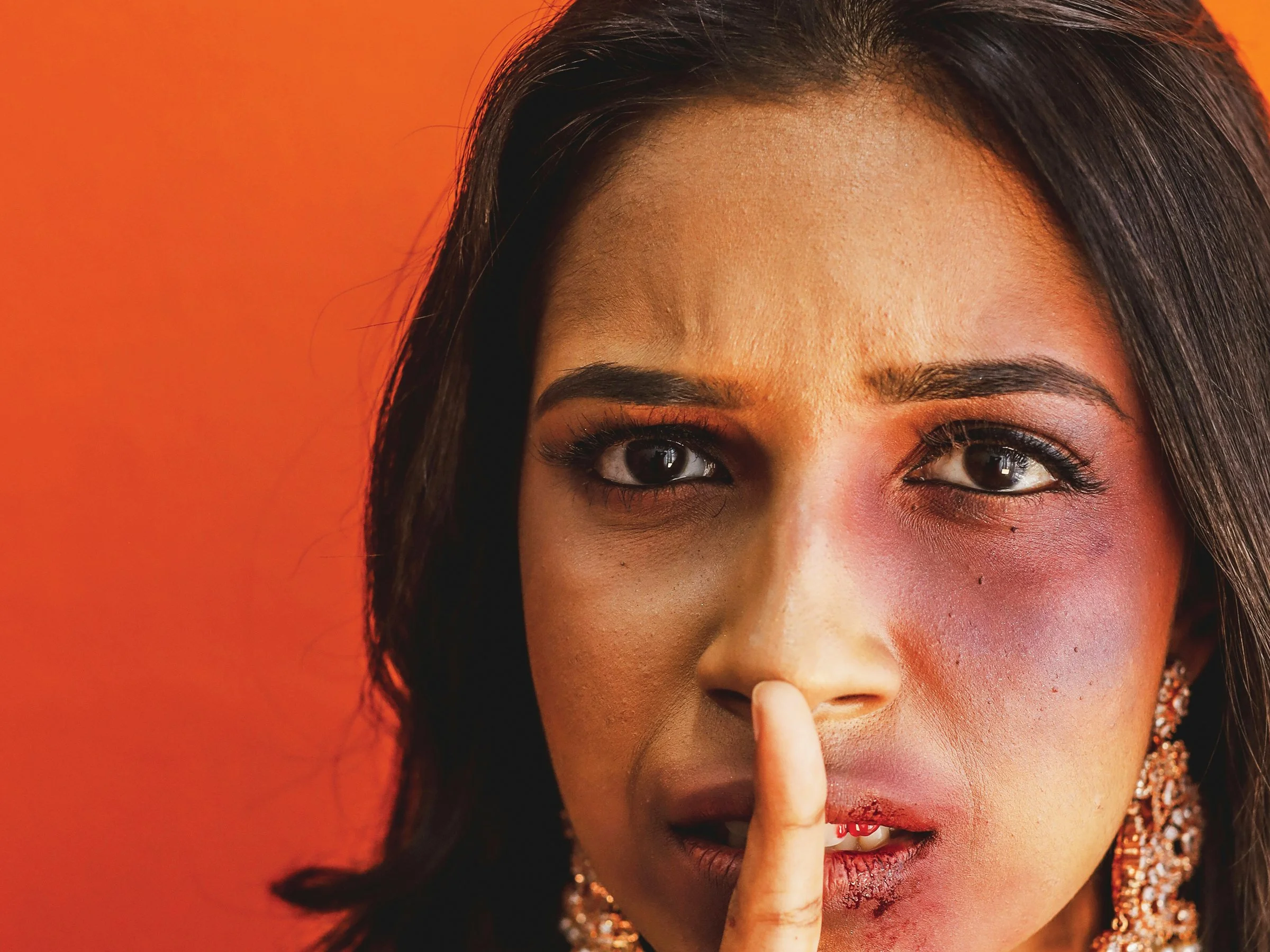
Why do women have to hide to seek certain services or help and protection? Image credit: KOGULNATH AYAPPAN on Unsplash.
From THE CANADIAN FEMICIDE OBSERVATORY FOR JUSTICE AND ACCOUNTABILITY
The Canadian Femicide Observatory of Justice and Accountability (CFOJA) launched Too True Crime podcast, with 580 episodes, one for each woman killed by femicide since 2020.
CFOJA is a grassroots initiative dedicated to preventing femicide (sex- or gender-based killing of a woman or girl) and other forms of male violence against women and girls in Canada.
“The Too True Crime podcast directly confronts the normalization of this violence, moving the conversation from entertainment to education and activism,” says Myrna Dawson, Founder and Director of the CFOJA, and a Professor of Sociology at the University of Guelph.
“Femicide is an escalating crisis, to make real change, Canadians must unite in demanding that the federal government recognize femicide.”
“To literally be the voice and keep the memory of these women alive is so important in this ongoing battle for justice,” says Denise Halfyard, a voice actor who recorded an episode about her cousin, Tamara Chipman, who has been missing from the Highway of Tears since 2005.
“These women are not just victims. They are mothers, daughters and friends. She matters. She is somebody.”
CFOJA is calling on Canadians to hear these women’s stories and lend their voices by visiting TooTrue Crime.com to sign the petition, urging the Canadian federal government to officially recognize femicide and work towards the inclusion of femicide in the Criminal Code of Canada.
Listeners can subscribe to the podcast, now available on Spotify and Apple Podcasts, to hear the devastating stories behind why we must all demand justice.