
GET GROWING!
THE REAL PURPOSE OF A GARDEN
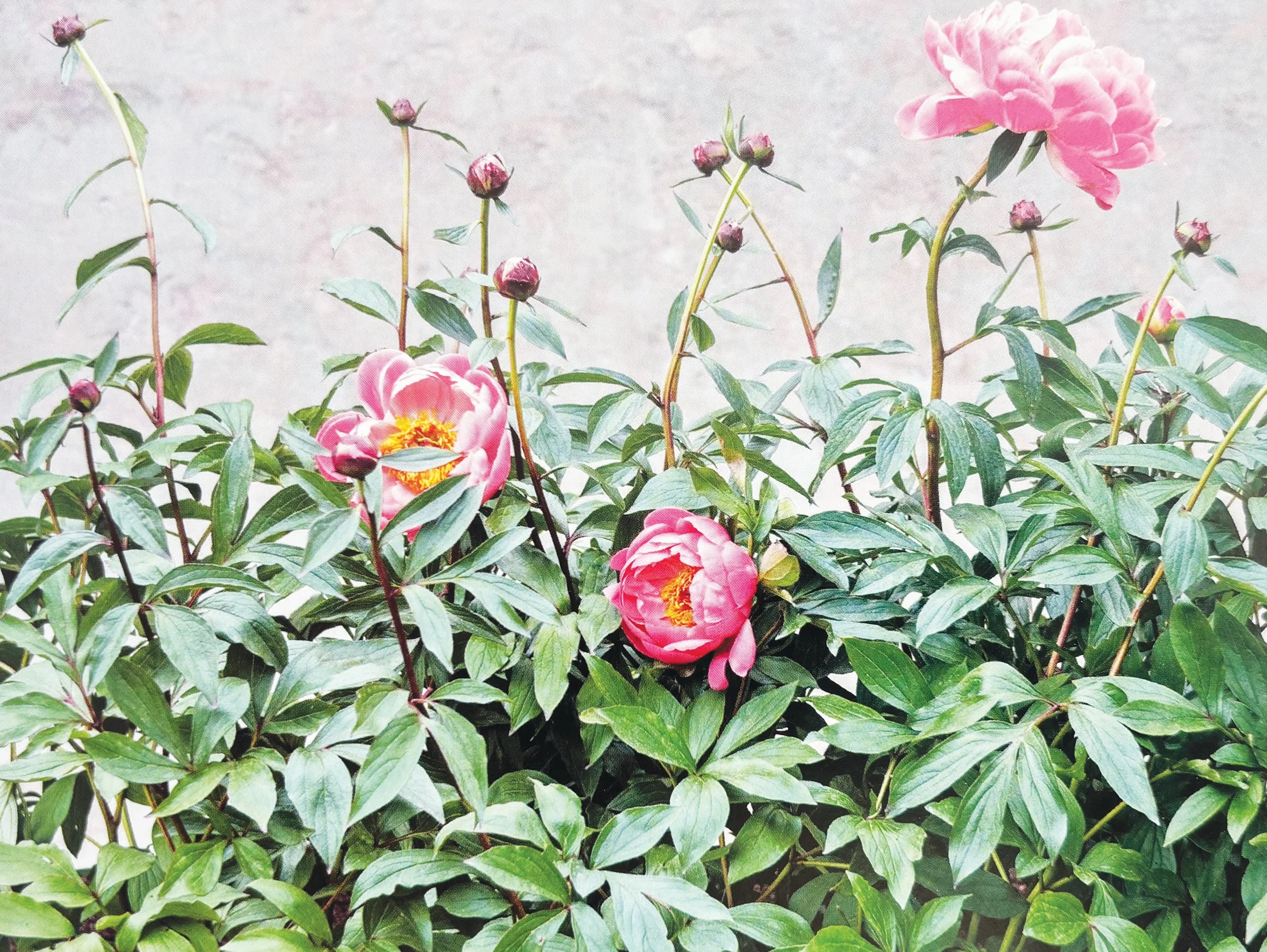
Peonies are iconic staple cottage garden plants.
By LADYBUG
“In loving memory of my grandma, who introduced me to the real purpose of a garden, to be enjoyed, and preferably with a large glass of something cold.”
With a dedication like this, I know I am in good hands.
Specially when the opening lines describe me to a T.
“Have you ever stood in a garden center, overwhelmed by the choices, with hundreds of different plants, all with fancy Latin names and unfamiliar technical information? What starts off as a well-intentioned day out, with aspirations of reigniting your unloved garden, can result in your leaving $100 poorer with a tray of pansies and some plants you’ve never heard of before in full flower – only to discover they don’t work well together, and rapidly die.”
Coming to the rescue, Jamie Butterworth presents over 60 different plant combinations, all of which he has tried, tested and grown. All of these can be adapted for any location – in the ground, in a container, on a balcony, in a small garden or a large yard.
What more can you ask for? Other than some good old grandmotherly advice, of course?
The first combination of sage, melica and peonies in shades of pinks and purples has me impatient for spring.
Another one with bright oranges and pinks with meadow rue and euphorbia dominating the grouping defies the “calming and delicate “ spring palette of soft shades of pinks and green. But it has me itching to move clumps of my meadow rue from the back of a border to allow them to drift through other plants, as Butterworth suggests. I can totally see his point, they would not only look more natural this way, it would avoid creating blocks of plants.
I absolutely love combination 5: White pasqueflower, red pasqueflower, Mexican feather grass and bearded iris. I have all of these, scattered around my garden, but never thought of grouping them together.
Another combination of hazel, ferns, cranesbill and columbines recreates the magic of a forest coming to life each spring. While the one with different types of hostas and white cranesbill is calming, another with ferns and primula, also for a shady corner of gardens is bright with what he descries as “the jewel-like colour these primulas provide, like a bag of Skittles scattered among the forest floor”.
I’m delighted to see one of my perennial favourites, lily of the valley, show up in a combination as it has been receiving some negative attention in recent times due to its enthusiastic (some call it invasive) nature.
Combination #15 is peonies. Just peonies. Butterworth obviously loves them as much as I do, describing them as an iconic staple cottage garden plant. He lists the varieties Sarah Bernhardt and Coral Charm as his favourites and grows them together for maximum charm.
His first combination for the summer months is a showstopper with vivid pinks, consisting of Lilac Beauty yarrow, purple loosestrife, purple lobelia and sage pink Amistad.
Butterworth creates a colourful cluster of pots with just one plant each – different coloured cosmos, verbena, moor-grass, sweet peas – and it looks gorgeous. I have to admit I’d never have thought to grow cosmos or sweet peas in pots. The first are scattered around my garden and the second, trained up the fence in the backyard. But now I intend to put my collection of clay pots in random shapes and sizes to good use!
Butterworth’s tips include pruning out lower branches of a large specimen to allow underplanting to drift through.
• Cutting flowering stems for a bouquet encourages the plants to keep blooming.
• For a summer resurgence and to keep pops of colour coming throughout spring, sprinkle a packet of summer-flowering annuals (cosmos or verbena would work brilliantly) directly into combinations in late spring.
• Buy and plant peonies as bare root plants with no soil on their roots. This is a much more affordable way to buy peonies, which can otherwise be alarmingly expensive, especially if they are pot-grown and bought in flower. It also helps save the planet, one plastic pot at a time.
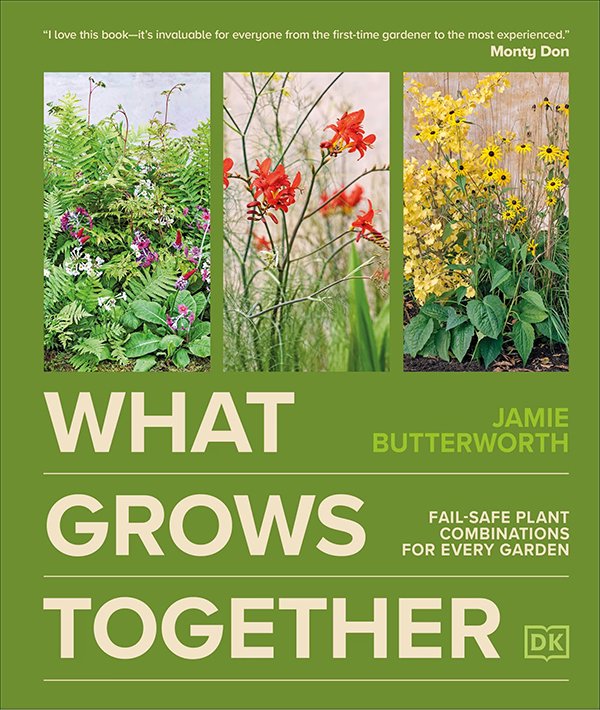
What Grows Together by Jamie Butterworth is published by DK, $35.99.
There are so many beautiful and unexpected combinations. Several of the plants are new to me and I am excited to bring them home, but I am even more excited about moving some of my existing plants around to try out the combinations Butterworth has created.
There’s tons of sane, no-nonsense advice, too. To wit: I have been gardening my whole life, and no matter how much you care or look after something, sometimes it just doesn’t work out as intended. Don’t take it personally, it’s not you. Dig out the offending specimen and compost it. Unless you can pinpoint what went wrong (and how you can correct it), replace it with something else.
Failure is not something one wants to admit to, but any gardener will tell you we’ve all killed more plants than we can count.
Moving on to others is the perfect way to greet this new season in our gardens!