
SENIOR MOMENT
THE WALLS WE BUILD TO KEEP OTHERS OUT LOCK US IN OUR OLD WAYS

Ultimately, what wins hearts is not wealth or credentials, but warmth, generosity, and compassion. Image credit: RDNE STOCK PROJECT on Pexels.
By DR CHANDRAKANT SHAH
A few decades ago, during a visit to Nairobi, Kenya, a distant relative I was staying with took me to a Jain temple.
The temple itself was elegant and well maintained, yet what struck me immediately was its setting: it was surrounded by a ten-foot-high wall, almost fortress-like. I noticed a similar arrangement around a nearby Hindu temple.
Later, on my journey from Nairobi to Serengeti National Park, I saw a very different picture. Almost every fifty kilometres stood a church, often with a school nearby. African children in uniforms walked in and out freely. The contrast was striking. Indian religious institutions appeared inward-looking and protected, while Christian institutions seemed open, visible, and woven into everyday community life. That memory stayed with me, not as a criticism of faith, but as a reflection on how communities present themselves to the wider society.
If we look at the experience of the South Asian diaspora globally, the story is mixed. Economically and professionally, the diaspora has done remarkably well. Yet history also records moments of profound vulnerability. South Asians were expelled from Uganda in 1972. Democratically elected South Asian prime ministers in Fiji and Guyana were ousted. Even today, subtle and overt forms of exclusion persist.
In recent years, highly accomplished individuals of Indian origin, including some political figures in the west – have faced racist backlash for something as simple as sharing Diwali greetings. Others have been told to “go back to where you came from” and worship their gods there. Sundar Pichai’s mother was once followed by security in an elite London department store simply because of how she looked.
These incidents have many causes, including racism, misinformation, and political opportunism. But they also invite introspection. Rather than blaming others alone, it is worth asking what lies within our own control – and how we can integrate more fully and confidently into our adopted country.
The Indian diaspora today numbers more than 34 million people, spread across nearly every continent. Its contributions to business, medicine, science, technology, education, culture, and public service are widely acknowledged. Yet admiration sometimes coexists with discomfort or resentment. Understanding this tension is essential, not to diminish our achievements, but to ensure that success is accompanied by belonging.
The real question is not why resentment exists, but what can be done to reduce friction and build trust.
The focus must be on solutions.
Building cross-cultural openness and social integration. A common perception – fair or not – is that South Asian communities tend to remain insular, living in clusters, socializing mainly within their own circles, and engaging minimally with local customs. Preserving heritage is valuable, but integration requires intentional openness.
Participate actively in civic life: Joining neighbourhood associations, parent–teacher councils, volunteer groups, charitable boards, and local initiatives helps others see South Asians as partners in community-building, not as a separate enclave.
Foster intercultural friendships: Relationships across cultures are among the most effective antidotes to misunderstanding. Inviting neighbours to Diwali or Eid celebrations, attending local festivals, or simply sharing a meal can humanize difference.
Learn social norms, not just language. Integration goes beyond fluency in English or French. Understanding local communication styles, humour, negotiation norms, and social etiquette can prevent unintended friction, especially for new immigrants.
Pairing achievement with humility and soft skills. South Asians abroad often rise quickly through education, diligence, and strong family networks. While admirable, visible upward mobility can sometimes be misread as arrogance – even when none is intended.
Model humility in professional settings by acknowledging team contributions. Expressing gratitude, and avoiding unnecessary comparisons help build goodwill.
Adapt communication styles by avoiding the direct, analytical style common in Indian professional culture which may clash with environments that value consensus or subtlety. Training in emotional intelligence and intercultural communication can make a meaningful difference.
Become a mentor for individuals from diverse backgrounds, it challenges the stereotype that we advance only our own.
Confronting internal biases: Caste, class, and regionalism. One of the most damaging exports of South Asian society is the persistence of internal hierarchies abroad. Caste consciousness, regionalism, and class-based exclusion are deeply out of step with multicultural values.
Build inclusive community organizations. Cultural associations should explicitly reject caste and regional divisions, both in membership and leadership.
Create spaces for honest dialogue. Just as communities discuss mental health or parenting, they should address inherited biases openly and critically. Empower younger generations. Second- and third-generation South Asians often hold more inclusive worldviews. Their leadership can help reshape community norms.
Strengthening belonging without competing loyalties. Host societies sometimes question whether diaspora communities are more invested in home-country politics than in local civic life. Importing political rivalries from South Asia into Canada can deepen this suspicion.
Prioritize local engagement. Cultural ties to the home country are natural, but public energy should be focused on Canadian institutions, issues, and democratic processes.
Celebrate culture without political aggression. Festivals, arts, cuisine, and spirituality enrich society; aggressive political nationalism in public spaces often alienates others. Embrace dual belonging. Healthy integration allows pride in one’s heritage while fully embracing Canadian values and responsibilities.
Addressing economic tensions with fairness and inclusion. In fields such as technology, healthcare, and small business, South Asians are sometimes perceived as dominant. This can fuel narratives of exclusion or unfair competition.
Encourage collaboration, not clustering. Professional networks that include diverse backgrounds foster partnership rather than suspicion.
Promote knowledge-sharing. Being seen as mentors rather than gatekeepers reduces resentment and builds respect.
Champion transparent hiring practices. Supporting merit-based and inclusive recruitment reinforces the values of fairness and opportunity.
Improving public perception through storytelling and visibility. Negative perceptions often persist simply because personal stories remain untold. Share authentic narratives. Stories of sacrifice, service, and contribution – especially in healthcare, education, and small business – humanize the diaspora.
Increase representation in mainstream institutions. Participation in school boards, local councils, arts organizations, and community media builds trust. Highlight role models of integration. Individuals who are proudly South Asian and deeply Canadian provide a powerful example for others.
Making generosity and kindness our cultural signature. Ultimately, what wins hearts is not wealth or credentials, but warmth, generosity, and compassion.
Be visibly involved in local causes. Supporting food banks, refugee programs, environmental initiatives, and community services demonstrates shared values. Good deeds should be visible.
Extend giving beyond the community. Philanthropy should reach beyond temples and cultural organizations into the wider society.
Practice everyday kindness. Small gestures – helping a neighbour, supporting a colleague, engaging respectfully – create lasting impressions.
The South Asian diaspora has much to be proud of. It has endured migration, discrimination, and cultural displacement to become one of the world’s most accomplished global communities. But success brings responsibility. When discomfort or resentment arises, the answer is not defensiveness. It is leadership – rooted in humility, openness, civic engagement, self-reflection, and generosity. Integration is not only about changing how others see us; it is also about how we see ourselves in relation to the societies we now call home.
If the South Asian diaspora embraces this broader vision of citizenship, it will not only reduce friction but elevate its moral standing. In doing so, South Asians in Canada can move beyond being successful residents to becoming cherished members of society – respected for their character, valued for their contributions, and trusted as partners in building a shared future.
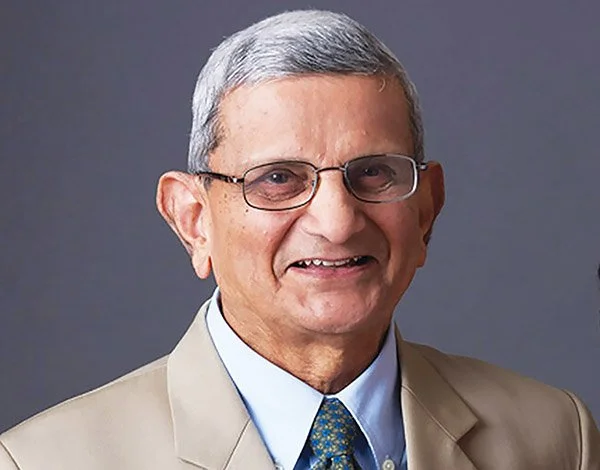
Chandrakant Shah, MD, FRCPC, O.C., O.ONT., Dr. Sc. (Hon), Professor Emeritus, Dalla Lana School of Public Health, University of Toronto, is an honorary consulting physician, Anishnawbe Health Toronto. He is the author of To Change the World: My Work With Diversity, Equity & Inclusion in Canada.