
MY TAKE
THE HEALTH HAZARDS HIDING IN PLAIN SIGHT
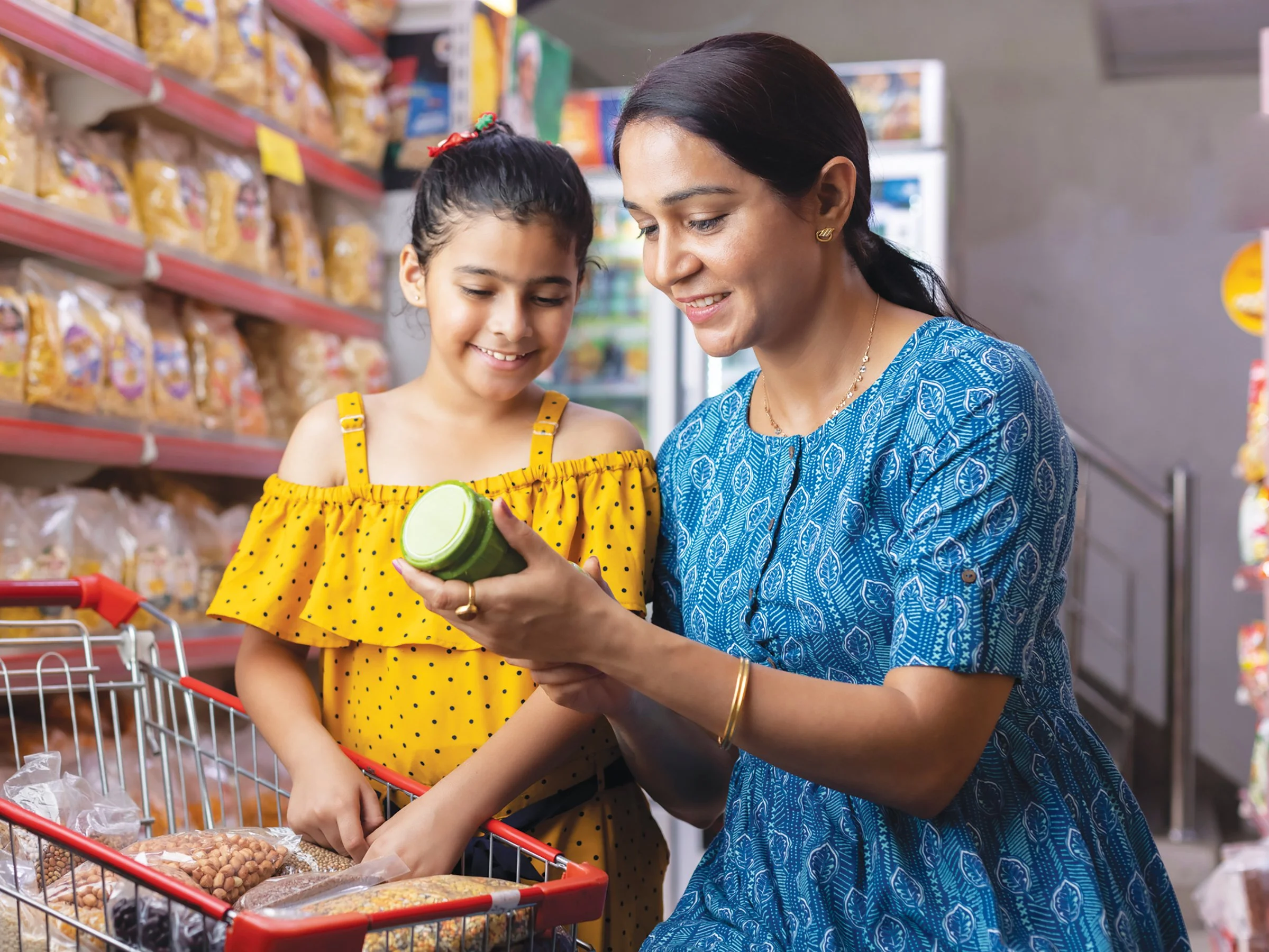
The so-called “healthy” alternatives aren’t that healthy. Image credit: NEWS CANADA.
By SHAGORIKA EASWAR
Measuring out copious amounts of ghee and sugar for Diwali mithais, or butter and different kinds of sugar for Christmas baking, I confess to having felt mildly superior to those turning to alternatives.
Not just because the so-called “healthy” alternatives aren’t that healthy, but also because, well, I make “serious” mithai once a year, and I was going to make it an indulgence. What was good enough for my mother and grandmother is good for me.
Besides, the idea of a low-fat laddoo is just not that tempting!
But over time, I’ve come to realize the sheer volume of sugar hidden in foods we consume every day. Sauces, colas, desserts, are obvious culprits, but sugar is present in even foods we mistakenly assume to be healthy.
Granola and fruit yoghurts top my list of such foods.
Food activist and New York Times best-selling author Vani Hari described Fig Newtons that I purchased countless boxes of as snacks for our kids as staples in the pantry and in her lunch box when she was growing up.
In her book Feeding You Lies, she writes, “The newer version claimed to be 100 per cent whole grain, made with real fruit. Sounds healthy, right?
“I read labels like they’re bestsellers, so when I took a closer look at the list of ingredients in this cookie, my jaw dropped. I couldn’t believe how many processed chemicals they contained. There was sugar under at least three different names, and artificial flavourings... Fig Newtons are a perfect example of how chemicals are replacing nutrients in the foods we eat. They contain some of the basic ingredients we’d use to bake our own cookies, like flour, sugar and baking soda, but most of the ingredients are not what you’d find in your pantry. Many of them can’t even be purchased in a grocery store.”
She has led campaigns against food giants like Kraft, Starbucks, Chick-fil-A, Subway and General Mills that led to the removal of several controversial ingredients used by these companies.
But the love for sugar is hardwired in us. Even those who’ve never had it discover their sweet tooth quickly..
A toddler being introduced to her first solid foods smacks her lips over mashed banana, blueberry-raspberry mix, apples and peanut butter, mango, and even sweet potato. Mashed avocado, not so much, And mashed broccoli with peas is met with a firm turning away of the head.
A gentleman who had been diagnosed with diabetes had sugarless tea. For someone raised on the standard two teaspoons per cup as desis of a certain generation were, it was a sacrifice he bore with a brave face.
Until giving in and consuming a whole pot of rabri. Occasionally, but still.
Once upon a time I was that person, two teaspoons of sugar in every cup, and at least three cups a day. I remember a friend of mine asking me if I was using up a week’s quota of sugar – her cup of tea was just barely sweetened with a quarter teaspoon. She also described her family’s version of green tea, which contained salt, and asked if we had something similar.
“We do, we call it soup!” I responded.
Another gentleman still takes four – yes, four – teaspoons in each cup of tea. After a heart attack and watching his diet on all other fronts.
In an attempt to detox our diet, and in what I call my Little Women mode, I decided to make my own granola. From scratch. Oats, nuts, maple syrup or honey. Good and clean? The recipe also called for dried blueberries. They were out at the grocery I frequent, but I saw packets of dried mixed berries. With sugar. Now I can understand cranberries being sweetened, but if we can have raisins and dried apricots, figs and blueberries without added sugar, why did the mixed berries need any?
I turned to dalia, or a porridge made from broken wheat, a winter staple in my grandmother’s home. I made it with dairy-free milk and sweetened it with some fruit or a date or two, believing I was starting my day in a good old-fashioned healthy manner.
Until I became aware of a little problem. Gluten. While I’m not allergic to gluten, it’s perhaps best not to consume too much of something that can trigger adverse inflammatory, immunological, and auto-immune reactions in some people. But then gluten is found not only in all species of wheat, but also in barley, rye, and some varieties of oats.
So what’s a woman to do?
Bake her own bread? With what? Rice is an obvious choice, but I don’t fancy khichdi or kheer for breakfast.
My search for alternatives led me to other ancient grains like sorghum (jowar), quinoa, corn, millet (bajra), sattu (roasted chickpea flour) and amaranth, etc. Our elders sure knew what they were doing.
Just a spoonful of sugar helps the medicine go down
In a most delightful way.
But the inimitable Julie Andrews didn’t have access to the research we now do. As do our policymakers. In a country with public health, shouldn’t products be labelled more clearly? Shouldn’t there be more information available about the dangers of over consumption of sugar?
I don’t want to turn paranoid over occasional treats but when Harvard Health Publishing warns that too much added sugar can be one of the greatest threats to cardiovascular disease, I do want to be careful.
According to a study reviewed by Mallika Marshall, MD, “Consuming too much added sugar can raise blood pressure and increase chronic inflammation, both of which are pathological pathways to heart disease. Excess consumption of sugar, especially in sugary beverages, also contributes to weight gain by tricking your body into turning off its appetite-control system. Liquid calories are not as satisfying as calories from solid foods, so it is easier for people to consume extra calories when drinking sugary beverages.
“All of these negative effects of excess added sugar intake – higher blood pressure, inflammation, weight gain, diabetes, and fatty liver disease – are linked to an increased risk for heart attack and stroke.
“How much added sugar is okay?
“What is the right amount of added sugar? As little as possible.”
Looking for Ovaltine for a cousin who was visiting from India and likes to start her day with a cup of the malted beverage, I noticed two types. One with an alert about high fat and sugar content and the other, without. Then, as often happens when you become hyper aware of something, another note on a packet of besan burfi – high in saturated fat. And on a loaf of bread, on it being high in sodium.
It’s that simple – the new nutrition label tells you at a glance if the food is high in saturated fat, sugars, sodium or any combination of these nutrients.
Or not. Because I can’t decipher this many calories of this or that. And I’m not alone.
Scientist, doctor, researcher of ultraprocessed food, and award-winning BBC broadcaster Chris Van Tulleken writes in Ultra Processed People “In the UK this system of highlighting the levels of fat, saturated fat, salt and sugar is entirely voluntary (many other countries have similar systems).
“For marketing purposes in the UK, packaged food is formally categorized as High in (saturated) fat, salt and sugar, or HFSS, (or not) by something opaquely called the Nutrient Profile Model.”
Opaquely being key here. Because it takes a whole page of text for Van Tulleken to help readers try to make sense of this system of labelling.
Then he shares numbers which have me shaking my head in disbelief:
One a scale of impact on blood sugar, if glucose is 100, then white bread is also 100.
Rice Krispies are 95, Kellogg’s Corn Flakes (as sold in the USA) are 92, Alpen is 55, Special K (as sold in France) is 54 – the same, roughly as porridge – Special K (as sold in the USA) is 70 and in France is 84. Skittles are 70. A Snickers is only 41. Carrots range from 32 to 92. Table sugar is around 60. It’s hard to know what to make of this variation, other than it shows the limitations of thinking about food in terms of glycaemic index.
Just print high fat-high sugar on the package and we’ll get it. And move past it to a safer, healthier option.
Learn more about how to tell what’s in your food at canada.ca/nutrition-labelling.