
GRANT’S DESI ACHIEVER
A BRIDGE ACROSS CULTURE DIVIDES
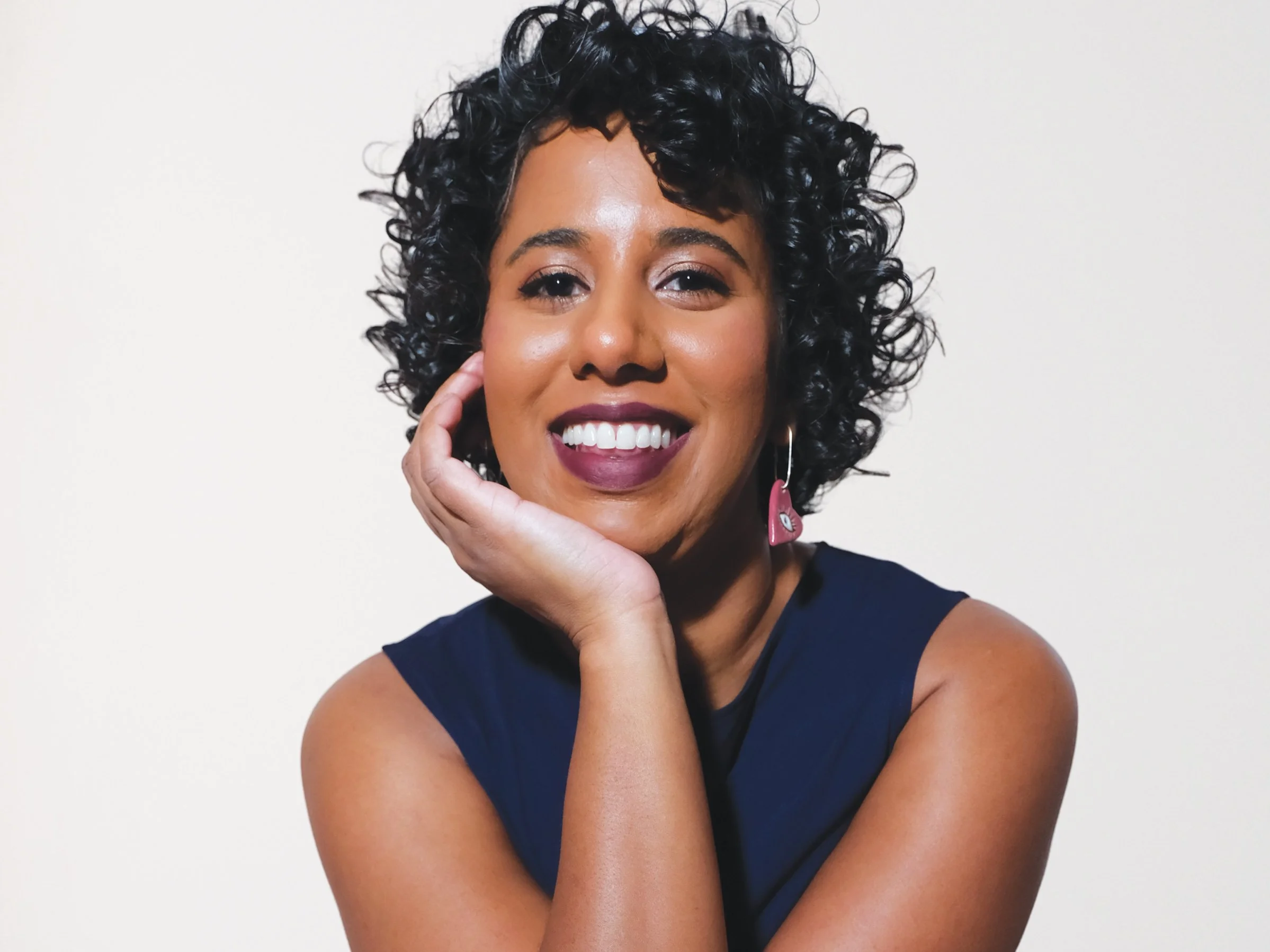
Kalpana Srinarayanadas, inclusive arts advocate. Image credit: SUCHAINA MEHAN 2023.
Grant’s is proud to present this series about people who are making a difference in the community.
By SHAGORIKA EASWAR
Kalpana Srinarayanadas is widely regarded as a champion of diversity in the arts communities. Her extensive experience across the arts and cultural sector, and her deep understanding of the evolving needs of creative communities, has helped expand opportunities and advance equity.
Having spent over 15 years in the sector, she has worked with the Toronto International Film Festival, the British Film Institute, the Royal Ontario Museum, and Canadian Stage.
She served as Executive Director of Regent Park Film Festival.
“It is a small community festival, but it was based in Canada’s oldest public housing neighbourhood which has been going through a revitalization project. Our mandate there was also supporting and showing films made by Black, Indigenous, people of colour, and ensuring all the programming was free because we wanted to make arts accessible.
“For me, especially the last couple of years, in these highly political times, not shying away from telling stories that may be political or controversial, is very important. It’s something that I’ve advocated for. For me, it’s always been important that the work I do aligns with my values. I want it to have a positive impact in the world. And so as I’ve gotten older and had the privilege to be able to make choices, I’m pretty intentional about how I spend my time and the people and organizations I want to support.
“All art is political. Because it reflects an experience. It gives voice to the oppressed, creates a sense of belonging.”
Over the course of her career, Srinarayanadas has enhanced resources and developed strong systems and operational frameworks to maximize organizational impact.
Most recently, she served as Managing Director of the Reelworld Screen Institute and Reelworld Foundation.
“My career has been mostly on the fundraising side, advocating for artistes. I’m good with a spreadsheet and so I always joke that I support people more talented than myself. I love to consume art, I want it to continue.
“Oftentimes, the barrier for people is not knowing the right people, not knowing all of the ins and outs. Growing up, I didn’t even know careers like that existed.”
Responding to a question about the need for organizations which work with people of colour today – aren’t we being represented in the arts? – Srinarayanadas quotes British actor Riz Ahmed.
“He’d just come out with his new show, Bait, and was talking about this idea of people who look like him finding a place at the table. And he said, trying to fight for your place or prove that you are worthy is no longer the thing that we should be doing. We should be building our own table, creating our own opportunities. We shouldn’t have to convince the historic gatekeepers, the decision makers, that our story is good enough.”
Flipping the question, with DEI practises being rolled back and anti-woke catching on, is this work more relevant today?
“Definitely. There’s a need across the board, but it’s even harder for people of colour. Take a film with a cast that is primarily non-white or a non-white director, you get the one chance. If it doesn’t do well at the box office, it’s one strike and you’re out. We have to be the best and successful right out of the gate and we don’t often get second or third chances.
“Creating the tools and resources for people to build their own table is really why this work is important.”
Srinarayanadas and her brothers were born in England. Her parents are from Jaffna in Northern Sri Lanka and they moved to England when they were 19 and 21. Her dad was fleeing the political situation and her mom went in the 70s when they were recruiting nurses from the colonies. The family moved to Canada in 1989 when she was three, and settled in Winnipeg.
Where there were maybe 60 Tamil families at the time.
“It was a very small community. I grew up with my dad’s side of the family – his three sisters and their kids. It was very intentional for the family to teach us Bharatanatyam, our pujas, celebrating Navaratri... those were the ways that they connected us to our culture, and what we were missing growing up in Winnipeg. Unfortunately, I don’t speak Tamil very well. Because my parents experienced a lot of racism in England and in Canada, they were insistent that we spoke English well. The idea that people won’t judge you if you don’t have an accent. So I grew up with Canadian shows. We watched Tamil films occasionally, but because I didn’t necessarily understand it, and in the 90s, you had to get bootleg VHS which didn’t have captions. And so the culture that I consumed was sort of curated.”
The weather was harsh. And certain other things set the family apart – a rice and curry dinner, but a ham and cheese sandwich for lunch at school, for instance.
“It was really kind of a secret thing that I didn’t talk about with my friends. What we did at home was very different than the world at school. It is this idea of the third culture. The Tamil culture at home, Canadian culture in school, and you have your own hybrid of the two that you create for yourself.
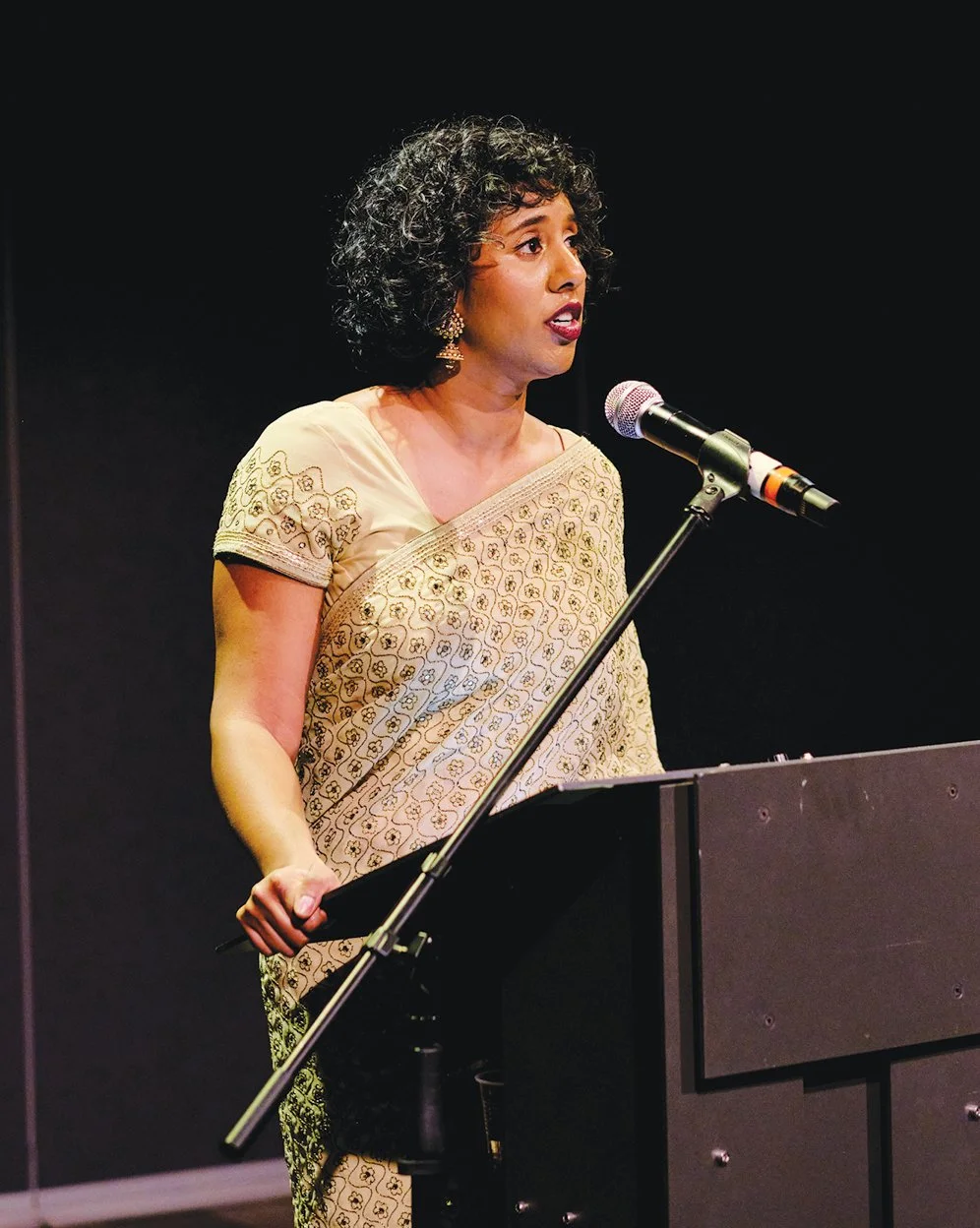
“Take the time to know yourself and know what your values are to create that direction for yourself.”
“Part of it is dissociating yourself from the negative aspects of what people see in your culture. The smell, the smelly food or the clothes that you wear.
“When I was at Regent Park, at every opening night, I would wear a sari, because that’s the sort of thing that growing up, especially in my early 20s, when I was still building my confidence, I would only have worn to a South Asian event. But it meant having to figure out how you can embrace your culture while not denying what you had to do to seek a sense of belonging.
“Even something as simple as my name. It’s a very common name among South Asians, but not here. As a kid I had a nickname, Kalvi. As I got older, I would introduce myself as Kalpana.
“At one of my workplaces, on my first day, my boss said, ‘Do you mind if we call you Kal, because Kalpana is hard to say.’ And I made a joke. ‘Kal reminds me of Hal, the robot from 2001: A Space Odyssey. So just call me Kalpana.’ I stood my ground, but I had to make a joke to do it.
“At the same workplace, it came up that I was born in England and someone said, ‘Oh, that’s why you speak English so well.’ Little comments like that, you learn to pick your battles in terms of where you’re going to be pushing back and where you just have roll your eyes and move on.”
Her experiences growing up, and the stories she heard from her family, inform her work.
“I’m overeducated, I went to school too many times, but I still ended up in the arts because this was always something that I really loved. But – especially coming from immigrant parents – that’s not something that you did for work. So I was going to be a doctor because that’s what you’re supposed to do. I switched to English lit and political studies when I realized I didn’t like chemistry and I’m never going to be a doctor. I went to law school for international law and human rights. In my first year I did an internship at Amnesty International. The next summer, another internship in Shanghai at a law firm and I just didn’t like it. After I graduated law school, I did an internship at the British Film Institute and thought this is the world I want to live in. I found a way to integrate the political and sociocultural, because you can make an impact on the world through the arts.
“My name, Kalpana, means imagination, and it’s also another name for Saraswati, the Hindu goddess of the arts and knowledge. I always say my parents manifested the life I live now, naming me Kalpana! And so I did more unpaid internships because that’s what you had to do to just get your foot in the door. My first paid job at Tafelmusik Baroque Orchestra was half fundraising and half receptionist. My parents were mortified. You have a law degree, you are answering phones?
“I’ve always been a bit stubborn, but also very clear about my plan and with an idea of where I wanted to go. I knew that this job would help me get the connections to get a job at TIFF, where I wanted to be. But my parents were like, what are people gonna think?
“I know they worked very hard to get us to a place where I could get those degrees, have those choices. Being able to take advantage of that – stubbornly or not – is what, in some ways, what they worked hard for, right? I took full advantage of the opportunities they moved here for. They opened the doors and I walked through.”
Srinarayanadas shares these tips based on her journey.
“Working towards a goal is important, but know that nothing is forever. If what appeared to be the perfect opportunity doesn’t work out, you can always leave or pivot. Be flexible.
“Even though you’re working towards something, sticking to your values doesn’t mean that you can’t also try something new. Having conviction doesn’t mean you’re blind to other things. And something that’s right for you today may not be right for you forever.
“Take the time to know yourself and know what your values are to create that direction for yourself. Where can you find that sense of belonging, of community, that will help you thrive and create a safety net for you? While building your career, building that community of support is just as important.
“When I need to take a pause or consider redirection, I have people I trust that I can go to talk things out with.”
• Grant’s is proud to present this series about people who are making a difference in the community. Represented by PMA Canada (www.pmacanada.com).
