
COVER STORY
SCHOLARSHIP WINNERS REVEAL THEIR SECRETS

According to the Universities Canada website, 1.4 million students – 1.16 million full-time and 444,000 part-time – were enrolled in Canadian universities in 2025, adding $48.6 billion to the nation’s economy. But at what cost to their families?
By SHAGORIKA EASWAR
The average cost of tuition for Canadian undergrads is around $7000 per annum.
The average cost of post-secondary education – including res and meal plans, etc. – is between $70,000 and $80,000.
The average student debt in Canada is $28,000.
In 2020, 46 per cent of them graduated with student debt according to Statistics Canada. This information is updated every five years.
Way before the immigrant dream of sending sons and daughters to prestigious universities became significantly more out of reach with the changes in OSAP rules effective this month.
Eligible students will now have a maximum of 25 per cent in grants to bank on, down from 85 per cent, which did not have to be paid back – the loan component increasing to a minimum of 75 per cent.
But several bright young minds are headed to universities with generous scholarships that cover both tuition and living expenses in recognition of their academic achievements and outstanding contributions to their communities.
Recipients of the 2026 TD Scholarships for Community Leadership program share the secrets of their success. Hint: It was not all study and no play!
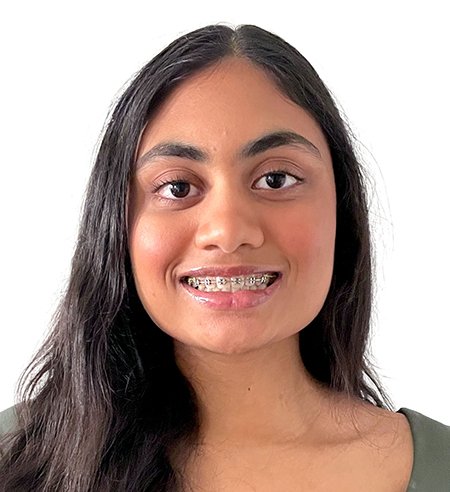
Alpita Patro: “Make some time for yourself.”
The scholarship amount of $70,000 is a “huge, huge thing to me and my family,” says Alpita Patro of Gonzaga High School, St. John’s, NL. “I am able to go to post-secondary full ride because of this scholarship which is good for four years.”
She found out she’d received the scholarship over Easter break. “I was home. It was early in the morning when I found out. I was about to go downstairs and start my workout and then I read my email and it said Congratulations! You received a scholarship. I ran upstairs to tell my mom and dad. That night, my mom went out and got a cake and we cut the cake and had a nice supper as a family to celebrate.”.
What she describes as having done “pretty well at school” involves maintaining an average of above 97. 98 per cent in math, chemistry, and biology. In Chemistry, she had 97 per cent, and in grade 12, 100.
“I blocked out two to three hours a day for catching up on homework and studying for upcoming tests or exams, but I wouldn’t consider myself always studying,” she says.
“I try to maintain a balance between school and personal life, and hobbies and hanging out with my friends.
“I play badminton. I started in grade 7 and I continue to play. I got opportunities to compete provincially. I helped my team win a silver medal at the Newfoundland and Labrador Winter Games. I enjoy swimming and volunteer as a life guard at a local pool. I am also an avid volunteer at a long-term care facility in my community.”
She was first inspired by her grandfather.
“He suffered from severe dementia. He couldn’t remember anything, he forgot our names, or what he’d done an hour ago. At the senior home I saw other seniors struggling with simple everyday tasks such as holding a pencil. These are things we take for granted. It was a combination of my own passion wanting to help these individuals and observing what the biggest struggles of my grandfather and other seniors around me were.”
She founded Creators of Tomorrow to deliver more than 30 science workshops to youth in under-represented Newfoundland communities. And she encouraged her STEM club members to design and manufacture memory puzzles and 3D card holders.
“We’re still in the prototype testing stage, so we’re bringing the memory games and devices to the seniors for their feedback. So it’s a collaborative effort, with their input on what works best for them and other recreational facilitators’ input on what they feel would be more effective or more easy to use, and building it together.
“We’re planning to pass the torch to a new student to carry on the project at our school, but I do hope to and plan to continue to create memory games for seniors throughout my post-secondary. To take this club with me and continue the work I am doing. And now with the TD Scholarship, mentorship and networking opportunities with my cohort and so many alumni, I hope that I can expand my work across the country.”
Alpita is going to Memorial University in Newfoundland for her Bachelor of Science.
“Not entirely sure about next steps, but I’m definitely passionate about healthcare, so seeing how I can help people in that realm. Geriatrics would be of great interest to me. I am also passionate about dermatology. If I am helping someone with their health, I think I would be very happy.
“Five years from now, I see myself, hopefully, attending medical school and continuing my work in my community through Creators of Tomorrow, and helping others in my community, serving others in a greater capacity. I hope to be in a position where I can serve others as much as I can and be able to help them in the ways that my community has helped me.”
Her tip for high school students is to focus on something they are genuinely passionate about and have the drive to do.
“Because then it doesn’t feel like work, doesn’t feel like you’re spending so much time on doing something that’s a chore. The time will go by fast and you’ll have fun doing it! So if you want to volunteer in your community, do so in an organization that’s working on issues you are passionate about.
“Also, try and stay organized. Keep a calendar if that helps you. Organize your time, but have time for yourself as well, for activities that you love, and for spending time with your friends and family, because together that makes a balanced and healthy life. And I think that’s very important in the busyness of life.”
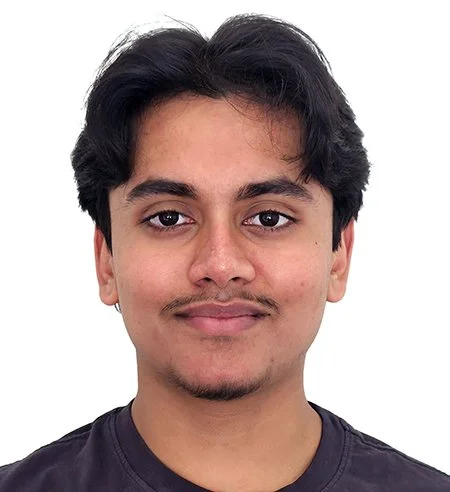
Ansh Ramani: “It pays to pay attention in class.”
Ansh Ramani heard that he’d received the $70,000 scholarship on April 1.
“Around midnight, and the reason I was awake was because I was studying for a test the next day – I had procrastinated!” says the student from Westwood Community High School, Fort McMurray, AB. “And that’s when I saw the email notification on my phone. At first, I thought it was some April Fool’s prank. I had to look through the entire email to make sure it was real. I went to my parents’ room, they were fast asleep but I just woke them up with my excitement. They were a little confused, just woken up from sleep. When it sank in, they were pretty proud of me, pretty excited. But obviously, we were all also tired, so we just decided to go to bed and talk about it the next day.
“The next day, I went out with my closest friends to get dinner. They were excited for me, too.”
Ansh says he worked pretty hard through all of high school, maintaining consistently high grades. In grade 12, he got 99 per cent in math, 98 per cent in calculus, 100 per cent in biology, 99 per cent in chemistry and 96 per cent in physics.
“Most of it was multiple choice, which definitely helped, but honestly, I had a really good teacher. And I have a really high interest in biology. So for me, when I was in class, everything was just kind of clicking, and I would ask questions.
“So studying after school, I did a lot less than people might expect. I focused on learning as much as I could in class, to understand the concepts when they were taught rather than trying to relearn them later. So whenever there’s some big assessment, I would only study the day before for a couple of hours because it’s more like reviewing for me, rather than trying to cram it in that moment. That’s just something that has also come to me naturally over so many years of studying. I find that engaging in class makes it so much easier for me to study because it’s about consistency.”
Ansh engaged in several extracurricular activities.
“I did robotics a lot, Zach Robotics. Even though the season ended, I’ve been invested in this for four years. Every year X, which is a company, releases a new robotics game. And teams from all around the world create robots and go to tournaments to compete with others. Last year, my team won the Alberta Provincials. After that are the world championships in Texas, and we’ve actually been there twice. You meet teens from all over the world with the same level of interest and I made a few friends. I also played volleyball.”
His DP is a character from an anime volleyball show called Haiku.
Seeing how marginalized communities lacked enrichment opportunities, Ansh became lead organizer for Connect Wood Buffalo (STEM Connect), organizing class trips from isolated communities, so students could attend technology workshops and start their own local STEM clubs.
Ansh and his peers also began a STEM Fellowship chapter, developing and delivering hands-on science lessons in elementary schools. “We’d go to their classes after they’ve learned a unit in class. There are about five science units per grade and we created workshops for every single one of them. It’s fun for them to see it coming from young students as well, instead of a subject or a topic in a book, to see students in higher grades interested in the same thing. Because when you don’t get to do any hands-on things, it’s really hard to develop an interest for anything. I wanted to put something they’re learning in class into something they see in person.
“I was inspired by some kids who were older than me. I just really want do that for others. Carry that forward, as they inspire even more people.”
He served on the RCMP National Youth Advisory Council, to share views on mental health and safety. “I had a friend who I met through robotics, who committed suicide. I hadn’t known or realized what he was going through. It was difficult to tell. So I tried to educate myself and then making sure it doesn’t happen again. Obviously, that’s not something that’s always possible, but really, making people aware of signs. And making sure there’s no stigma, especially in the South Asian community. I know for a fact, there’s a lot of stigma attached to seeking help for issues like this. The biggest problem with that is because it’s stigmatized within the family, people will not reach out to their own family. And that really leaves them with so few options.”
The fellowship chapter is rooted in the high school and Ansh has passed it on to another member in the group, but he’s going to carry over Connect Buffalo.
He is going to the University of Alberta to study Biology.
“There are communities just outside of Edmonton, where schools are very small, where students never really get to experience technology the way we did at my school. So my goal is to create a program where we can get students to come to U of A, to come to the lab. I want to take it to a bigger group of people while I also have access to more.
“I want to go to medical school, and I’m particularly interested in paediatrics because I enjoy working with young people. And I think the reason for that is I deeply believe that youth have the most potential out of everyone because, they have the most life ahead of them and they’re able to change the most.
“Five years from now, ideally, I see myself in medical school, continuing to pursue my goal of becoming a physician, and remaining involved in community initiatives.”
His tips for students graduating next year include focusing on quality.
“With so many students becoming more and more competitive in high school, others feel really pressured to join as many clubs, teams, and organizations as possible. But I think it’s much more valuable to invest in a few things that actually matter to you because when you’re passionate about what you’re doing, it doesn’t feel like you’re being forced to do it, and you’re motivated to do more and more. So you don’t burn out, right? And I think burning out is something a lot of students face. There’s so much stress.
“And talking about burnout, I think it’s important to be focused in the moments that you take for granted. When you’re spending time with your friends or family, be present in those moments, you know? Enjoy those moments because, I think that’s what high school is really about. Having friends you can lean on – support each other and just have fun with them. This will prevent you from burning out no matter what you’re doing. High school is where I’ve made the most of my memories.”
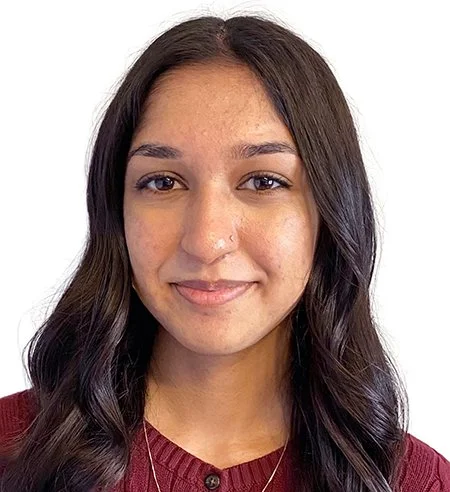
Sia Peetush: “Participate in things you care about.”
Sia Peetush of Laurel Heights Secondary School, Waterloo, ON, was in her physics class when she saw the email about having received the scholarship.
“I couldn’t believe that it was real, to be honest. I asked to go to the bathroom really quick and called my parents when I was in the hallway. I was just so grateful and my family was so excited and happy. We all went out to dinner that night to celebrate.”
Sia had physics, biology, and calculus, and then English, philosophy, advanced functions, and chemistry in her last semester. She maintained 94 average, spending around three to four hours when she got home. Longer, if she had a test. There were also after-school lessons.
“I was more busy on some days, but not every day! I was in a lot of different clubs.”
She served on the executive of the school DECA and Medical Clubs and held a co-op student research position. She was also part of the Mock Trial team. “For this, we have a team, you’re given a case, and you have to develop your case for the defence and crown,” she explains. “On the day of the competition, you get to go to the courthouse and present it to a judge. It’s great fun!”
She sings and plays the guitar and strove to create spaces where everyone feels welcome and valued. After her brother who has autism was reproached for his restlessness by attendees at a singing recital, she created Inclusive Music Recitals, an annual talent recital for disabled kids.
Sia also revived a Best Buddies chapter at her school to bring together neurotypical students and youth with disabilities through social activities aiming to build friendships and promote inclusivity.
She wants to be a physician and is going to Laurier for Health Sciences and thanks to the $70K scholarship, she says she believe she will have more time to focus on volunteering and her community. She plans to continue with inclusive music recitals.
“They’re really great in that you can kind of run them from anywhere. Also just carrying the perspectives and the messages that I’ve learned from best buddies with me, and using that to continue to create inclusive spaces.
“Five years from now, I would have finished my undergrad, and hopefully be pursuing post graduate studies. And I would be continuing to work, to be involved in my community.”
Her tips for students coming into grade 11, 12 this year on how she balanced course work, extra-curriculars and time for herself:
“Take it day by day. That’s kind of always not a simple thing for me when I start getting really overwhelmed. If that’s too much, just take it hour by hour, even. And I do things to stay organized, which I think was helpful.
“Beyond that, just participating in things that you care about and that you’re dedicated towards, because if you do that, if you care about what you’re doing, then, you are more likely to stick with it. To enjoy it.”
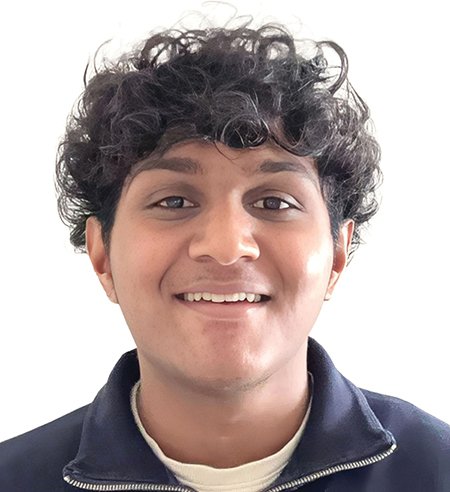
Vedant Sheel: “You don’t need to join every club.”
Vedant Sheel, of Waterdown District High School, Hamilton, also heard he’d won the scholarship on April 1. Which just happens to be his birthday.
“I read the email and at first I was, like, is this a joke? Is this real? And then I ran straight down to my parents and gave them a hug. It was honestly amazing!”
The family celebrated together at home, by ordering Manchurian, his favourite food.
“It was a very unique moment because it felt like not just recognition of only academic achievements, but also the impact of community involvement.”
Vedant maintained an overall average of 96 to 97 per cent, putting in around five hours after school on a typical day.
“That’s broadly speaking! Because most days I’d pay attention in school, and then it would be maybe two hours after school. And on weekends it would vary based on plans for the weekend. Time management was really important for me, because while maintaining strong academics, it was important to be involved in extracurriculars. So within the school itself, I served as president for several clubs, including robotics club, coding club, math club. We had a DECA club, and then also the Hindu student association. I also helped build the STEAM Innovation Challenge, a youth-led, non-profit for students to compete to solve real-world issues.
“For this, we focus on engineering, astronomy, life sciences, and recently we added computer sciences. Each of these have different issues. The topic this year was something related to sustainability. We had around 700 participants, approaching 1000 next year. And each of them come up with their own creative projects, creative work. They display it, and it sparks the impact on a societal level. So civil engineering, for instance, what they see in their particular community or society, which needs fixing. You get a whole lot of ideas from everyone.
He co-founded Codify, an educational platform to make coding and AI learning accessible outside of school
and also conducted research at McMaster University as well as MIT, where he focused on learning more about artificial intelligence.
“It was essentially a research internship. I had this project on pulmonary fibrosis – I was interested in that because my grandmother had it. The problem with that is that you don’t know how rapidly it can grow and the prognosis. What to expect, etc. So we worked on a machine-learning model that could take some basic information from patients and then provide a prognosis rapidly.”
To ensure no one is excluded from things that others take for granted, Vedant created A Voice for the Voiceless, an artificial intelligence system to translate ASL gestures into text-to-speech.
“This one is quite a long story!” he shares. “In 3rd grade, I had a teacher whose daughter was hearing- impaired and used American Sign Language to communicate. I tried to talk to her, but it was really hard because I didn’t know sign language and I’d have to write stuff down. It was a big communication gap. In grade 9, we learned about computer vision and I reached out to a professor at Waterloo. I was a ninth grader at the time, so I didn’t know if he would even respond. But luck was on my side and he did. We did more work understanding a computer’s object recognition. I realized that, hey, what could really benefit people such as my teacher’s daughter would be building an app that can look at hand gestures and translate them in real time.”
He presented the work at a Canada-wide science fair and received “a bunch of recognition” from it.
And he went back to his teacher’s daughter.
“She was amazed. She was really happy. I also gave it to a lot more people. A few thousand people reached out to me and used it.”
Vedant is going to be studying computer science at the University of Waterloo. He sees himself applying AI, mathematics, and technology to solve meaningful problems.
“I’m interested in quant – quantitative finance – so whether it’s as a quantitative researcher, an entrepreneur, or something in between. Five years from now, I hope to be working on challenging problems that really excite me and being surrounded by talented people.”
Vedant, like the other scholarship winners, stresses the importance of quality over the quantity.
“You don’t need to join every club or pursue every opportunity. Instead, find activities that genuinely interest you and where you can make a meaningful contribution – so for me, for example, that would be the research. You don’t have to start off by being part of so many different clubs. Speaking from experience, it’s unnecessary and you’re better off focusing on a few things that are really meaningful to you.
“I would also encourage students to be more intentional with their time. Creating a schedule, setting priorities. That helped me a lot with balancing academics, studying, as well as leadership positions, research, and community service. Most importantly, pursue work that you actually care about. If you’re passionate about what you’re doing, balancing responsibilities becomes way easier because it feels purposeful rather than overwhelming.”
More info on TD scholarships at www.td.com/scholarship.
$100K scholarship winner wants to create problem-solving technology

Aryan Thakur: “I’m focused on building technology that works in real conditions, not ideal ones.”
The University of Guelph awarded Aryan Thakur of Southwood Secondary School a $100,000 Schulich Leader Scholarship to pursue Engineering Systems and Computing, highlighting his exceptional potential in engineering and technology as a member of the 15th national cohort of Schulich Leaders.
As a new partner university to the program, this marks the first Schulich Leader ever to be awarded at Guelph.
Aryan brings an entrepreneurial mindset and leadership grounded in building practical, accessible technology solutions, with a focus on creating tools that address real-world needs and improve how communities and organizations operate.
“Aryan reflects the innovation, leadership, and problem-solving mindset that Schulich Leader Scholarships were created to support,” said Judy Schulich, President of The Schulich Foundation. “As we mark 15 years of investing in Canada’s future STEM leaders, students like Aryan demonstrate how entrepreneurial thinking and a commitment to practical, community-focused solutions can create meaningful impact and help strengthen Canada’s future competitiveness.”
“This scholarship gives me the opportunity to focus fully on creating technology that solves real problems for real people,” said Aryan. “I’m focused on building technology that works in real conditions, not ideal ones. Whether it’s simplifying volunteer coordination, improving access to learning, or designing offline-first tools for small businesses and rural communities, I want to create systems that are practical, reliable, and shaped by the realities people actually face every day.”
Recognizing the increasing importance and impact that STEM disciplines will have on the prosperity of future generations, businessman and philanthropist Seymour Schulich established this $200 million scholarship fund in 2012 to encourage the best and brightest students to become Schulich Leader Scholars: the next generation of entrepreneurial-minded, technology innovators.
The $200 million Schulich Leader Scholarships program spans 20 universities across Canada in support of entrepreneurial-minded students pursuing STEM education.
More at schulichleaders.com.