
GRANT'S DESI ACHIEVER
LEARN, UNLEARN, RELEARN
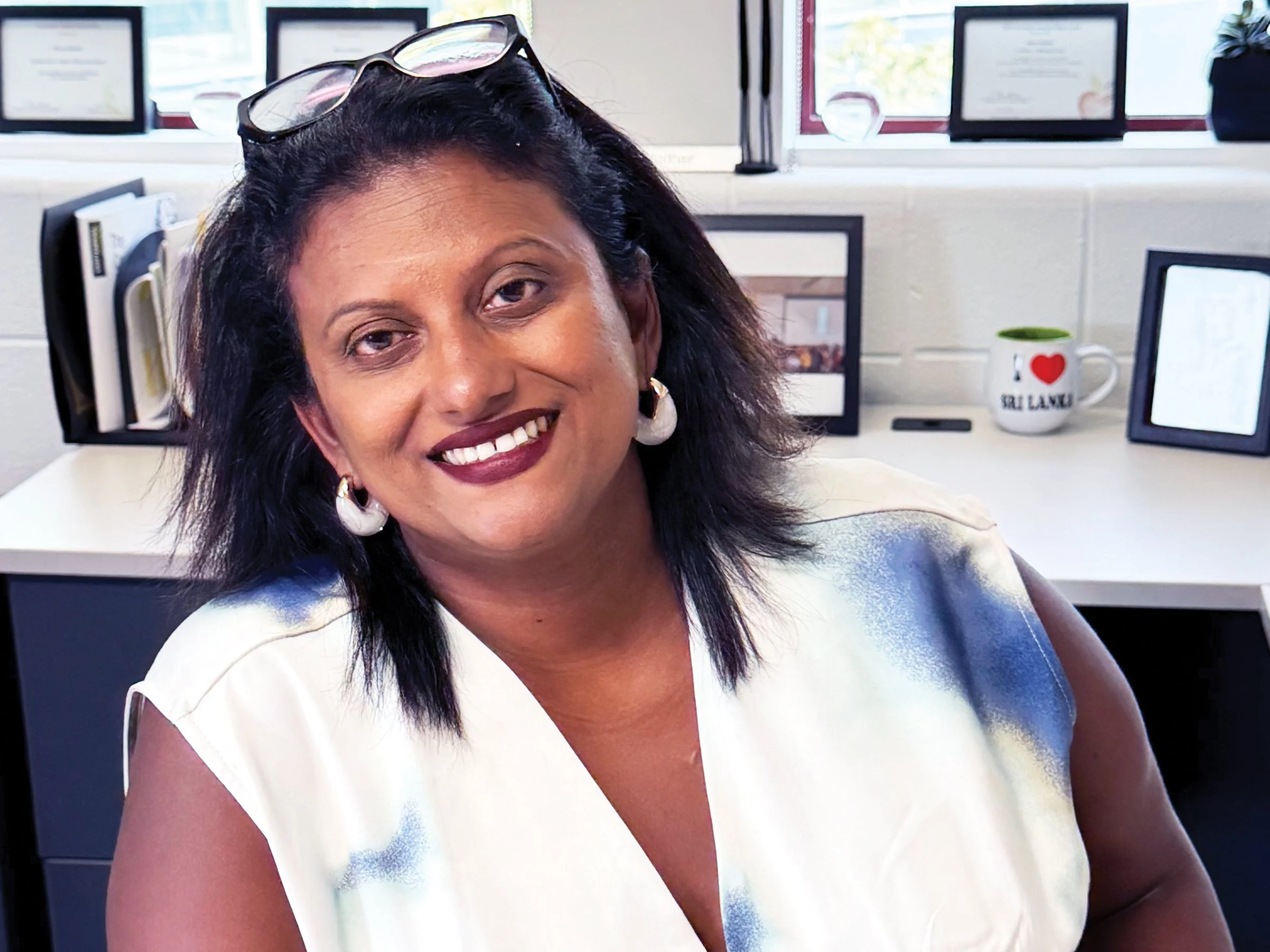
Dr Meera Mather, Dean, Faculty of Lifelong Learning and Industry Training, Centennial College, Toronto.
By SHAGORIKA EASWAR
United Way Greater Toronto recognized Dr Meera Mather as a champion whose leadership in boardrooms, classrooms and communities is leaving a lasting mark on Canada.
“A former student, Sukhjit Singh, nominated me,” shares the Dean, Faculty of Lifelong Learning and Industry Training at Centennial College. “I honestly didn’t expect to be recognized. To be nominated by a student was enough for me, it really moved me. When you help create opportunities for people, I think the impact often extends far beyond the individual – Sukhjit is doing some wonderful work within the community. Students have profound impact on us, too. It’s transformational, and transformation is not one-way, the reciprocity is huge.”
Dr Mather’s mandate is to ensure that education remains accessible, flexible, and responsive to the needs of learners, employers and communities. To serve learners at every stage of life. Her focus is on creating pathways into and through education, ensuring that no learner is turned away because of circumstances or previous educational experiences.
She says working at Centennial has given her the opportunity to help advance access, promote equity and student success in higher education. The academic upgrading and pathways for adults who believe they have missed the opportunity to pursue higher education being a case in point.
“We have secured provincial government-funded opportunities that allow learners to access upgrading programs without tuition costs and seamlessly move into college or university programs. Learners who once doubted themselves discover their potential.”
Dr. Mather continues to champion and strengthen Centennial’s high-impact program at the Toronto East Detention Centre, which helps incarcerated learners earn their Ontario Secondary School Diploma, a credential that opens pathways to employment and supports successful reintegration into the community. Her team recently received a handwritten letter from a student at the detention centre, thanking them for the impact that the program had on his life. Centennial is currently the only Ontario college offering this initiative.
She is proud of Centennial’s reputation as a social justice College, and talks about the progressive policies and practices in place.
“When I joined Centennial’s academic leadership team in 2004, I was one of only three leaders from racialized communities. I was honoured to serve on a College task force dedicated to advancing Centennial’s social justice agenda. One of the initiatives I was deeply involved in was the development of the College’s mandatory Global Citizenship course, a foundational course that I later had the privilege of overseeing.
“I have been fortunate to serve in leadership roles, but leadership is not about the position you hold, it is about how you use that position to create opportunities for those who have experienced marginalization. That also means being willing to engage in difficult conversations, because those are often the moments when we challenge our assumptions, confront our biases, and grow as individuals and as a community.
“We all have biases. The important thing is to recognize them and continually reflect on how they influence our decisions and interactions. When we consider the inter-sectionality of people’s identities, we begin to understand that inclusion extends beyond race to encompass factors such as disability, gender, age, culture, and lived experience.”
Her work has an anti-racist and decolonial framework to education that fosters equity, inclusion, and belonging for all learners.
“Historically, if you look at curricula, policies and practices that are embedded in our systems, colonial perspectives have been prioritized. A decolonial approach broadens that lens. It creates learning environments where diverse perspectives, voices, experiences, cultures and knowledge systems are valued and reflected in our curriculum, literature, learning resources and classroom discussions. It creates opportunities for all learners to succeed.”
At an established learning institution with well established structures, cultures, and practices in place, this begins by listening, says Dr Mather.
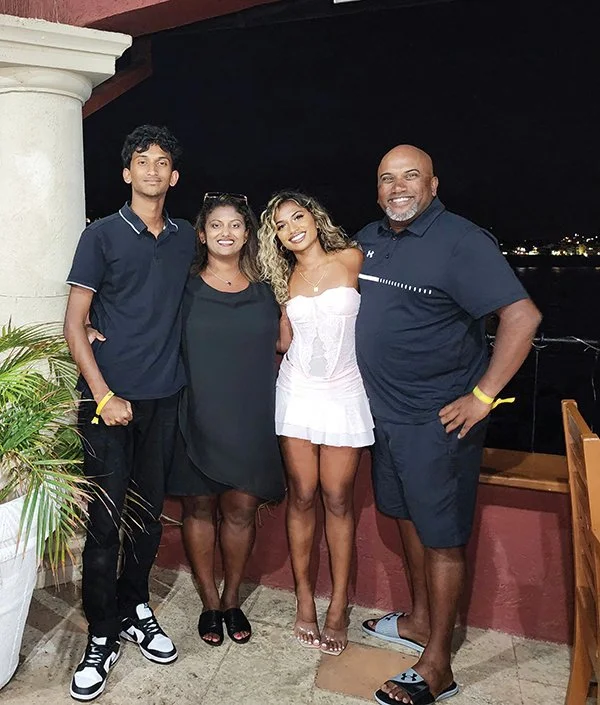
“Do not let your circumstances define you.” Dr Meera Mather with her family.
“At Centennial, we intentionally engage our students, faculty, staff, and community partners to understand their lived experience and identify barriers that may still exist within our policies, practices, programs, and systems. It goes beyond the curriculum. It requires more than good intention, it must be integrated into the institution’s culture, decision-making, and long-term planning. It has to be continuous. It requires us to continually ask whether our policies and practices are creating opportunities for everyone.”
Dr. Mather has helped establish pathway partnerships within Centennial and with university partners that expand access to higher education. One example is Centennial’s Pre-Health Sciences Pathway program, which provides mature learners, newcomers to Canada, and others seeking a new direction with a strong foundation to pursue nursing and other health-related programs.
She champions flexible learning opportunities through online and part-time studies, micro-credentials, and industry responsive training. “Students should be able to enter and re-enter learning throughout their lives without facing any unnecessary obstacles.”
Dr Mather and her team have partnered with the Scarborough Women’s Centre for women leaving challenging family situations. Through this partnership, thirteen women were able to access free educational opportunities that helped them build confidence, develop new skills, and create pathways towards greater independence and economic security.
She has worked with Humanity First to support Centennial students facing financial hardship, raising funds to help provide food, clothing and Walmart gift cards. “Sometimes a relatively small act of support can be the difference between continuing their education or having to put their dreams on hold.”
Working with the senior leadership at Centennial, she helped provide 20 Afghan women judges who came to Canada as refugees with tuition-free English language training along with learning materials and laptops. The college absorbed the full cost, helping these women begin building new futures.
She worked with her team and partnered with Moon Time Sisters, an Indigenous organization, to raise funds and airlift nearly $20,000 worth of hygiene products to Indigenous women in Northern communities.
Dr Mather serves on the Board of Directors for Peace Forward, Canada, and was also on the Board of Directors for the South Asian Autism Awareness Centre.
She came to Canada in 1983 during the Civil War in Sri Lanka. As a child, she witnessed people being killed around her, bomb blasts, and gunshots. Her uncle in the UK was able to find a way to get them out of the refugee camp in Colombo. Canada was accepting refugees, and the family landed in Montreal after a brief stop in the UK where her uncle equipped them with his daughters’ clothes and $1000. She recalls watching her parents, both highly educated and accomplished professionals, struggling to have their credentials recognized.
“That’s another reason I do the work I do. Like many immigrants, my parents accepted being factory workers for the rest of their lives. My mom was a teacher and she really struggled, but she was a very strong woman. She started teaching Math and English out of our home, while working in the factory full time.”
She was 10 at the time and has vivid memories of the family’s struggles. “We didn’t have many champions, diversity wasn’t really embraced in those days. We faced racism. I know what exclusion looks like, what barriers look like. But I also witnessed extraordinary resilience. My parents never gave up, they emphasized the importance of education as one of the most powerful pathways to opportunity, independence, and social mobility.”
A chance encounter made a big difference in their lives.
“My parents had found a small apartment for $325, but with two kids to feed, money goes really fast. They would take my sister and I with them as they looked for jobs. We had winter jackets and shoes that my uncle gave us, but the winter in UK is very different from winter in Montreal, and we’d duck into a convenience shop to thaw out a bit. This French gentleman was so upset seeing us kids under-dressed for winter. My father tried to explain, but he couldn’t control his emotions. He started to cry.
“The gentleman was very empathetic and took us on a bus – he paid for our tickets – to the Salvation Army, he explained our situation to a counsellor. We got clothes, food items, and then the counsellor took us in a taxi to the welfare office where they gave my parents a cheque for $575 and sent us home in a cab. My parents found jobs fairly quickly and were on welfare for only another month. But that help made a huge difference.
“That experience stayed with me. Years later, I founded and led Centennial College’s Holiday Drive Committee. With colleagues across the College, we partnered with not-for-profit organizations, raised funds and collected donations to support marginalized individuals and families during the holiday season. Every year, I thought about the unsung hero whose kindness gave my family hope when we needed it most. Creating the Holiday Drive was my way of paying that kindness forward.
“Today when I meet students facing barriers, I do not see deficits, I see potential. I know how transformative education can be.”
Dr. Mather has witnessed significant changes at Centennial College throughout her career and has been privileged to contribute to initiatives that have shaped its evolution.
She is married to Dinesh and is the proud mother of two children, Jasmine and Joshua. Despite the demands of her career, she treasures time with her family, who continue to be her greatest source of support and inspiration.
Dr Mather shares three life lessons. Success is not measured by the position you hold, but by the opportunities you create for others. If you can help someone believe in themselves, remove that barrier, and open doors that were once closed, you have made a meaningful difference
Do not let your circumstances define your future. Your story may begin with a challenge, but it does not have to end there.
Remain curious. Be willing to learn, unlearn, and relearn because growth requires humility, courage, persistence, and resilience.
“These are what took me to where I am. And you have to – for me, most importantly – always self-check because, when people move up the ladder, they sometimes forget where they came from.”
• Grant’s is proud to present this series about people who are making a difference in the community. Represented by PMA Canada (www.pmacanada.com).
