
MY TAKE
WHERE THE MIND IS WITHOUT FEAR
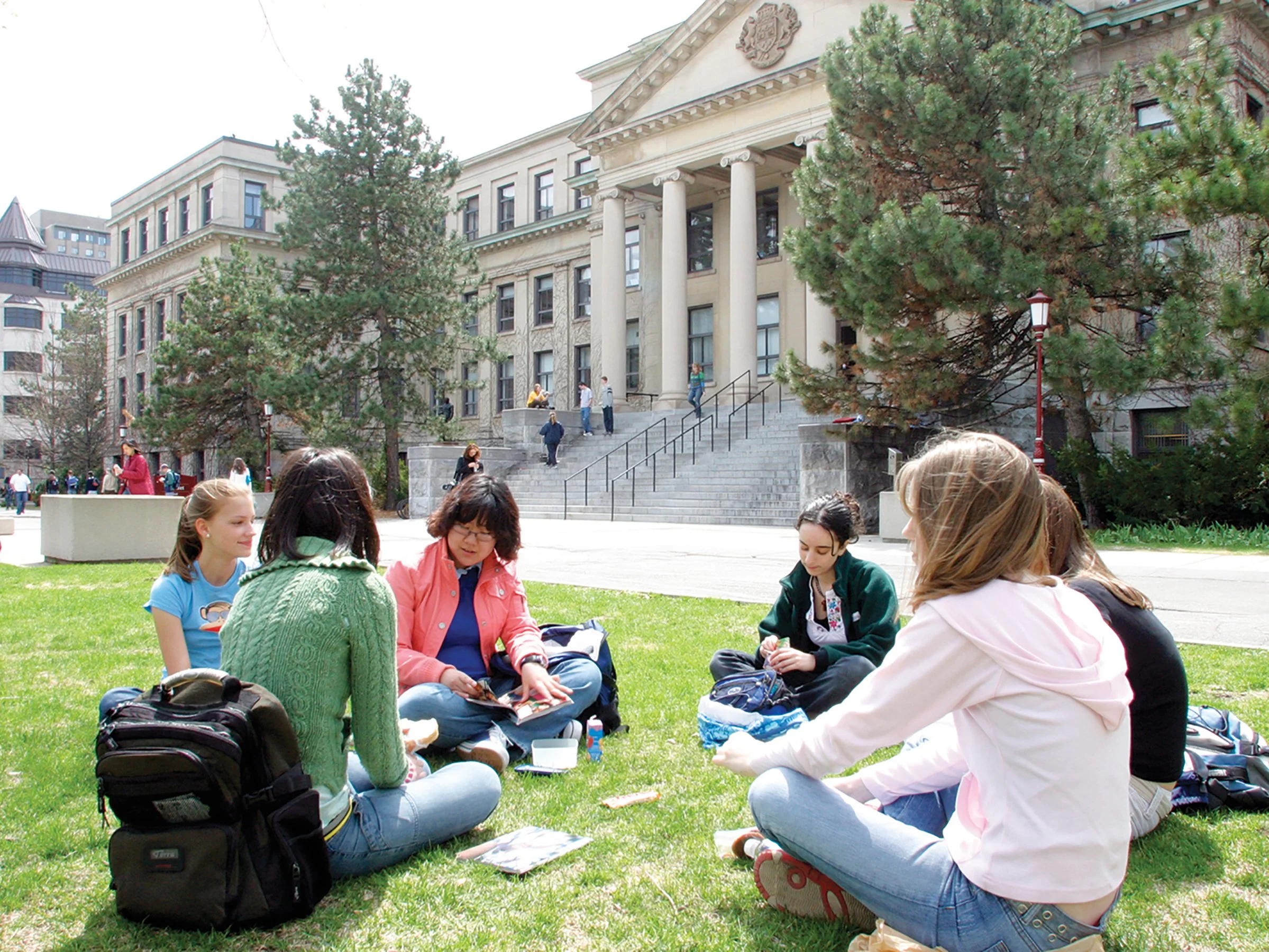
We want to encourage open minds and free speech, but both are under threat. Image credit: NEWS CANADA.
By SHAGORIKA EASWAR
Nobel laureate Rabindranath Tagore’s poem, Where The Mind Is Without Fear, was written before India’s independence.
It represents Tagore’s vision of a new and awakened India.
The original poem in Bangla, Chitto Jetha Bhayshunno, was published in 1910 and Tagore’s own translation in 1912.
Its words resonate today as they did then:
Where the mind is without fear
and the head is held high;
Where knowledge is free;
Where the world has not been
broken up into fragments;
by narrow domestic walls;
Where words come
from the depth of truth.
Having heard it recited in both Bangla and English and having read it in many anthologies, it’s also the first poem that springs to mind when the topic of freedom of speech – especially on campuses across Canada – comes up.
As students head off to post-secondary institutions of choice, chances are high they have a list of things they are being cautioned about by parents. Once upon a time, parents used to tell their children to steer clear of politics and religion in the public sphere. When the two intersect, as it often happens now, the rules of polite engagement blur even more. When are you on safe territory and when are you offending someone?
And so, somewhere along the top of that list will be something that likely wasn’t top of mind for parents some years go.
Because after all, weren’t universities supposed to be places of learning, of exploring new ideas and thoughts?
But the winds of change are blowing and I sense the anxiety in a friend whose twins start university this year.
I recall an episode of CBC Ideas on the subject.
At the recording of the event presented by Toronto International Festival of Authors (TIFA), Nahlah Ayed moderated a discussion with Randy Boyagoda, Davide Panagia, and Malinda S. Smith.
The professors differed slightly on the finer points, but all agreed that we were in a “poly crisis”.
The compelling conversation brought together leading international voices to consider how universities are facing unprecedented threats.
Davide Panagia, Professor of Political Science at UCLA, where he teaches courses in political theory, and whose work explores how politics intersects with culture, spoke about the anxiety and fear educators also face.
Malinda S. Smith, Associate Vice-President Research (Equity, Diversity and Inclusion) at the University of Calgary, defined the fine difference between DEI and EDI. While the two would appear to be interchangeable, DEI places diversity first, whereas equity is prioritized in EDI.
She also shared the origins of the word woke, and spoke about censorship and banning books and ideas.
And Randy Boyagoda, Vice-Dean, Arts and Sciences, at the University of Toronto, professor in the English Department, and currently chair of the PEN Canada Advisory Board, pointed to the ripple effects of decisions to take something off the syllabus. People found Plato’s Republic too woke, he said.
Boyagoda is also the UofT’s Provostial Advisor on Civil Discourse, and said, “Inclusion should include three tall white men in Maga hats”.
In an interview with Desi News when he took over as Provostial Advisor, he’d described civil discourse as “Thinking out loud together”.
“You can yell, you can swear, and still be part of civil discourse, so long as you are trying to get to a common understanding. The Canadian temperament is polite, which is great. But there’s a danger in using politeness not to have a real conversation, to avoid reckoning with issues – though it may feel easier and safer to do so. If we keep walking away, the vital centre of shared public life gets hollowed out, leaving the extremists and the apathetic at two ends.
“Universities have to be places of dissent, protests, as they always have been. Dissent can be present in classrooms, public lectures, in conferences.”
We want to encourage open minds and free speech, but as the discussion revealed, both are under threat.
Not only are institutions clamping down hard, students themselves hesitate to engage.
Out of an abundance of caution as drilled into them by their parents, perhaps, but could there be a larger issue at play? The factors being external, too, not only internal.
Could it have anything to do with where so many international students are coming from? From places where questioning is viewed as disobedience and disrespect?
Are we, the parents, also culpable?
“Blame the parents!” said the panel. The pressure to succeed is so immense that students enter universities seeking the grades that will get them into good jobs, not knowledge. But credentials do not necessarily prepare students for the jobs of today that ask for critical thinking skills.
And so the stress grows exponentially, along with a fear of what the future holds.
A Leger poll, commissioned for the Fraser Institute last year, showed that around one-in-three Canadian university students – 37 per cent of self-described right-leaning students and 30 per cent of self-described left-leaning students – fear formal consequences including lower grades if they express a viewpoint in class that conflicts with what is considered the “safe” stance on controversial topics.
“When students attend university, it is assumed that they will encounter a broad array of opinions, and that differing views will be discussed, contested and debated openly,” said Matthew D. Mitchell, senior fellow with the Fraser Institute and co-author of Canadian Students Are Getting a One-Sided University Education. But that’s not happening at campuses across Canada, according to the students themselves.”
The study found:
58 per cent of right-leaning students and 51 per cent of left-leaning students believe that there is a “safe” political view on controversial topics discussed in university classes.
37 per cent of right-leaning students, 33 per cent of centre-leaning students and 30 per cent of left-leaning students fear experiencing formal consequences – including having their grades lowered – for expressing honest views during class discussions.
40 per cent of right-leaning students and 35 per cent of left-leaning students feel constrained in being able to ask questions, offer unconventional thoughts, or challenge current norms on controversial issues.
50 per cent of right-leaning students and 36 per cent of left-leaning students said they felt uncomfortable expressing their honest opinions based on the political views of their professor.
And 85 per cent of right-leaning students and 45 per cent of left-leaning students believe that their professors advocate a leftist viewpoint.
“Students should never be afraid to ask tough questions, express their honest opinions or challenge conventional views in class,” said study co-author Michael Zwaagstra. “These findings raise serious questions about the quality of university education Canadian students are receiving.”
Boyagoda had these tips for students heading back to school this month on how to navigate a possibly fraught landscape.
“No matter what you study, read a good novel. Good novels invoke characters with different views coming into conflict. Read how the novelist resolves those issues.
“And go to events on campus. There’s so much going on at every university – go, meet new people and invite new thoughts and ideas into your mind. There’s also free food, usually!”
Embrace new ideas.
Be fearless.