
A ROOM WITH A POINT OF VIEW
BROWN GIRLS BREAK FREE
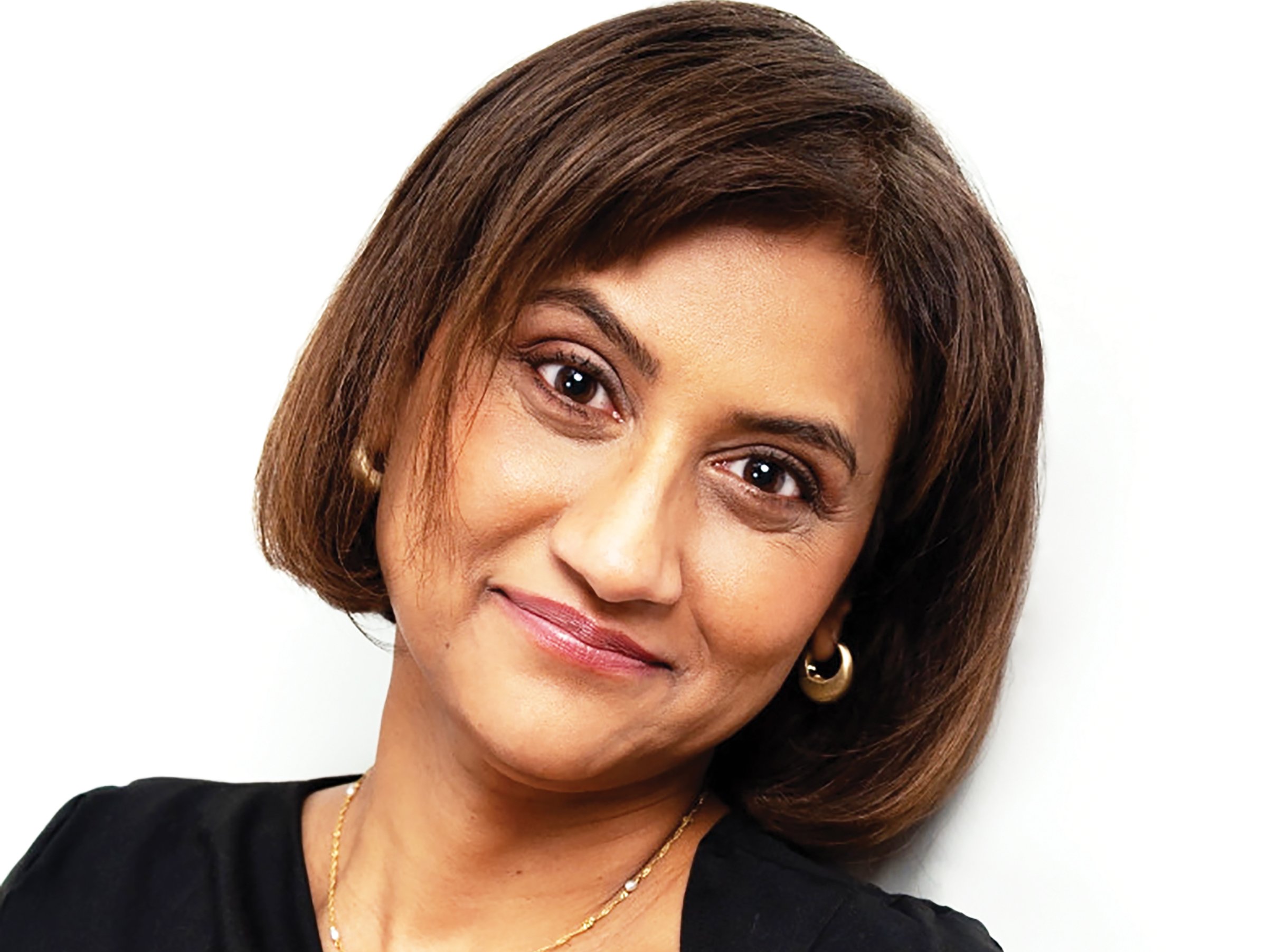
Sima Qadeer explores the many facets of South Asian identity in her book Brown Girls, Grown Up. Image credit: MATTHEW BENNETT.
By SHAGORIKA EASWAR
First generation immigrants – especially the women, going by my anecdotal “research” – tend to question the choices they made in their early years in a new country.
As they tried to find secure financial footing, they also tried to hold their families together in a culturally unfamiliar landscape. But in doing so, did they overlook the challenges their kids were facing while navigating their own landscapes? Their anxiety, their second-guessing themselves in a desire to fit in?
Sima Qadeer explores these and other facets of identity in Brown Girls, Grown Up.
Like Rehana, who learns that “the words ascribed to your origin story can never be outrun”. That the only way to be accepted by others is to reject parts of herself.
Could Leela’s “authentic self” get her anywhere? Self-deprecating, neurotic, and just a little bit anxious.
Her mother wants to call her boyfriend Simon by another name. Ismail. It would be just for their family, she assures him. “We know you are Simon, but to us you can be Ismail.”
Another woman is amazed at the casual confidence of a woman she meets at a therapy session. There was no fear of the outcome – rejection or acceptance. How did people live like this? Amira would have permanent ulcers.
At what point, Amira wondered, did privilege and ignorance intersect and transform into wilful racism?
Hanna’s daughter wants to know why her lips are pink while her mother’s are brown.
My half-Pakistani daughter didn’t recognize the brown she was also painted with, what it meant to be a female of colour, know her ancestors had carried her legacy long before she was born, that she had a mother who would never be pink like her.
And then the double whammy.
What if any brownness they have in them will just be erased, partly because their own brown mother isn’t really brown – just her skin?
Yasmeen learns that “at best, she’s popular adjacent”. She was attractive enough, smart enough, accomplished enough to be acknowledged and even included, but she never reached top status.
The series of stories in Brown Girls, Grown Up are brazen, and they’re tender. They are about middle-aged women who face questions about “menopausal outbreak” when their response to a situation strays from the script that meets with collective approval. Who try, ever so hard, to carve a place for themselves in the impenetrable group of moms in the school yard. Who learn that “we carry shame differently, it looks different on us, it feels different. It’s received differently.”

Brown Girls, Grown Up by Sima Qadeer is published by Curbstone Books Northwestern University Press, USD24.
The book is a collection of their stories, and an acknowledgement that at least some of the women wonder if they understood their mothers enough.
“How did our moms survive? Raising daughters and sons in a culture that made no sense to them and didn’t accept them, speaking a language they struggled with, and dealing with racism on top of everything.”
Rendered with wit, tenderness, and vulnerability, Brown Girls, Grown Up is a love letter to South Asian women navigating motherhood, marriage, ageing, and all forms of intimacy. It shines a light on the nuances of modern womanhood with grace, honesty and charm. The stories delve into the subtleties and blatant struggles of navigating shifting identities as one matures,
These stories, written with emotional clarity and quiet force, challenge the idea that self-realization ends once a woman becomes a wife or a mother.
I read it and think how some of the future stories of our daughters might play out differently if mothers and daughters read a book like this together. Without blushing or choking over some of the words.
Readers will meet women they relate to or know.
Or wonder if they’ve missed some signs the next time a bunch of them gather. Who among them is dealing with stuff she’s unable to voice?