
COVER STORY
ANITA RAU BADAMI: HOW A STORY BLOOMED IN MY GARDEN
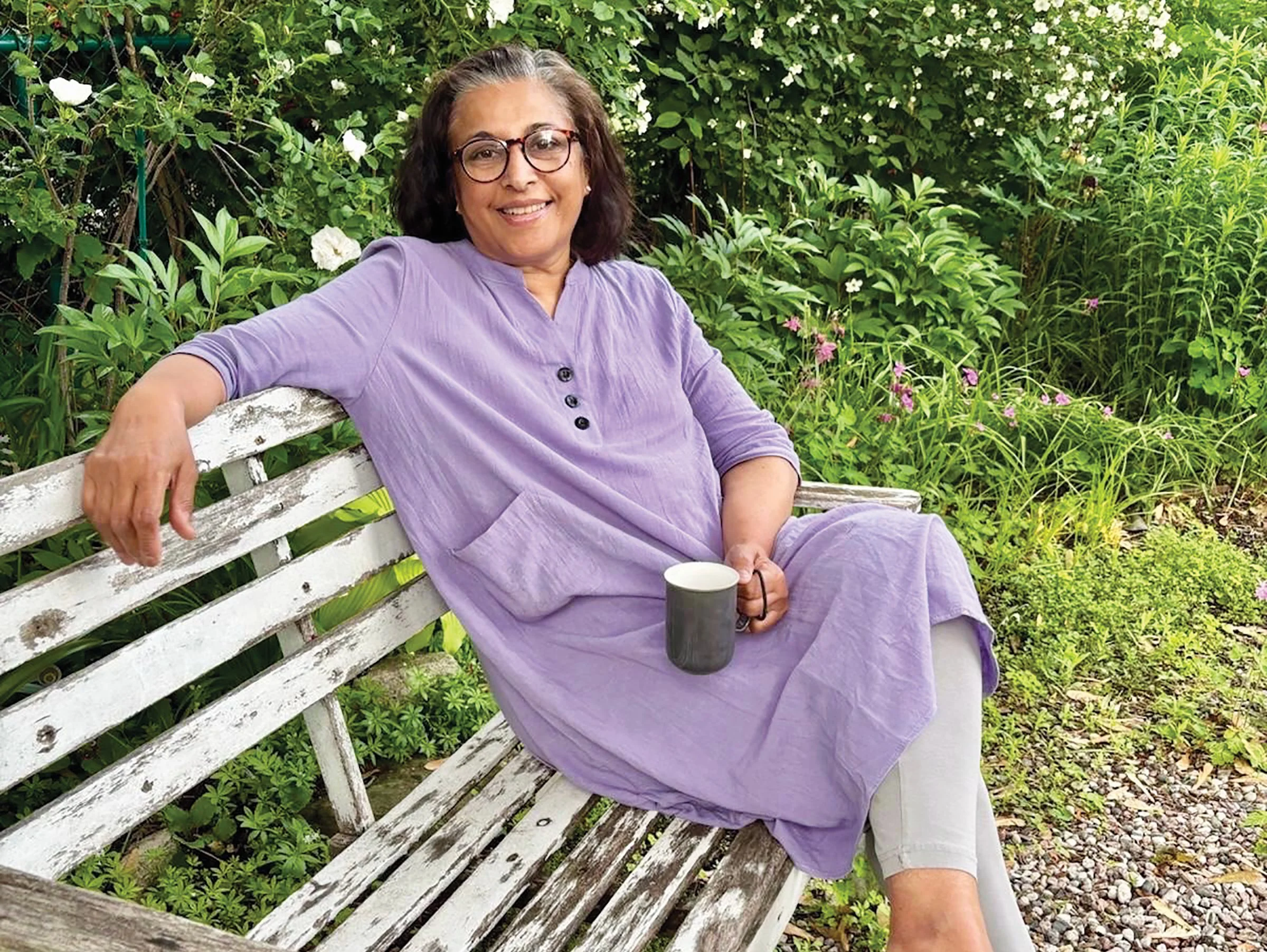
“I think for me, this writing is also a way to hang on to all that I think I’ve lost.” Image credit: MADHAV BADAMI.
After a 15-year hiatus, Anita Rau Badami returns with a deeply moving tale.
By SHAGORIKA EASWAR
Anita Rau Badami’s debut novel, Tamarind Mem, took the Canadian publishing industry by storm in the early 1990s and was a national bestseller.
In 2000, she followed it up with The Hero’s Walk. It received rave reviews, was a national bestseller and won the regional Commonwealth Writers’ Prize.
Can You Hear the Nightbird Call? was a bestseller in 2006, and Tell it To The Trees, published in 2011, garnered critical and public acclaim.
This month, Anita Rau Badami makes a triumphant return with Asha In Her Garden, a big-hearted, compulsively readable and relatable novel about mysteries, ambitions, misunderstandings and miracles that ricochet and echo through a close-knit family and the woman at its centre.
In a wide-ranging conversation with Desi News, she talks about her writing, her other passions, and what she’s been up to these past 15 years.
In a previous interview in Desi News you’d said that you like to take a break after a book is published, to take time to meet real people, get back into the real world. But 15 years?
Writing has been my profession for 45 years now, and I never take so long over anything. But after my last book we moved to Montreal. I was doing a lot of travelling. The publicity stuff that happens after a book come out, just kind of wipes me out. It takes me a year or so to recover. Although I did have projects on the go, until you actually sit with something and it fully gets inside your system – at least for me – I make a whole lot of small starts to begin with, but I don’t exactly know where I’m going.
In addition, after we landed in Montreal, I felt that not knowing French sort of cut me off from this landscape. I didn’t belong to Vancouver or Calgary any more, where we’d lived previously. I didn’t belong to anywhere in Canada. At the same time, I was beginning to feel that I didn’t belong to India, either, even though that’s part of who I am.
A landscape is important to ground my work because the culture is so deeply ingrained in who I am. And somehow I felt that I didn’t understand enough about how my Indian culture is translated into this landscape, how it has been transplanted. There are so many types of Indians in this part of the world, just like in India, but somehow in India, there was a sort of common glue. There was one layer of commonality, which I understood completely. But here it had become kind of scattered.
I was looking for that perfect amalgam of everything I knew about being Indian there and here and a story that would fit into that and a landscape that I could draw on.
That took me some time. And then my father-in-law passed away. I was very fond of him and there’s this unbearable pain that comes from not being with people who’ve been part of your life towards the end of their lives. The same thing happened a few years later with my mother-in-law. She was very sick and we were going up and down. So there’s this guilt, all these horrible feelings which sort of transcend your professional life somehow. And I think this is true for most, or at least many of us.
On top of that, my mother lives in California with my siblings. They take such good care of her, but I’m the oldest and you know how it is in India, the hierarchy of responsibility. I felt guilty that I wasn’t doing anything for my mother, but she didn’t want to come here because of our winters. So there was all this emotional turmoil going on.
And then there was the pandemic. For the first year, I almost felt like I was floating in a non-world, when nothing mattered. There was the sense I had, why the hell am I writing anything? What’s the point? March 12, the whole of Canada shut down, and then after that, the rest of the world, one after another.
So I decided to set this book in the one place that didn’t need a landscape – a hospital bed.
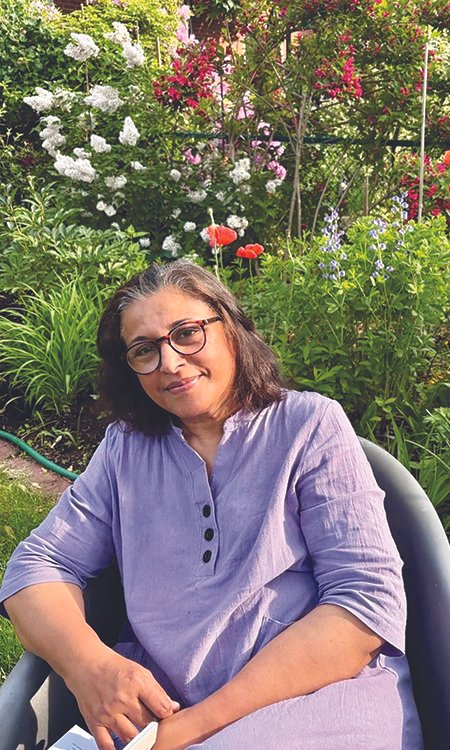
“A landscape is important to ground my work.” Image credit: MADHAV BADAMI.
Asha In A Hospital Bed? Doesn’t have quite the same ring as the garden, does it?
Because by that time I’d settled on a storyline and wrote the book from the perspective of Asha in a hospital bed. But then it became very limiting.
And I particularly enjoyed that clueless son of hers and wanted to develop that. I wrote the whole book three times. From the perspective of Asha in the hospital and from that alter ego, the hag. I had turned the hag into the Vetala. You remember the Vetala/Betal stories? But the Vetala in the original asks questions which have to be answered and that was getting more and more complicated. It just wasn’t working out. So I had to abandon all that and restart. But I wanted to keep that Vetala character, the hag.
Of course, she’s integral to the story. Even when she’s not on the page, you’re aware that she might pop up any minute. She’s a very palpable presence.
You observe minute details and the finer nuances. Doesn’t everything trigger an idea for a book or a character? Do you keep a little notebook with personality traits or quirks, little incidents that might be the seeds of stories?
I have stacks of notebooks! I love the feel of ink on paper. So I have notebooks for each character plus notebooks of the overall book. And there’s a moment when everything comes together, falls into place.
Sometimes that takes longer, this time it took too long. I really hate that it took this long, but there’s nothing one can do, you know?
Is the book autobiographical in any way?
There’s always going to be small autobiographical reality, every book I write, no matter what the story. That’s how I create authenticity, and I think this is true for almost any fiction writer. You pluck out bits that are real from your life or observed life and you weave the stories around those points of truth.
For instance, the hag. She’s is actually my reality. I used to see her. Ever since I was a child, I used to get up screaming in the night, seeing this old lady with streaming white hair, just sitting in some corner of my room. It’s so weird. My mother would get upset and my brother would start shouting, shut up, shut up, shut up. Everybody who knows me knows the hag. I’d go on these excursions from school and just scare my friends all to death screaming my head off. I was convinced she was real. And she always seemed to show up just before something terrible – for a child – would happen. Like getting caught by the teacher for not doing my homework, those kinds of things. Many years later, the year before my father died, I must have been about 18, this woman appeared again in my room, and this time I saw along with her, a body with a shroud, I know this sounds kind of crazy. Now that I’m older I don’t see her that much and occasionally when I do, I wake up with a start. She’s a shadowy something, but she doesn’t frighten me. Sometimes I feel it’s just some kind of subconscious fear that, like I say in the book, is a manifestation of my own personal worries and fears, and maybe as I’ve grown older, I’ve become more sanguine about these things, about being able to deal with anything.
But she’s real for me. She’s from me, from my consciousness. I feel even though she used to frighten me when I was young, she’s there to keep me safe. Almost like she was kicking me awake to remind me of something. She’s just there as a kind of presence. If I need her, I know she’s there.
I have to confess, I did not expect the hag to be one of the from-your-life details!
And then the attack in the garden also happened.
No way! Really?
This was in 2001, around two months after we moved to Montreal, moved into this house, which we have been living in since. The garden has a huge maple
Just like in the book!
Yes, I love and hate that tree! We share a fence with this lovely neighbour. I had just planted some clematis there. This was in April. My mother-in-law was visiting that year, and she and my husband were on the other side of the house, listening to Carnatic music. Full blast. So they wouldn’t have heard anything that was happening on this side. I was sort of crouching near the fence and tying that clematis to the fence. There’s a gate on the side of the house which I couldn’t see from where I was sitting. I heard the gate open and assumed it was our son coming home. He must have been around 14. I didn’t pay any attention, and then suddenly I feel these arms wrapping around me, and I’m thinking, this isn’t my son, this feels like a much bigger person.
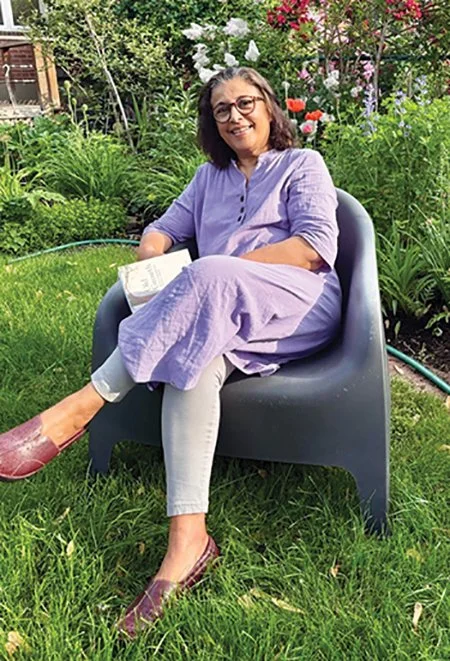
“There’s always going to be small autobiographical reality, every book I write.” Image credit: MADHAV BADAMI.
I’m picturing the scene in the book.
I can feel something poking into the back of my head. And this guy whispers, “Don’t scream, don’t shout, don’t say a word”. And for like all of 5 seconds, I don’t. And then I think, who the hell does he think he is, coming into my house? Telling me not to talk? So I jumped up and screamed, taking the guy by surprise. He fell backwards and I fell on top of him. Our new neighbours didn’t know us, we had just moved in, but they ran to the rescue. And this guy dropped a knife and just ran. I’d thought it was a gun. I didn’t know what a gun or a knife feels like poking into you!
Your garden is your haven. An attack there is such a violation.
Yes, and that connects with this whole idea I’d been feeling that the only place now that I feel completely at home is my own home and my garden. Which is so limited, you know, in a funny kind of way, but also very expansive. That stayed with me, that incident from all those years ago. I needed to make something of it. The rest, everything that I built around it, that is completely made up. My poor son wasn’t involved, although he was quite a clueless irritating teenager, I can tell you!
Oh that. They all are! But we survive, they grow into fine young men, and then we wonder why on earth were we butting heads all those years ago?
Exactly. And now he’s the father of my delightful little granddaughter.
In your other life, you’re a visual artist. Which is clearly evident in the vivid descriptions in the book. And you made Asha’s daughter, Anjali, an artist.
Art was my road not taken. I was either going to be a writer or a painter ever since I was 17. My parents encouraged both of these creative pursuits. We lived in Calcutta at the time and my father took me to the National Art Gallery for classes. I was too young to join, but my father somehow managed to get special permission for me to attend on weekends. His one stipulation was that they’d pay for my education up to post-graduation. After that, it didn’t matter if I was a painter, tabalchi, or a scientist, whatever, I had to go off and make my own way. They’d be there for emotional and moral support and food, etc., but otherwise, you’re on your own. Take responsibility for your decision.
Growing up in India, I didn’t have the option of doing both a major and a minor, so I decided to go into writing, which I loved, as a profession. But the art has always been next to the writing. When my son finished high school, I decided to go back to school for formal art education. I went to Concordia University and asked them to give me dispensation from all the regular courses because I just wanted to do studio arts, drawing and painting. I said, listen, I’ve got multiple other degrees, so can we just skip the art history and art theory? They were pretty nice. I did just a couple of the courses that everybody had to do. Painting and drawing were my majors. I was around 45.
I work in mostly traditional media. Oil paints, watercolours, soft pastels, hard pastels, oil pastels, pencil, charcoal, ink... But I haven’t tried to exhibit or anything. I just do it for myself. I feel the writing has been competitive enough, this is just for me. Maybe I’ll do illustrations for a book of mine some day.
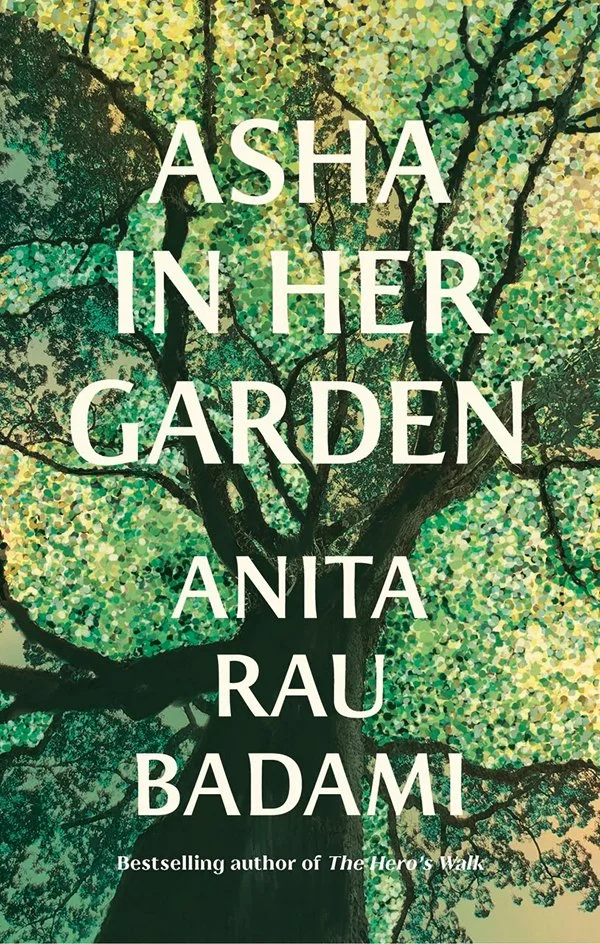
Asha In Her Garden is published by Alfred A. Knopf Canada, $36.
Asha In Her Garden is so relatable at so many levels. The early years in Bangalore, the immigrant experience, the garden, even the neighbour, Madame Brard, who takes Asha under her wing. Anjali wants to paint a family series and Asha is concerned about how the family will be depicted. Like so many parents worry about kids oversharing on social media. How they come across in their kids’ version of the story. The clearing out of a lifetime of stuff. The number of conversations my friends and I have about this. What do we do with our heavy saris and the yellow gold which we inherited from our mothers and grandmothers.
Oh my gosh, I’m having these conversations. My daughter-in-law doesn’t want any of my stuff. And the thing is, see, for you and me, this gold is not just the value of it, it’s the value of those attachments. The people who’ve given them to us. They are precious to us for a variety of reasons.
All of these little details that you have, Asha hiding behind the front door so the neighbours don’t think she condones picking up second-hand stuff – though in our family I happen to be the one who picks up pots, planters...
I’ve come home bearing lamps, entire doors. And then my family is appalled. My mother, she says, why can’t you buy new things because you know how immigrants are, new immigrants, they love new everything and I love old everything.
So all of these people, these interactions, are they all real? Like we know the tree is real now.
These observations, they’re just a collection. I don’t know where they come from. There’s usually a particle of reality and then I build around it. Almost everything is made up, but when I start from that core of truth, then everything I make up feels believable to me. And it needs to feel authentic to the character. It has to fit that character’s personality.
Because these characters are so real, if it didn’t fit, it would seem like a major misstep. The reader knows Asha and Asha wouldn’t do that.
And also there’s a generational thing. Her children don’t have a clue all this is going through her head and they wouldn’t understand her. They’d think she’s bizarre, you know, to be thinking like this, so it has to fit everyone. They belong to a different generation, their history is here. I see it from my own son and my nephews and nieces. Their sense of that whole familial connection, that whole thing of, like I said, the hierarchy of age, even if you know your mother is talking complete gibberish you’ll still say, yes, yes, because you don’t want hurt feelings.
Calgary and Vancouver, they didn’t make so much of an appearance in your books, but Montreal figures large in Asha. So is this Anita growing up? Do you feel you now know your city intimately enough to give it a role? Do you feel rooted there?
Well, now I’ve lived here for nearly 25 years, and I’ve learned French. For the longest time I used to feel that there was this sort of screen between me and the rest of Montreal life. I felt that I was somehow cut off from half of what was going on. Now that I know the language, that’s a huge help.
But then if it was language, and you felt more connected because you know French, that wasn’t an issue in Calgary or Vancouver.
No, but there I felt that I was a newcomer. Temporary. I wasn’t sure. And I was busy with other things. A small child, studying. I was working three part-time jobs when I lived in Calgary and in Vancouver while writing all these books. There was much going on. I didn’t feel the need to get into the city, to creep into its blood and bones, in a manner of speaking.
Here, I’ve had the time now to be able to do that. This has become my home. Outside of my garden and my own four walls, the city is my home and I’m not going back. I don’t have anywhere to go back to. And so there’s this is sort of poignance about that and a sorrow. India has been my ancestry. That’s where we can trace back generations of my family. They never moved out of there.
Our son and his family live in London. They’re not coming back here, and we’re not going to move to the UK. I don’t want to move any more. I moved my whole blooming life from the time I was a little girl. So that’s another layer of complexity in my life as a traveller.
You might wish – like Asha – for a garden with guavas, jackfruits and mangos, and also wood roses. But again, like her, you’re grounded here. Asha pictured her tree casting its benevolent shadow over her family, and then when she’s attacked, wondering, why hadn’t they just left her under the tree. This where she wants to be.
Do you have a writing ritual. This table, near that window, or do you write whenever the impulse, the mood strikes. Anywhere, any time?
No, I treat it like work. So I go to my office at 9 in the morning. Now because I have the whole day, I don’t have anybody to look after, I can go in as early or as late as I want and stay as late as I want. I don’t have any other timetable to follow. So it’s my writing and my painting life. I have both my studio and my office in the same space, so I shift between the two. It’s bliss, honestly. I can’t believe there was a time when I used to sit inside a cupboard in my bedroom and write books! This was in Vancouver, to cut out distractions.
If the book is going full swing, then I just get into it right away and start off from where I stopped. Maybe a few chapters before just to refresh my memory.
If it’s a new book, I start looking at possible storylines, characters, start writing with a pen because that really helps me. I don’t know, it’s still a very mysterious process for me.
I have no idea what I do to reach the end of a book, exactly, except that I have to have bum on the chair. And my laptop, my pen and paper in front of me and I have to be writing something. Or least thinking about it or doing some research.
Sometimes, after I’ve written multiple iterations of a book, when I go back, I feel that I didn’t really need this character and that character. Maybe I can collapse them into one. Or shift bits of one character to another character entirely. For instance, Asha was doing something in an original version. Then I felt particular stories fitted Suresh better because earlier I kept feeling there was something wrong. But I liked the stories, I didn’t want to get rid of them. So just by giving those stories to another character, somehow it suddenly became right.
It’s one strange process. I just keep at it. I’m very persistent. I don’t like giving up a project, whether it’s reading a book, even if I don’t like it I will finish it!
And this book...by the time I was with my fifth iteration, it was already a book that I couldn’t let go of. There are some books that refuse to coagulate properly. You reach a point when you feel, I put in so much effort, but unfortunately, it’s just not gelling. But this one, there was something about these people and, these small traumas that they go through, I couldn’t not finish it.
Everybody has these lives, which are unremarkable from the outside because it’s just one of many lives. I like writing about these ordinary lives that are also universal because everyone has some version of the same stories happening in their own lives.
There’s this woman from Ukraine who lives down the road from me. She goes for walks and she’d walk by our home. I have a very beautiful front garden, too, and from spring right through until the fall I’m always, if possible, out there. And this woman would stop to chat. And she’d complain loud and long about missing her life and how horrible the cherries were in Canada and Canadians didn’t know anything about cherries. The best cherries in the world grow in Ukraine. Not just cherries, the plums and the peaches too. This lady, her attitude towards that home country, which is now in a state of war and not accessible. She’s been an immigrant here for many years and is happy she’s safe here, her son was born here. But she still has family there. So she’s in agony.
There was this other woman who used to walk by my house for many years. She’d comment on my garden, “I don’t like those funny, furry leaf things. They make me scared.” And I’d laugh and say, sure, I’ll move them to the back or somewhere else. The walks, and her stopping to chat continued for several years and then she disappeared. I knew she lived in this seniors’ residence a few blocks away and thought maybe she’s moved. And then, three years ago, I see this woman coming down the road, who looked like a carbon copy of the lady, down to the white cropped hair. Identical. I thought I’d seen a ghost because this was so many years later and she looked the same. So I was standing there with my mouth open and this woman comes up, she says she’s her daughter, and starts crying. “My mother died a few weeks ago, and I know she was very fond of stopping here and chatting with you. Both my brother and I feel that we know you because of our mother.”
She stood for one hour talking to me about her mother, about how they had fallen out and now she was feeling so bad that she hadn’t made up. And I was just thinking, these strong emotions and hurts and feelings. We think they’re so Indian, but they are universal. These are the little things that I remember, and build all my books on. I collect these, really. I mean, I have this long memory for all kinds of details that most people don’t want to remember.
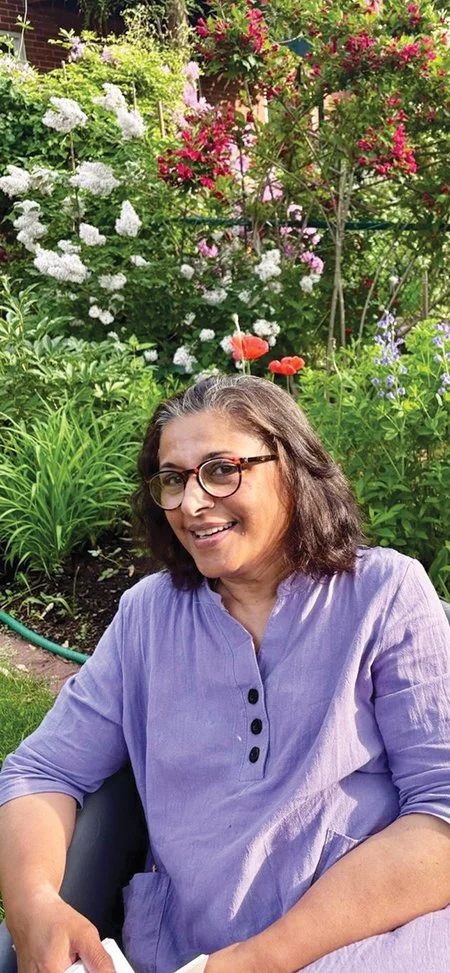
“ I’m not a friendly person in the sense that I don’t crave hundreds of friends, but I like people. I like talking to people. I like interacting with people because people are the source of my fiction.” Image credit: MADHAV BADAMI.
Everyone wants to be a best-selling author, but so many people don’t realize how much work goes into it and how much finessing you have to do before you actually present your work. What would you say to someone who stops by you in your garden and says, “Hey, Anita, tell me how you did this?”
I don’t think there are any real rules. You do have to be creative to begin with. You have to have a good sense of story and what details to hang on to and what to throw away. And you keep polishing. That’s why you have to rewrite so many times because the rewriting is as important as the original writing. And persistence, you have to sit and write. In order to have a book you have to write. Because there’s no point dreaming of stories and writing little sentences and hoping it’ll somehow make itself into a whole book or a whole story.
It’s a lot of work. I treat it like work. It’s not a hobby for me. It’s not something I do just because I suddenly feel like doing it one day and not the next. It’s a profession, it’s a passion, I can’t not do it.
The other component of my writing life has always been the reading life. I read extensively. I read everything under the sun. The news, non-news, gossip, comics, fiction, non-fiction. There are things that may be are over my head, but it’s not difficult to read and figure it out. And I don’t just read the internet. I read books. I’m not being snobbish. I love the internet, it’s a great resource, but my original way of reading has always been hard copies of everything. Through reading extensively, you start learning how to sort the grain from the chaff, even on the internet.
So yeah, I would recommend reading endlessly. I’m not a friendly person in the sense that I don’t crave hundreds of friends, but I like people. I like talking to people. I like interacting with people because people are the source of my fiction. So I can’t just lock myself up in my ivory tower and presume to know how the world works without actually knowing the denizens of this world.
Which is why I like talking to all these people who go by my garden, including this other woman called Ludmila, who asked me whether I would come and clean up her garden. She thought I was my garden help!
This sort of connects with my thing about losing a landscape. I feel that these people I interact with are giving me these little windows and doorways into this landscape and making me feel more grounded. It took me a while to understand that.
I think for me, this writing is also a way to hang on to all that I think I’ve lost. And keeping a record for my son. Sometimes he asks questions, but I feel that maybe it’ll be my granddaughter. There’s always one generation that wants to know about their past. And hopefully these books will be some kind of link.
When we chatted after Can You Hear The Night Bird Call? you’d said you hoped that readers would relate to the story, that there’d be a sense of connection regardless of who it was or where they were. Now 20 years later, with so many more desis in Canada, perhaps we are less of an “exotic” species. Asha’s story is deeply rooted in India, but very Canadian. What do you hope readers will take away from this book?
I hope they just take away this sense of the story of an ordinary life, their life, told or some small aspect of it explored. Because really, it’s just a small aspect of one person’s life.
I think maybe the younger generation would probably relate, people who are my son’s generation or even younger. They seem to have related completely to the younger characters in the book. Which I loved because, for me, those are the foreigners in my book. Those are the characters I had to extrapolate from my own experience as the mother of a boy who’s grown up here. You know, from my son’s experiences and my understanding of what he was going through when he was growing up. It’s not entirely my own internal view of the world. So I’m glad that has resonated with people, young people. Those characters and their relationship with their parents.
And I hope that a lot of the people will read the book like you and me, our generation, with this sense of recognition.
I loved writing the book. I loved writing Dilip in particular. His dog-grooming business, it’s the most bizarre career path for an Indian boy. And his realization that perhaps his mother doesn’t entirely trust him even now, but that’s okay. He still goes out and buys her a Japanese maple.
The story about the nuns at your school saying, “What big lies you tell. Ask your parents to see me.” That’s just priceless. So what’s next for the woman who has been writing since she was a little girl?
My next book is non-fiction, about gardens, but not exactly a gardening 101 or how to garden. It’s more about the politics, culture, history of plants, plus the personal. It’s creative nonfiction. And for that, I do plan to put in a whole lot of ink and wash drawings or something else. I’m not sure what just yet, it’ll depend on what I’m writing or what I’m illustrating.
You’re not going to make us wait 15 years for it, are you?
I don’t think so! This one has been boiling away and getting written for a very long time. It’s almost ready to go.
And then stories for my granddaughter. I used to write children’s stories in another life in India. A huge number of them were published. I was just excavating all those stories and I thought, now that I have a cute little granddaughter, I’m going to write a couple of children’s stories for her and illustrate them.