
HELLO JI!
WAIT TIME OUTSIDE LADIES’ LOO: AN ETERNITY
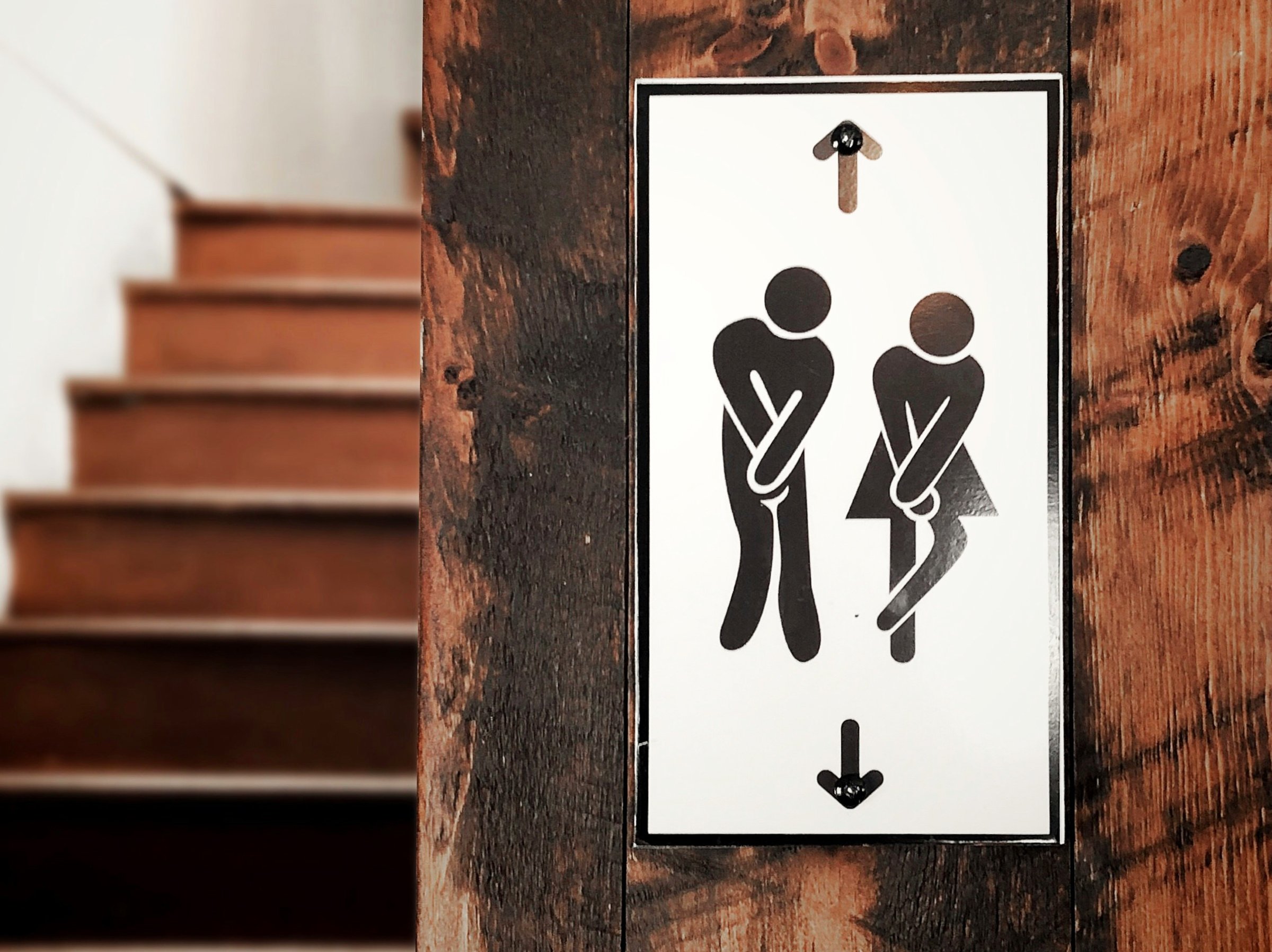
More women than men line up outside the toilets on flights and there are long line-ups outside women’s washrooms at concert and theatre venues. Image credit: OLIVER COLLET on Unsplash.
There’s an old clip of Waheeda Rehman on YouTube in which she talks about how things have changed since the time she ruled the Hindi movie industry as a top actor. Women on outdoor shoots got dehydrated because they wouldn’t drink water for fear of needing a washroom. Because there weren’t many public washrooms in India then. The men had few qualms about urinating in public, against a tree or a wall – it’s what men do! With no fancy vanity vans like the actors now have, costume changes were awkward for females, too. Rehman recalls people forming a circle, holding up sheets or saris to form an enclosure behind which one crouched and changed.
What would she have made of the news that female politicians in Saskatchewan’s legislature will soon have their own designated washroom after going without one for 110 years? According to the Canadian Press report, men have had theirs since the legislature opened in 1912.
There are jokes about the line-ups outside women’s washrooms. In Jasmeen Siddiqui’s The First After a character can’t think of any other event he’d been to where he’d seen so many women in one place at the same time, unless they were all waiting in line for the bathroom.
We’ve all observed this too. More women than men lined up outside the toilets on flights and the long line-ups outside women’s washrooms at concert and theatre venues.
On a Heritage Toronto walk, Canadian theatre producer and impresario David Mirvish told his rapt listeners that when the Pantages Theatre (now the CAA Ed Mirvish Theatre) opened in 1920, the women’s washrooms were far fewer than needed. The theatre could seat 3,600-plus guests, but the original washroom provisions reflected the building codes of the early 1900s which were unequal to say the least.
Yes, women do generally pee more frequently than men. Without going into details of bodily functions, here are the contributory factors:
Bladder capacity: A woman’s bladder typically holds up to 500 ml, while a man’s bladder can hold up to 700 ml. This size difference is largely because the female pelvis houses the uterus and other reproductive organs.
Anatomy: Women have a wider pelvic floor and a shorter urethra, which can naturally result in less structural support and higher rates of stress urinary incontinence.
Hormones: Estrogen helps support the sides of the bladder. When levels drop – such as during menopause – women often experience increased urinary urgency and frequency.
Pelvic trauma: Major reproductive system trauma or the physical strain of pregnancy and childbirth can weaken the pelvic floor muscles, frequently altering bladder control and increasing urgency.
Women also use washrooms for menstrual management.
If a simple search reveals all this, why has it taken us this long to provide adequate facilities, even in Canada? How much longer do women have to wait in line for this, the most basic of rights? For some dignity?
Shagorika Easwar