
BOOKWORM
MONEY DISTORTS
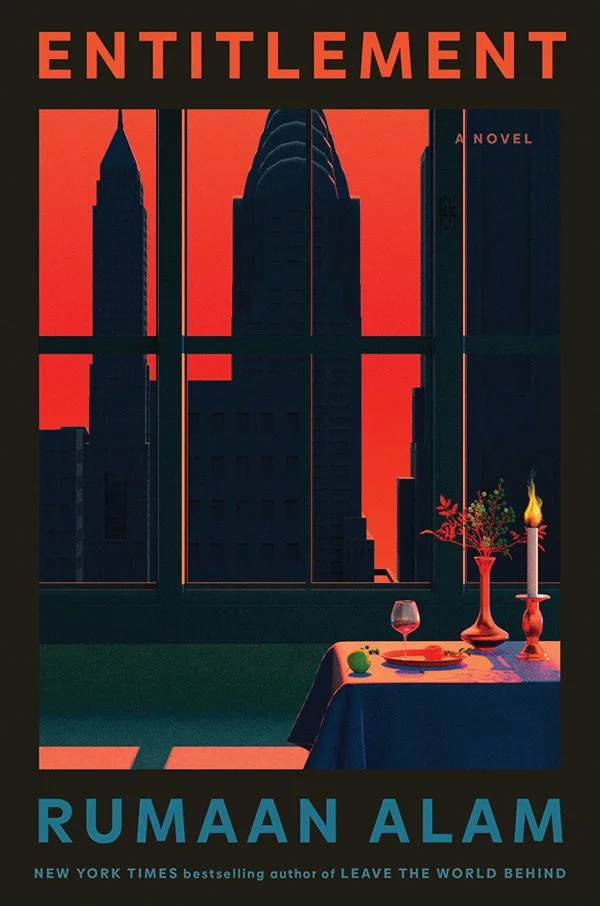
Entitlement by Rumaan Alam, Riverhead Books, $39.99. The latest book from the New York Times bestselling author Rumaan Alam is unsettling and thought-provoking in his signature way. And yet different.
Remember the movie based on his book Leave the World Behind with storks in a swimming pool, deer running amok and Tesla cars gone rogue? It painted a dark picture of a near future.
Entitlement is all about now.
About wants and how seductive being close to money can be, how distorting and destructive.
Brooke wants to impress her mother, make a difference in the world, and secure her independence. Her new job assisting an octogenarian billionaire give away his vast fortune may just be the ticket to achieving all of these.
She thinks she has found a way to do that, by helping Asher Jaffee change a child’s experience of the world. Her mother’s friends hold a different view. “The mega rich. They wreak havoc on the environment and refuse to pay fair taxes, then they get to decide what’s a worthy cause, bless the rest of us with some of their leftover money.”
There are no dead bodies, no murder and mayhem, but something bigger is at risk as Brooke transforms from someone who declines an expense account cheque for lunch to someone who wants more. Ever more. From herself. From life. And from Jaffee. She wants to be his legacy.
Home page image credit: JAY SOUNDO on Pexels.
STREET CRED
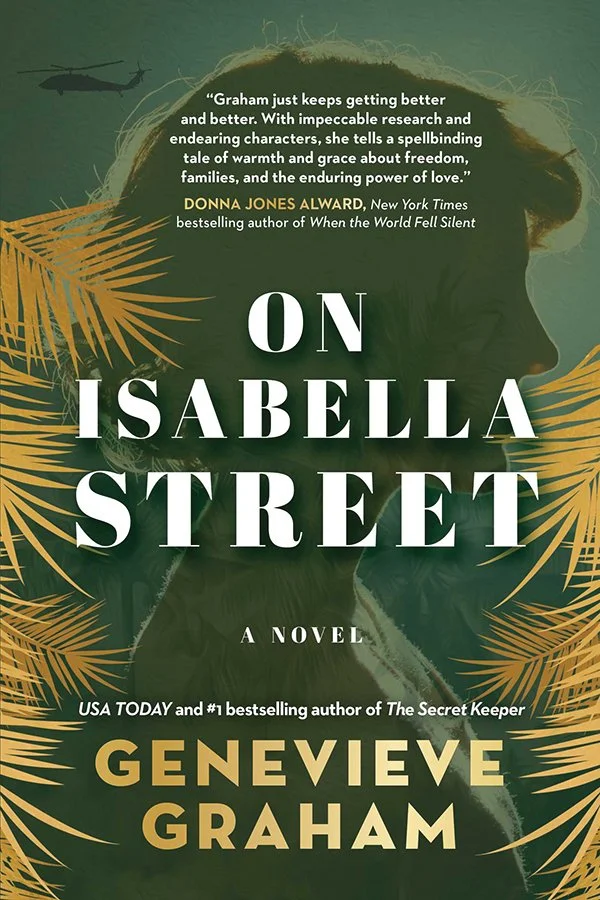
On Isabella Street by Genevieve Graham, Simon & Schuster, $25.99. On Isabella Street transports readers into one of those YouTube shorts of Toronto in the 60s.
With landmarks and iconic names making an appearance. The CBC building, Buffy Sainte-Marie, Leonard Cohen, Oscar Peterson, Anne Murray...
Set against the harsh reality of the way mental health was seen – a time when health practitioners could get away with statements like, “It’s one of those mornings. Full moon or something.”
Of generations of war veterans being left to deal with trauma on their own, of women fighting for rights.
It is however, in essence, the story of a unique friendship.
Marion and Sassy, two young women from vastly different backgrounds, with different aptitudes and attitudes, progress from being neighbours in their building on Isabella Street to the best of friends, relying on each other for emotional support. And this is before they discover how their lives are connected.
It brings alive the unfettered optimism and the crushing disillusionment of the sixties – All will be solved, those young people swore, through peace, harmony and free love. If only they didn’t have to make a living – and sheds light on aspects of that era that we are unfamiliar with. Such as the fact that “a woman received news of her own condition and prognosis secondhand, after her husband had been told”. Or that the Liquor Control Board of Ontario kept track of what people drank.
The book is a clear-eyed view of Canada as it was then. Marion likes thinking of her country as safe and welcoming and offering a future to everyone including war resisters from the US. But she’s also painfully aware of what her father says about Canada making and selling weapons for war. That some see Canada as an American weapon.
And it’s the weaving together of two love stories.
THE TREES OF LIFE
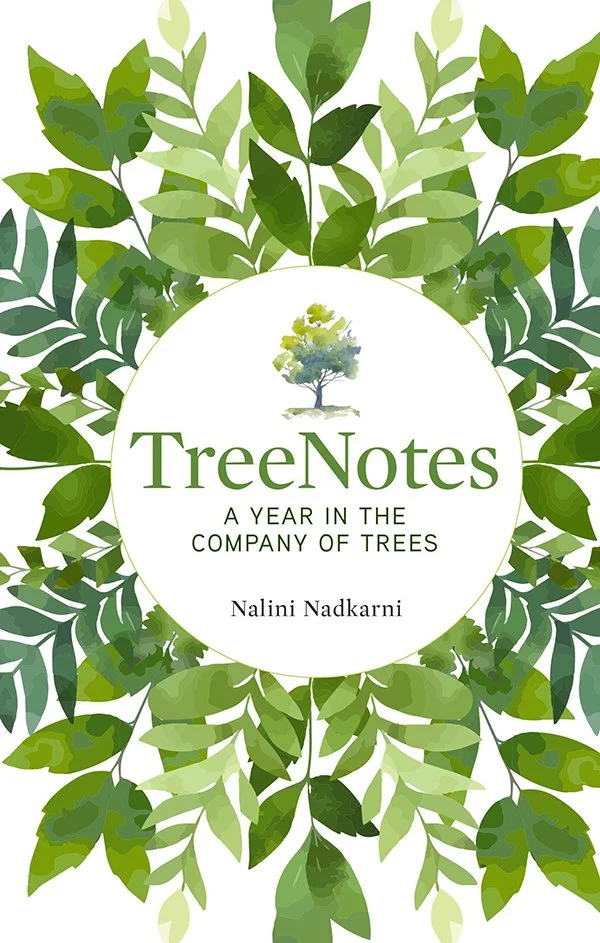
Tree Notes by Nalini Nadkarni, National Geographic, $32. Forest ecologist Nalini Nadkarni shares trees’ diversity, usefulness, beauty and worth in lyrical prose.
It is not a book about the tallest or widest or oldest trees – though they do show up – or those growing in extreme conditions, but about “everyday trees and their relationships with everyday people” helping us to see the trees in our yards and streets in a new light.
Nadkarni brings together stories and information from cultures and traditions around the world. Tu BiShvat, the Jewish holiday commemorating the New Year for the Trees, for one. And that for centuries, Egyptians, Greeks and Native Americans used the extract of willow bark to soothe aches and pains. Salicin, the active ingredient in the bark, was developed into aspirin in 1899.
She advocates for changes that we can easily incorporate to help save trees – such as bringing along one’s own chopsticks instead of using disposable ones offered at restaurants.
I can’t help but wish, though, that the self-acknowledged tree-hugger had thought to say no to the blank pages between chapters in her book. How many trees would that have saved?
HOT BUTTON ISSUES
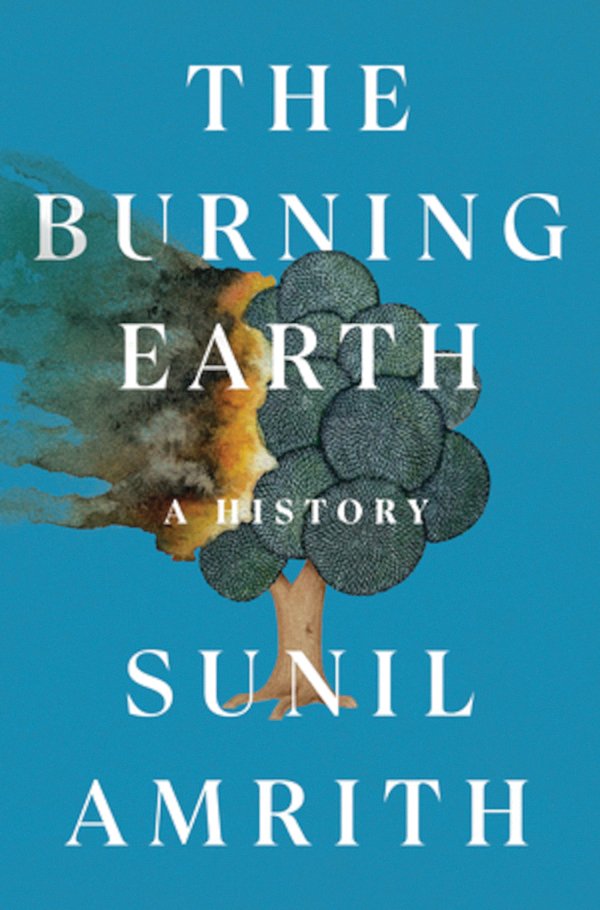
The Burning Earth by Sunil Amrith, WW Norton & Company, $47. Sunil Amrith twins the stories of environment and empire, genocide and ecocide, of an extraordinary expansion of human freedom and its planetary cost.
The Yale professor reckons with the ruins of Portuguese silver mining in Peru, British gold mining in South Africa, and oil extraction in Central Asia. Amrith’s account of the ways in which the First and Second World Wars involved the massive mobilization not only of men, but of other natural resources from around the globe, provides an essential new way of understanding war as an irreversible reshaping of the planet.
“The imperial globe-spanning pursuit of profit, joined with new forms of energy and new possibilities of freedom from hunger and discomfort, freedom to move and explore, has brought change to every inch of the earth.
“While migration is not an option for many people, for those for whom it is, migration doesn’t come without a heavy price.”
Anton Chekov had seen in Siberia 150 years ago, just what it takes to leave home, Amrith writes. “To sacrifice for this one’s own locality, one’s own beloved nest...” In the more recent words of the Somali British poet Warsan Shire: No one leaves home unless / home is the mouth of a shark.”
GROWING PLACES
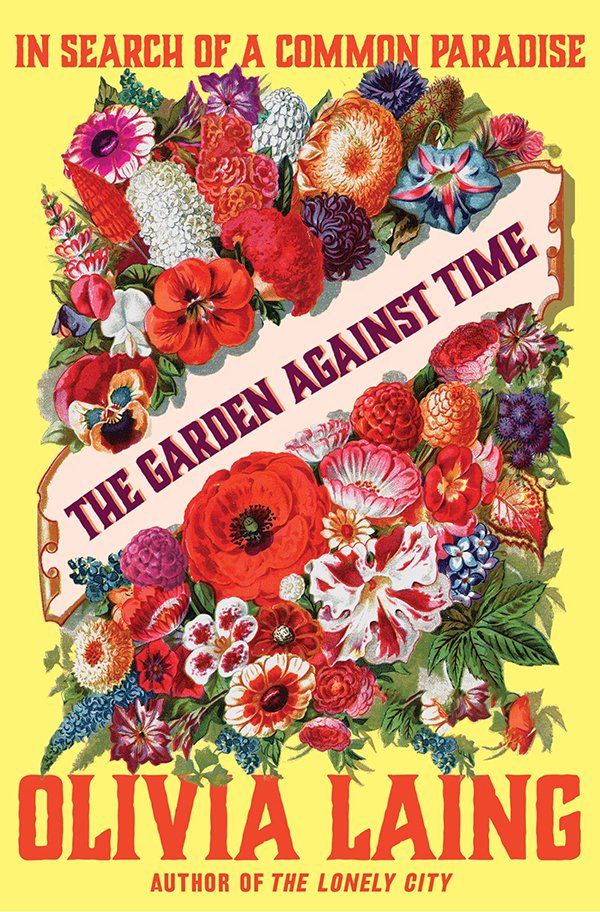
The Garden Against Time by Olivia Laing, Norton, $36.99. Can a tended plot of land become one’s personal paradise? Olivia Laing faced this question head on when, in 2020, she began to restore an eighteenth-century walled garden in Suffolk. She had never had a garden of her own. Home ownership came to her in her forties, and only small flats with barely any outdoor space.
In the beginning her would-be paradise “looked neglected and clapped out, the lawn crisped” and the greenhouse “was full of half-dead tomato plants, and outside its door the Magnolia grandiflora had dropped hundreds of leaves, the colour and consistency of baseball gloves”.
Had we made a mistake? Had I imagined it, the mood that seemed to gather between the walls?
Laing weaves the story of her restoration with leisurely and informed detours. The reader’s mind wanders along with hers as she toils under the March sun eating hot cross buns and drinking cups of tea, moving between real and imagined gardens. She explores Milton’s Paradise Lost, ventures into a wartime sanctuary in Italy and a grotesque aristocratic retreat funded by slavery – hidden behind the beauty of some gardens is the shocking cost of creating a paradise on earth.
Every garden, fertile or otherwise, has time and space “enough for all of us,” Laing discovers. It’s not a place to hide from the world; rather a place where discovery begins.
At first I thought it was the gardens that were being compared to paradise, as in heaven, but to my surprise the concepts ran the other way round. Our word ‘paradise’, with all its charmed associations, has its roots in Avestan, a language spoken in Persia two thousand years BCE. It derives from the Avestan word pairidaeza, which means ‘walled garden’, pairi for ‘around’ and daiz for ‘build’. As Thomas Browne explains in The Garden of Cyrus, it was these botanically-minded people ‘unto whom we owe the very name of Paradise’.
MILLENNIAL ADULTHOOD

Goddess Complex by Sanjena Sathian, Penguin, $39. Sanjana Satyananda walked out on her husband at a commune in India after a disagreement about whether to have children.
Now she is trying to resurrect her busted anthropology dissertation and crashing at her annoyingly perfect sister’s while her well-adjusted peers obsess over marriage, mortgages and motherhood. To move forward, she needs to finalize her divorce. But there’s just one problem. Her husband is missing.
From the author of Gold Diggers, an examination of millennial adulthood, the often-fraught conversations around fertility and the painful quest to forge an identity.
A THORNY PAST
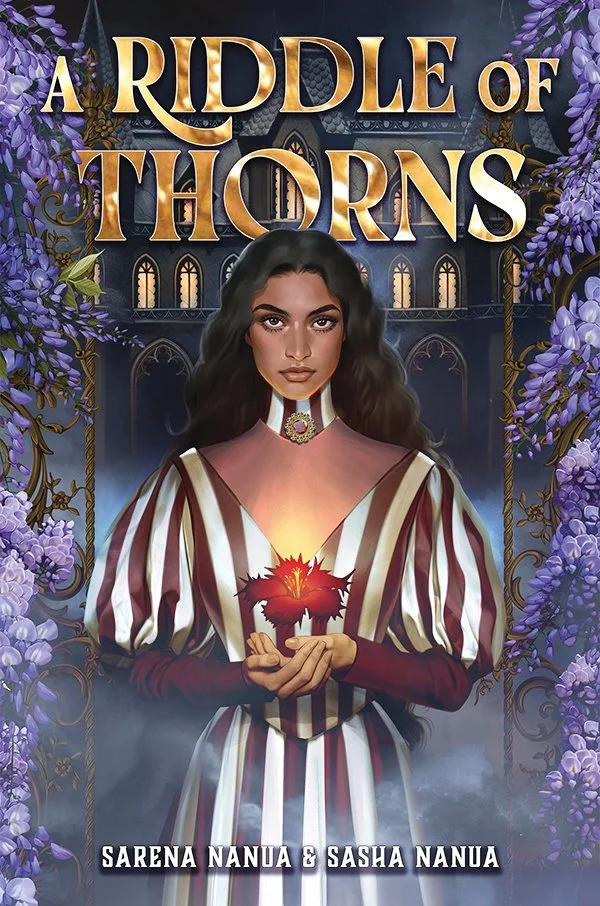
A Riddle of Thorns by Sarena Nanua and Sasha Nanua, Holiday House, $26.99. Set in a glittering yet shadowed Edwardian Paris where worship of Roman gods never faded, A Riddle of Thorns is a Gothic fantasy brimming with romantic tension, cryptic puzzles, and long-buried secrets.
Eighteen-year-old Sana Gupta returns to her ancestral home to claim her inheritance – but instead finds herself in a high-stakes contest of riddles against three enigmatic strangers. The prize? Ownership of Razor-thorn Manor and the mythical flower said to grant any wish.
The book is an ode to The Secret Garden, one of their favourite books, the Nanua twins write in their acknowledgments.
What if the story was told from a South Asian lens? What if the representation of India (and immigration as a whole) was differently portrayed?
They have conjured up a great read for young adults, combining their favourite genres – fantasy, historical, and mystery.
And leave readers with a clue for a possible sequel!
A COZY READ
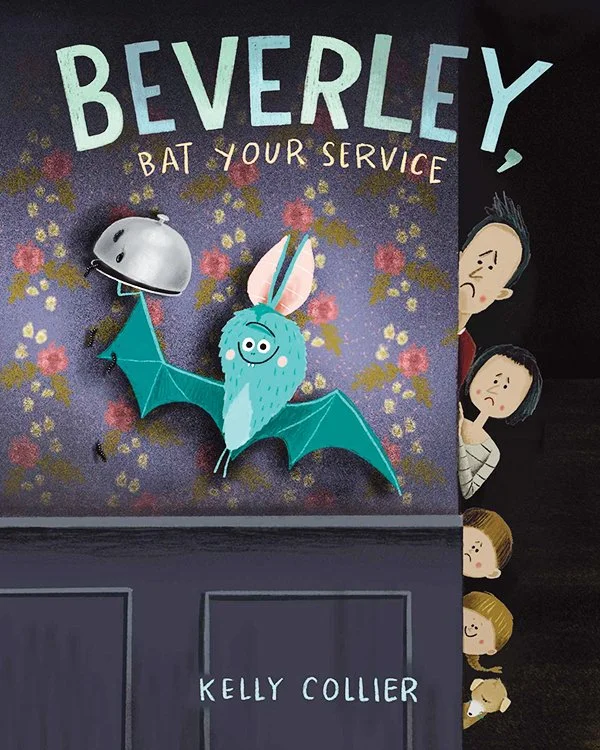
Beverley, Bat Your Service by Kelly Collier, Atheneum, $26.99. Beverley lives in a big old house perfect for entertaining. He always has plenty of snacks.
When a human family moves in, Beverley goes all out to make them feel at home. But Beverley is a bat and the family doesn’t necessarily see his efforts as welcoming. What’s a bat to do?
The charming little tale turns all the sweeter when you see the dedication: For my mom, Beverley, who loved to throw a good dinner party.
Aww.
TEEN REVIEW
By ESHAAL KAMRAN
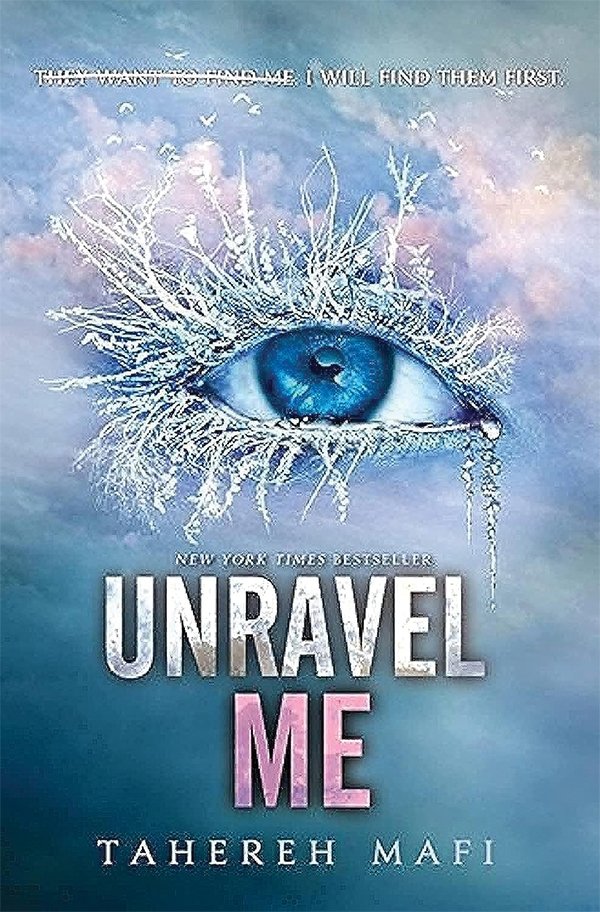
Unravel Me by Tahereh Mafi, Harper Collins, $19.99. Unravel Me, a fantasy novel written by Tahereh Mafi, is the second book to her beautifully written Shatter Me series. It continues with Juliette Ferrars, a young lady with a lethal touch. After escaping Sector Forty-Five and Warner’s army, Juliette and her lover, Adam Kent, are taken to a secret underground base referred to as Omega Point by Kenji Kishomoto, a former soldier who betrayed Warner.
At Omega Point, almost everyone has some sort of power, including their leader Castle. They have all been set to train their powers to the fullest. They must harvest their strengths to create an army powerful enough to take down the Reestablishment, individuals who intend to destroy the world.
While training, Julliette seems to be the only one who doesn’t see her power, a lethal touch, as a gift, but as a curse. She struggles to change her perspective and finds herself stranded with much bigger problems.
This novel uncovers secrets so big, they can destroy relationships. This book touches upon self-discoveries and illicit love. The ending leaves the reader on a huge cliff-hanger, persuading the audience to further read the series! I definitely recommend this novel to anyone who loves fantasy and suspenseful stories.
• Eshaal Kamran is a youth volunteer at Brampton Library.