
SENIOR MOMENT
WHAT’S COOKING IN OUR KITCHENS AND CULTURES?
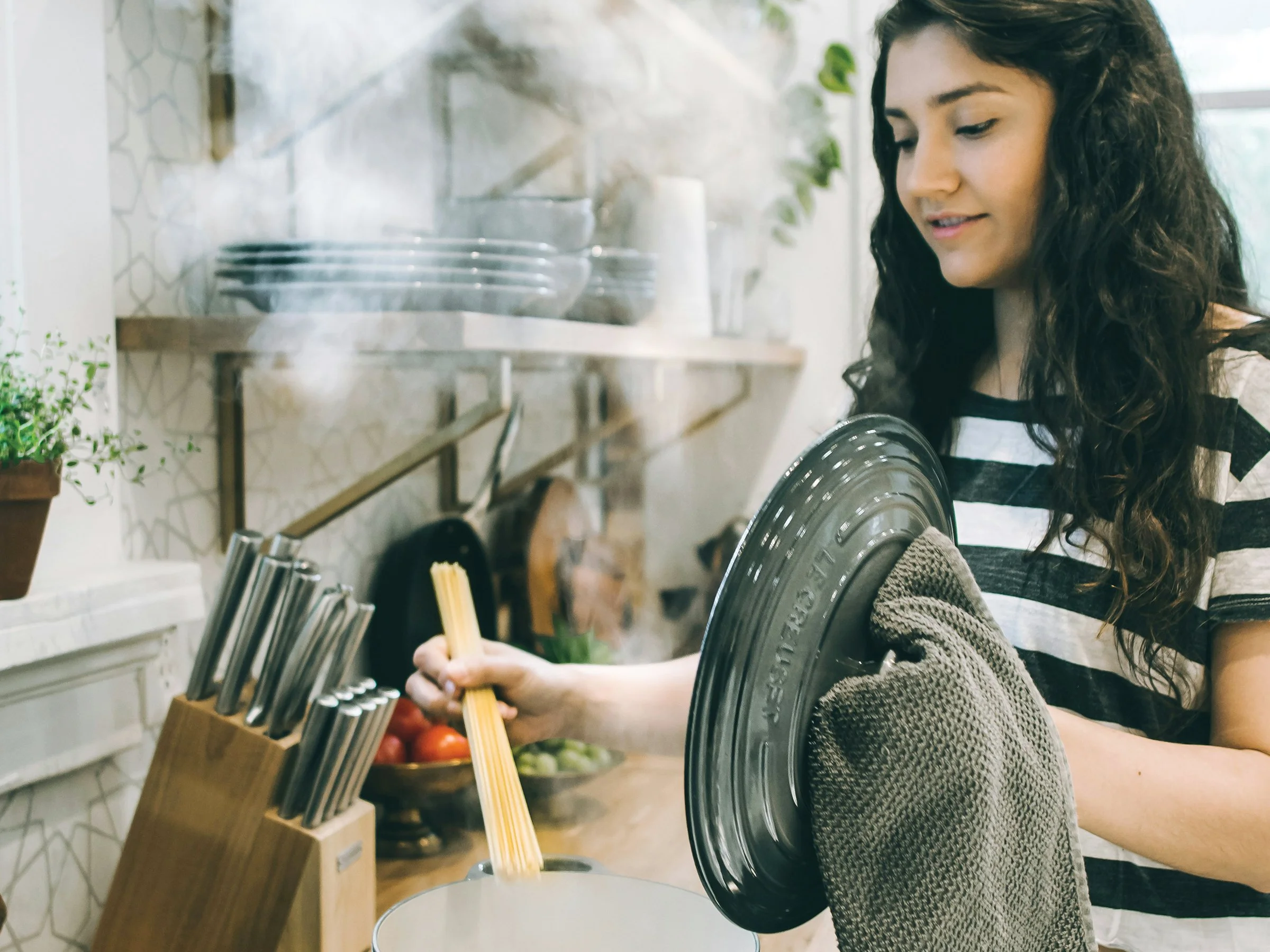
In the world of cooking, “authentic,” “original,” and “fusion” are more than just buzzwords. They shape how we understand food, both where it comes from and how it evolves. Image credit: LE CREUSET on Unsplash.
By DR CHANDRAKANT SHAH
Recently, my elder son, Sunil, surprised me with an unexpected comment. “Dad,” he said, “the desi dishes you cook aren’t always authentic. I learned how to make the real version from an old lady in an Indian village on YouTube!”
At first, I laughed it off. But the remark lingered. What does it really mean for a dish to be authentic? Or original? Or fusion? I also started wondering why we do tadka in our cooking, or why naans are made in a tandoor, and why our breakfasts are savoury while European ones are often sweet. Let’s stir this pot of thoughts together.
In the world of cooking, “authentic,” “original,” and “fusion” are more than just buzzwords. They shape how we understand food, both where it comes from and how it evolves.
Authentic food stays true to the traditional methods, ingredients, and culture it came from. It is passed down through generations, often within a region or community.
The key features are using traditional, local ingredients, following time-honoured techniques and reflecting cultural or religious customs. For example: rajma chawal in North India, which is slow-cooked kidney beans with rice; idli sambar in Tamil Nadu, which is steamed rice cakes with tangy lentil stew; and Neapolitan pizza in Naples, Italy, made in a wood fired oven using specific tomatoes and mozzarella. Authenticity isn’t strict uniformity – it allows for regional and personal variations. But it must stay within the cultural framework that gave birth to it.
Original food is a fresh creation, an innovation by a chef or home cook. It might use familiar ingredients in new ways or invent something entirely new. The key features are not bound by tradition; but are driven by creativity and experimentation and may one day become a classic itself. For example, a microwave masala khichdi made in 2 minutes, a beetroot biryani with a modern twist. The very first burger or Coca-Cola were once original. An original dish can, over time, become “authentic” to a new region or group as it gains popularity and tradition.
Fusion food blends elements from different cuisines – ingredients, methods, and presentation – to create hybrid flavours. The key features are cross-cultural and experimental; they reflect globalization and migration and are often playful and surprising. For example: Paneer tikka quesadilla (Indian, Mexican); butter chicken pasta (Indian, Italian); tandoori pizza (Indian, Western), and Hakka noodles and Manchurian (Indochinese inventions from Kolkata). Fusion dishes tell the story of migration, creativity, and the merging of food cultures.
Why do we do a tadka? Tadka, also known as chaunk, is a cornerstone of Indian cooking. It’s the art of tempering spices in hot oil or ghee to unlock their flavours and aromas. Tadka is important because it releases flavours. Spices like cumin, mustard seeds and garlic bloom when heated, adding depth by infusing oil. The spice-infused oil spreads flavour throughout the dish, adding texture, such as crispy onions, garlic, or chillies, which gives contrast, and finally, it begins or finishes a dish. Starting tadka is used in sabzis and curries, whereas finishing tadka is poured over dals or chutneys for aroma and taste.
Common tadka ingredients include mustard seeds for their earthy, pungent taste; cumin seeds for their nutty and warm flavour; dried red chillies for their smoky heat; curry leaves for their citrusy fragrance; hing (asafoetida) for its umami and digestive aid; and garlic, ginger, and onions – base notes of many Indian dishes. There are regional variations. For example, in North India, hing, cumin and garlic are commonly used; whereas in South India, mustard seeds, urad dal and curry leaves are used, and in Gujarat/Maharashtra, tadka may include se-same seeds or green chillies. In essence, tadka isn’t just a cooking me-thod – it’s a sensory experience.
What’s special about the tandoor? A tandoor is a vertical clay or metal oven used widely in Indian, Pakistani, Afghan, and Central Asian cooking. It’s fueled by charcoal or wood and can reach temperatures of up to 900°F (480°C). It works by providing direct heat from burning coals, by convection currents inside the oven and the radiant heat from the clay walls. This three-level cooking creates food that’s juicy inside and seared on the outside. The signature smoky flavour is hard to replicate in a regular oven. Tandoori breads like naan and roti puff up instantly when slapped against the hot walls, creating a crispy, chewy texture. Tandoor cooking is often a community affair, used during feasts, festivals, and weddings.
Why are South Asian breakfasts savoury and European ones sweet? Here’s a fascinating contrast: In South Asia, breakfast is usually savoury, spicy, and hearty whereas in Europe, it’s more likely to be sweet, light, and mild.
There are several factors influencing the habit.
South Asian breakfast is savoury and substantial because of the culinary tradition. Idli-sambar, poha, parathas with pickle, chole-bhature... where spices and lentils are standard.
In a hot climate, spices stimulate digestion, and salty foods replace electrolytes and water lost through sweating as salty and spicy food makes one drink more water.
Fermented foods like dosa or dhokla, help gut health.
Local grains and pulses lend themselves to savoury preparations, and, historically, people involved in physical labour needed a sustaining meal before work.
On the other hand, European breakfasts are generally sweet and simple because of the industrial era. Quick meals like toast, jam, cereal became common during the working boom.
Sweet, carb-rich foods give a quick energy boost in the morning in colder countries and bread, butter, pastries and fruit preserves have been traditional in Europe.
And once a luxury, sugar became widespread through colonial trade.
In a globalized world, things are changing. In India, toast with Nutella or bowls of cornflakes are now common. In the West, savoury options like shakshuka, avocado toast, or oats upma are trending.
Most of us cook the way our parents and grandparents did – by memory, instinct, and tradition. We follow customs without always asking why. But when we reflect on why we temper spices, how the tandoor shapes flavour, or what makes a dish authentic, we gain a richer understanding of our culinary heritage. Whether you’re recreating a centuries-old recipe, inventing a new one in your microwave, or blending flavours from around the world, your kitchen becomes a space where tradition meets imagination. So next time someone questions your cooking, ask them: Are you looking for authentic, original, or fusion? In each, the answer is always delicious.
A WELL-DESERVED HONOUR FOR DR SHAH!
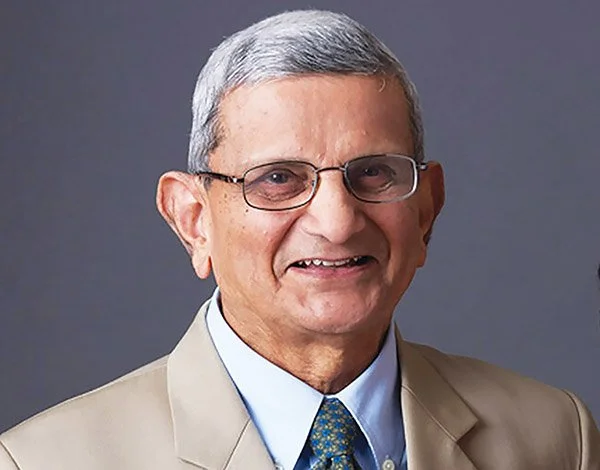
Dr Chandrakant Padamshi Shah, MD, FRCPC, O.C., O.ONT., Dr. Sc. (Hon) has been appointed Officer, Order of Canada.
O.C. recipients are those who have made outstanding contributions to Canada at the national level.
The Professor Emeritus at the University of Toronto’s Dalla Lana School of Public Health has transformed public health education nationwide and championed Indigenous health throughout his career. His advocacy reshaped Canada’s citizenship exam and established the country’s first endowed Indigenous Health chair, leaving a profound legacy of inclusion, scholarship, and systemic reform.
Dr Shah is an honorary consulting physician, Anishnawbe Health Toronto. He is the author of To Change the World: My Work With Diversity, Equity & Inclusion in Canada.
A well-deserved Order of Canada for Dr Shah!