
BOOKWORM
AS GOES THE NATION, SO GOES A FAMILY
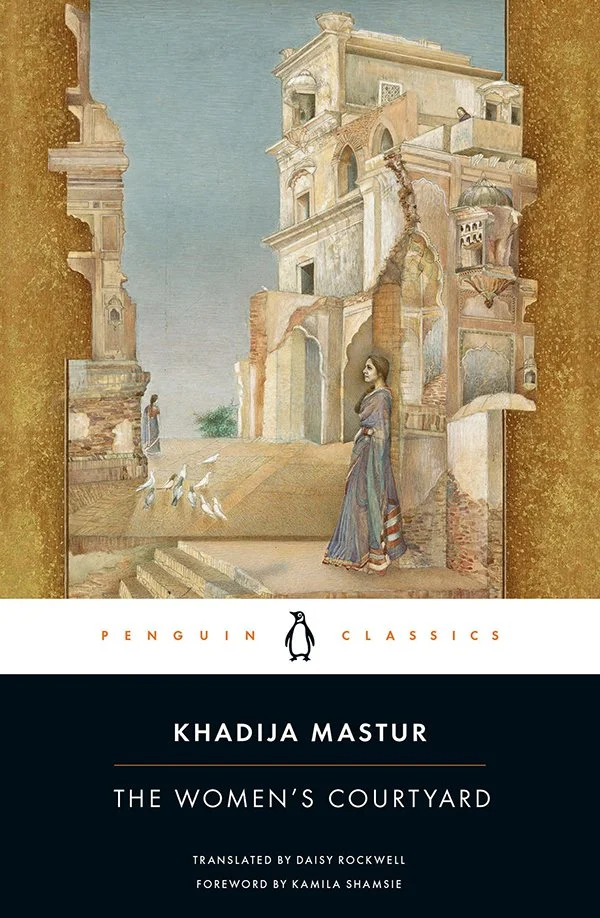
The Women’s Courtyard by Khadija Mastur, translated by Daisy Rockwell, Penguin Classics, $24.95. First published as Aangan in 1962, Khadija Mastur’s novel, set in the turbulent decade of 1940s British India, was hailed a masterpiece of Urdu literature. The Women’s Courtyard, translated by Daisy Rockwell, introduces a new generation of readers to Aangan, and offers a unique perspective on the Partition, from the point of view of a family in an unpleasant, claustrophobic setting.
The novel follows the struggles of a Muslim family. It’s the story of the youngest daughter Aliya as her life plays out against the backdrop of the political dismemberment of the subcontinent in a world governed by men in the family. The men are busy fighting for freedom. Some support Hindustan. There are supporters for the creation of Pakistan as well. Large question around national politics seep through the walls of the secluded courtyard. As they deal with poverty that engulfs them, a direct result of the men doing nothing but pursue political passions, the women are left to run the household on shrinking means, and Aliya attempts to gain an education against all odds while fending off amorous advances from her cousin.
The war continued on. Inflation had swept the house clean. In truth, Jameel’s tiny salary couldn’t have filled anyone’s stomach. How selfish everyone in the household had become. Amma’s brow was always creased. She’d come to hate the very sight of Chacha. She had a strong feeling that if the money from the shop were to come into the house, everything would be changed instantly. They would have the good fortune to eat in style. She was always threatening to leave for her brother’s house, which made Chachi worry about the dishonour this would bring to the household. Everyone would say that Chacha had been unable to feed them.
The Women’s Courtyard is a feminist classic, written at a time when patriarchy in India hadn’t yet become comfortable with the idea of women’s equal status in the society. (We have made some progress since, but barely.)
Daisy Rockwell won the 2022 International Booker Prize for translating Geetanjali Shree’s Hindi novel Tomb of Sand (Ret Samadhi). I could sense the magic of her translation on every page. I felt was I reading the original in Urdu as Khadija Mastur takes the reader to the very source of the psychological phantom-limb trauma of the Partition that torments the people of the subcontinent to this day.
FINDING ANAA
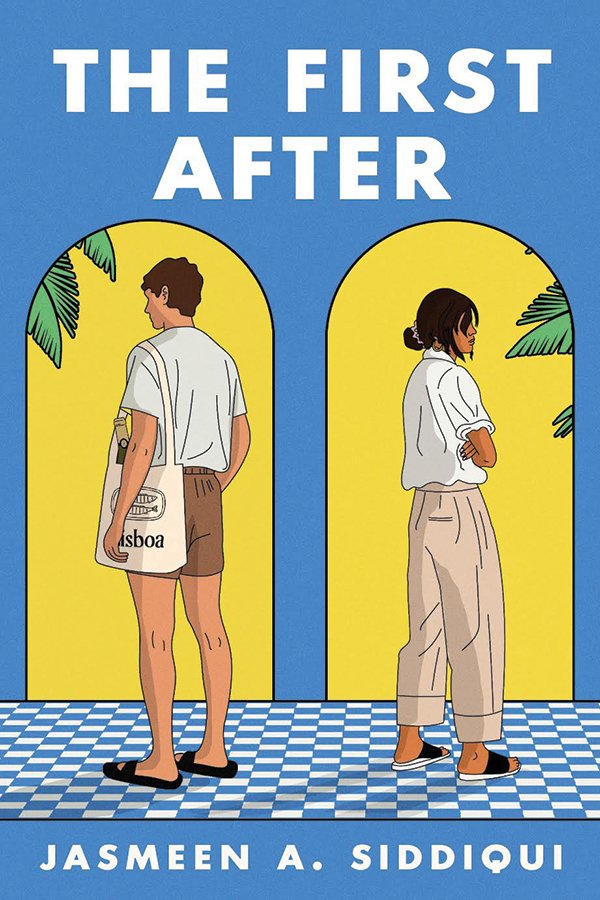
The First After by Jasmeen A. Siddiqui, Random House Canada, $26. “Throughout her life, she’d been taught that she was most palatable when she didn’t say too much, when she smiled and nodded and pressed her tongue hard against the back of her teeth”.
But 23-year-old Anaa is an aspiring poet. The sort of girl who gets into discussions over the elasticity of time and how death is actually a deeply comforting concept. Someone who increasingly felt she didn’t belong in her group of friends, aware of the silence that descends when she speaks about the sweatshop labour behind the labels they are excited about. Who wants to be seen as a woman of colour even though that was the last thing she wanted when she was in school. Who wants to go as a Freudian slip on Halloween – wearing a slip dress with terms like id and ego on it.
Her boyfriend in Canada, Ben, was easy-going, open about being devoted to her. He enjoys being with people and makes friends effortlessly. But Anaa finds him too accessible, she’d rather Ben had a more exclusive energy. He loves her for who she is, but Anaa would rather he want more from her, more for her.
She moves to Portugal and falls in love with her new life there. A new group of arty friends, a new relationship. Tiago is edgy, articulate, he brings out whole new facets of her personality.
And then Ben comes on a visit they’d planned before she met Tiago.
She wants to meet Ben as the person she’s blossomed into. But she’s anxious about Ben and Tiago meeting.
It was like characters who time-travelled weren’t supposed to interact with people from the past or else the linear thread of time would knot into itself and the very fabric of their existence would cease to exist.
Despite her best efforts to keep them apart, of course Ben sees Anaa with Tiago and Tiago sees her with Ben.
The language is poetic. “The following night arrived as most Friday nights do, dangling at the end of the week like a heavy ripened fruit, plump with potential.” And chuckle-inducing. At a poetry reading, Ben can’t think of any other event he’d been to where he’d seen so many women in one place at the same time, unless they were all waiting in line for the bathroom.
Absorbing, insightful, cheeky and charming, The First After is ultimately, a book about finding oneself. After all, it is the story of a girl whose name means “Self”.
JA, SIMRAN, JA!
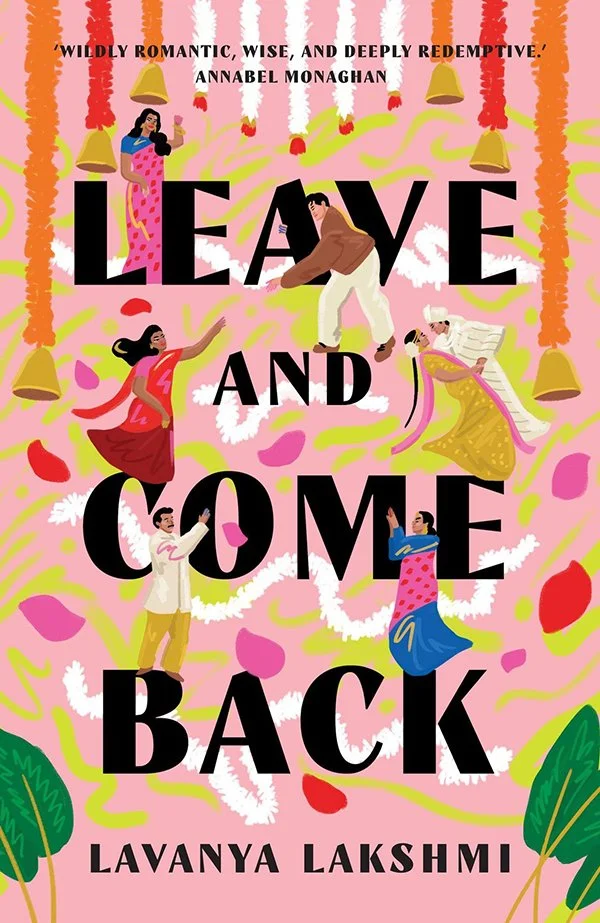
Leave and Come Back by Lavanya Lakshmi, Doubleday Canada, $26.95. Simran Gopal (there’s a story behind the name) is living out her own swoon-worthy romance to rival the beloved Bollywood films of her childhood (DDLJ in particular, but no, that’s not why she’s Simran).
Until an invitation to her cousin’s wedding brings her back to the family home she’s been avoiding for the last seven years. And then Leo Bridges, her new boyfriend, accidentally crashes the engagement party, taking the family drama up another notch. To avoid evoking the ire of Veena perima, Simran’s aunt and the family matriarch, the cousins need to rally. They need to trick Veena perima into abandoning her plans to find a suitable boy for Simran and into adoring Leo. They have to move her past thinking of Leo as “some shoe-wearing (indoors) klepto”.
Commence: Operation DDLJ.
They coach Leo on Veena perima-approved “good behaviour”. This happens to include bending down to touch elders’ feet to seek their blessings. I found myself giggling helplessly at the point where poor Leo, bent double, is going red in the face because they forgot to inform him when it was okay to stand upright again. Or the time when he makes tea for everyone in his continuing efforts to win them over and it’s awful. But at least he knows not to call it chai-tea!
Kavitha, Simran’s cousin, a reviewer of movies, describes one popular genre as rom-com-fam-dram and Leave and Come Back is the perfect example. It’s warm and sweet, with huge helpings of family drama, and it’s laugh-out-loud funny. It’s also topical, with Simran working at the international students’ office at UofT. A small team that is “perpetually under-resourced and over-tasked”.
Bonus: It shares aspects of Tamil culture not often seen in this genre.
“Yenna, yelachu poittai! You’re too thin! Toronto mein good food nahin mila, kya?”... the familiar braid of English and Tamil and Hindi, so interchangeable in this house, tugs at her unexpectedly.
Bonus#2: Old Kishore Kumar songs are referenced in the book. Some translated – This is life, the colours and the shape of it – allowing the reader to make the connection to Yeh jeevan hai, is jeevan ka, yahi hai rang roop.
Lavanya Lakshmi shares her love for the movie that has fans across generations in a book that will be loved across generations, too.
The photographer yells, “Say ‘cheese!’” and from a corner, an uncle shouts, ‘No! Say ‘paneer!’”
Everyone groans as the shutter clicks. The photo is ruined and it’s perfect.
GROWING UP IN BOMBAY
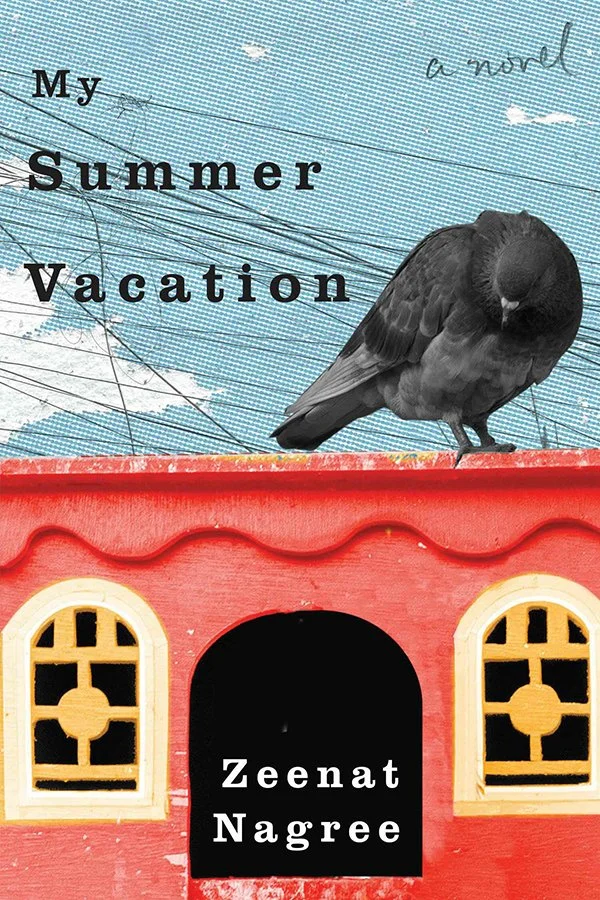
My Summer Vacation by Zeenat Nagree, Esplanade Books, $22.95. Students are expected to submit an essay on what they did over the summer vacation at 12-year-old Zeenat’s school.
A neighbour’s child is kidnapped. Her coming of age is marked at a ceremony. Her father gets her a goldfish and she can only come up with names like Harriet or Nancy for it, but “These names do not fit in our family”.
But with nothing exciting – to her mind – to report, she considers making up a trip to the mountains. After all, what’s so interesting about spending long days inside the family apartment with the cockroaches under the fridge, the pigeon’s nest above the cupboard and the shared toilet in the building, watching her mother and aunts navigate interpersonal relationships? Or in wearing her sister’s hand-me-downs altered by her mother?
Even the autobiography of a penny that we read in school this year was more interesting than anything I have ever done because the coin travelled from one pocket to another and fell into a gutter during a day of heavy rain before it was rescued by a hungry beggar.
And Zeenat is lost in her make-believe world of books and American television shows. The precocious pre-teen’s observations of the people and events around her in this auto-fictional account pack humour, tenderness and finely detailed vignettes. A child on the cusp of growing up as her city morphs from Bombay to Mumbai.
DON’T FEEL LIKE A HUG? JUST SAY SO!
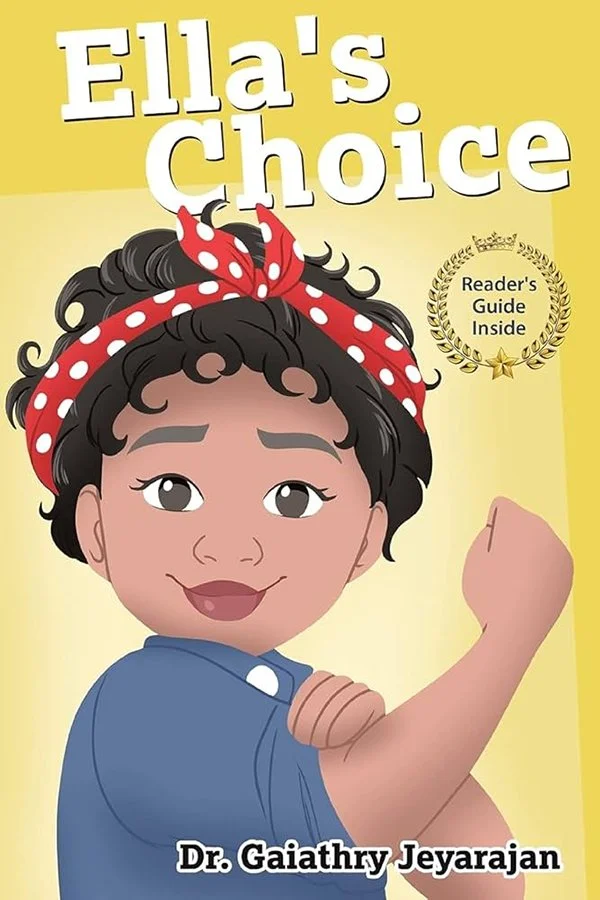
Ella’s Choice by Dr Gaiathry Jeyarajan, Tellwell, $16.99 (Amazon). In her foreword, Dr Gaiathry Jeyarajan, a Toronto-based psychiatrist, writes that parents often force choice on their children. In everything from what to wear to what to eat. It is very important to teach children to respect boundaries their own and those of others.
Little Ella likes to spread her love. Her parents get hugs and kisses, but she has been taught that it’s okay to say “No!” if she doesn’t feel like a hug.
Winner of the Child Psychology Award, Ella’s Choice introduces young children to consent and personal boundaries through a fun and engaging rhyme, giving them the language to communicate boundaries and seek help when needed. It involves several family members and includes a readers’ guide with examples parents can use.
LOVE YOURSELF
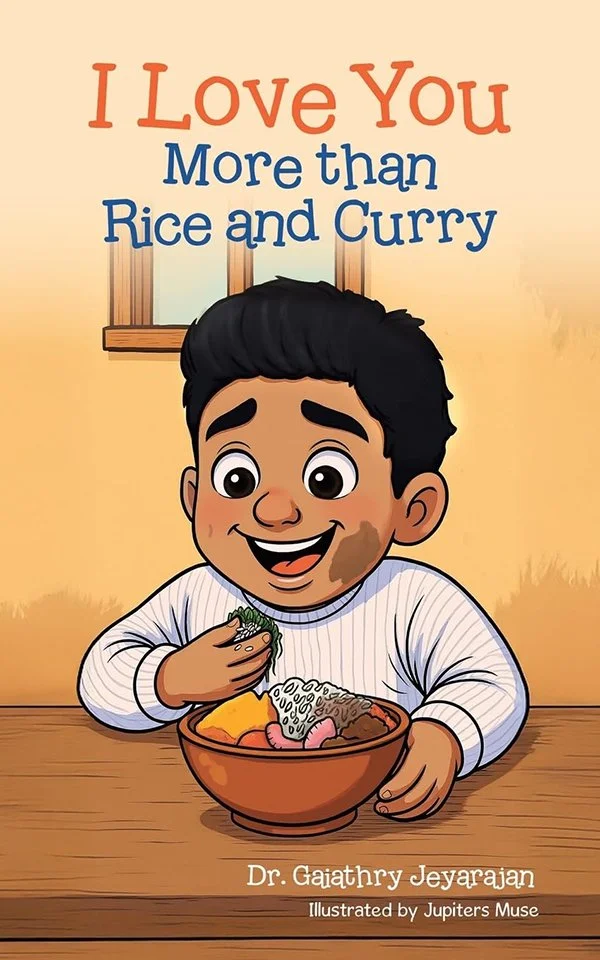
I Love You More Than Curry And Rice by Dr Gaiathry Jeyarajan, illustrated by Jupiters Muse, Tellwell, $17.99 (Amazon). Noah is excited to bring his favourite fish curry and rice to school for lunch, but his friends say it smells funny. Until Chloe shows interest in knowing its name and wants to taste it. Soon the other kids crowd around, wanting some too.
I Love You More Than Rice and Curry, draws from Dr Jeyarajan’s Tamil heritage and lived experiences with racism. The book teaches children that different doesn’t mean strange, and highlights how peer allyship can transform exclusion into belonging. It reinforces that when belonging is fostered at home, children are more likely to extend that same empathy to others and includes a guide for parents and teachers to spark conversations that make all children feel valued and confident in who they are.
TEEN REVIEW
By NISHI SHAH
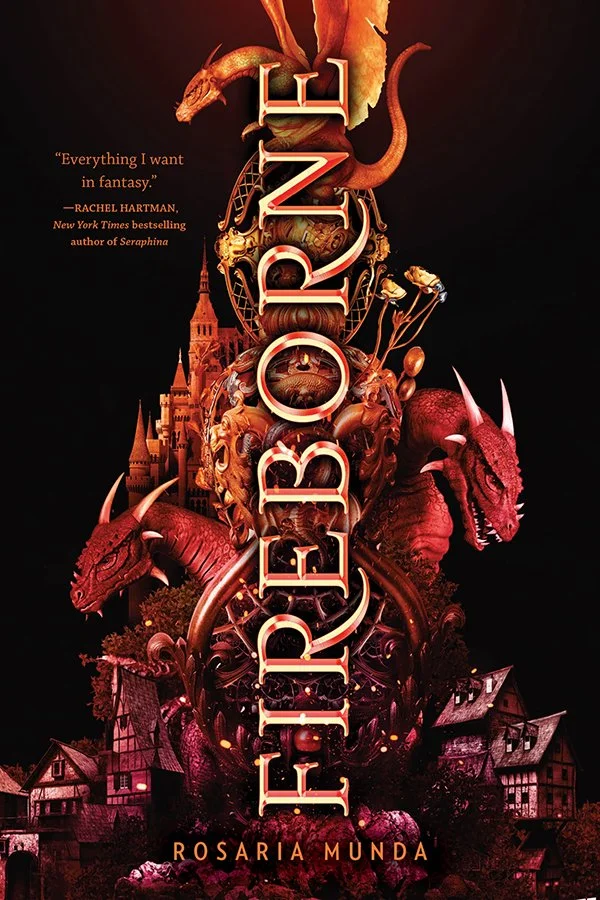
Fireborne by Rosaria Munda, GP Putnam’s Sons, $28.99. Fireborne by Rosaria Munda is set in a world where the old regime has been destroyed by a brutal uprising. The story follows Annie and Lee, who are two orphans who rise through the system to become dragonriders, and in the fight for the title of Firstrider.
Munda’s world-building is rich and immersive, making the reader feel as though they are the characters themselves. The dual perspectives also provide the readers with different viewpoints on the same scenario, creating a sense of balance between these characters. The characters themselves are well-developed, with Annie’s strength and determination in what she believes in, in contrast to Lee’s constant internal conflict.
The book overs many topics in a creative light, though most of them are political, they do not feel boring or as though they lack depth. They are well thought out and are easy for the reader to understand and pick up on. As the book goes on, some characters do feel like they are not thought out or are just fillers, as they do not add to the story.
Fireborne uses dragons and their rides to send forward the message that true power is not something that is a birthright, but it is rather the choices we make. It is definitely book you should pick up and read.
• Nishi Shah is a Brampton Library youth member.