
GRANT'S DESI ACHIEVER
RAAGS AND RICHES
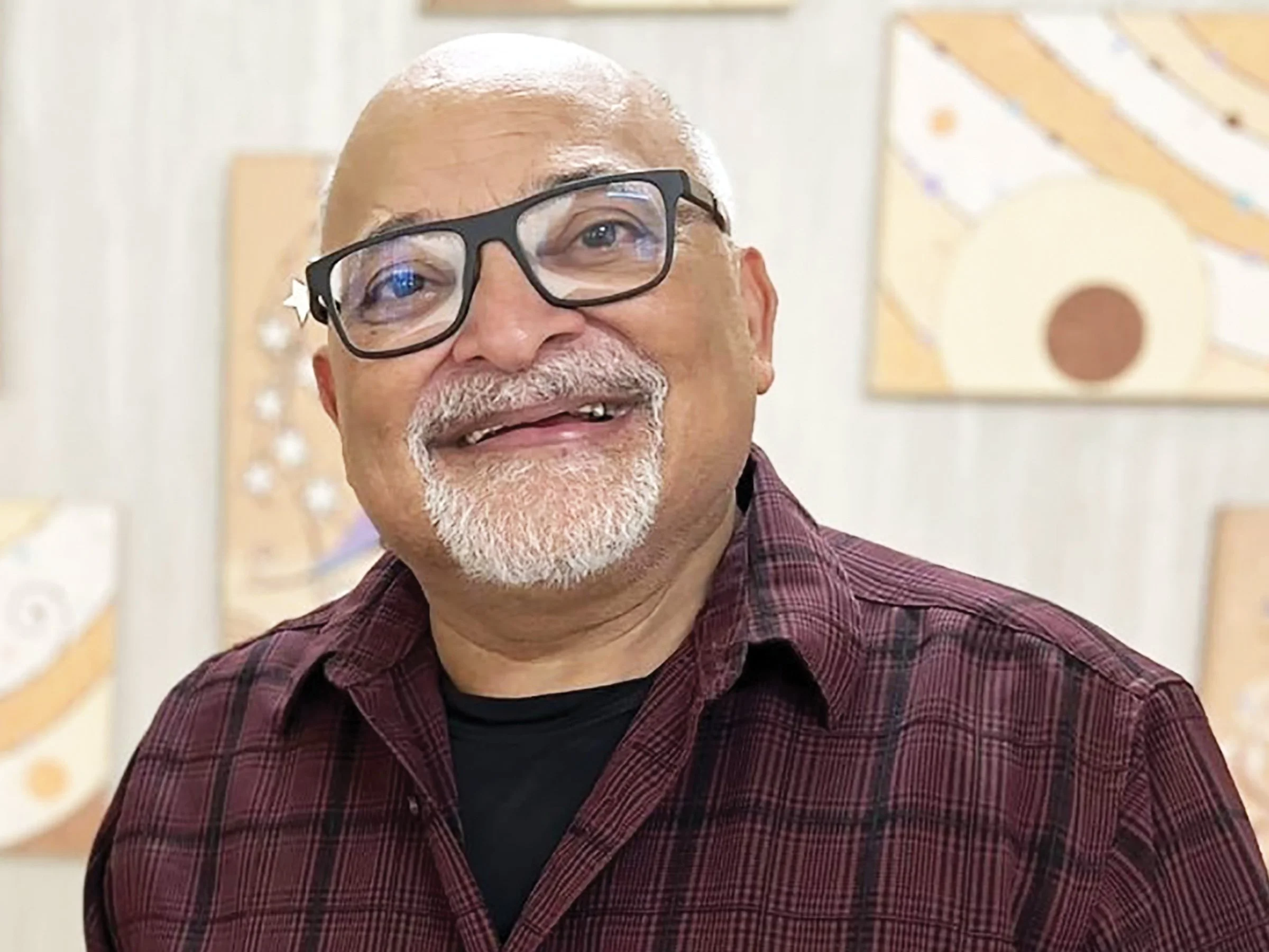
Mohamed Khaki is a passionate advocate of raag-sangeet. He is the Pragramming Director of Raag-Mala Toronto.
By SHAGORIKA EASWAR
Mohamed Khaki describes himself as the “face behind a strong team” when music aficionados at yet another soul-stirring concert organized by Raag-Mala Toronto heap praises on him for bringing the best of Indian classical music to the city.
It is indeed a strong team of dedicated volunteers and Khaki, who himself began as a volunteer, lists the many names who have helped build Raag-Mala.
Magan Ambasana, founding president, and Raya Bidaye, whom Khaki counts as among his mentors.
“To this day, he attends our concerts, he’s like a Raag-Mala emeritus! Tapas Mukherjee, who was president after Magan bhai, and so dedicated; Dinesh Gandhi; Zahid Khan and Rishi Mishra...
“Selfless volunteers with a passion for raag-sangeet, who played a huge role in bringing in artistes.
“And Manoshi Chatterjee, our very able presenter.”
When Khaki was approached to be president in 2012, he said he’d do it for a year. He began by convening and bringing together a group of people who love music as well as supporters and donors. In April 2013, Raag-Mala presented a concert with a new team.
Praveen Sheolikar and Arati Ankalikar “just happened,” he says. “I was fortunate I had just retired from my job at an investment management firm with a good settlement. I had the time to call everyone! Rajesh Godbole, founder-president of Shadaj in Boston and I hit it off. He was bringing artistes to North America and we arranged for them to come to Toronto. We did six or seven concerts that first year.”
Khaki was on the board of an organization working in community development in East Africa.
“Totally different from hierarchical organizations,” he says. “We paid our own way for each trip to remote villages in Kenya. There I learned how you work with communities, and that’s the ethos I approached the Raag-Mala team with. It’s all of us, everyone is invested. That then seeps into the donor base, they feel that sense of community.”
Khaki helped formalize the system they had in place. Concerts used to be held at University of Toronto’s auditoria, St Michael’s church or Glenn Gould Studio. He helped find them a new home at the Aga Khan Museum. And he brought luminaries from the world of music to the Raag-Mala stage.
Buddhaditya Mukherjee, Shahid Parvez, Veena Sahasrabuddhe, Bahauddin Dagar, Uday Bawalkar, Ashwini Bhide, Prabha Artre – who came at the age of 80 – Alam Khan, Ajoy Chakraborty and Kaushki Chakraborty. It’s a long list of illustrious names.
“But remember, they came for Raag-Mala,” Khaki is quick to point out. “Bismillah Khan and Vilayat Khan had come. As had Zakir Hussain who performed with Hariprasad Chaurasia and Shivkumar Sharma.”
He has interesting anecdotes about his interactions with many of them.
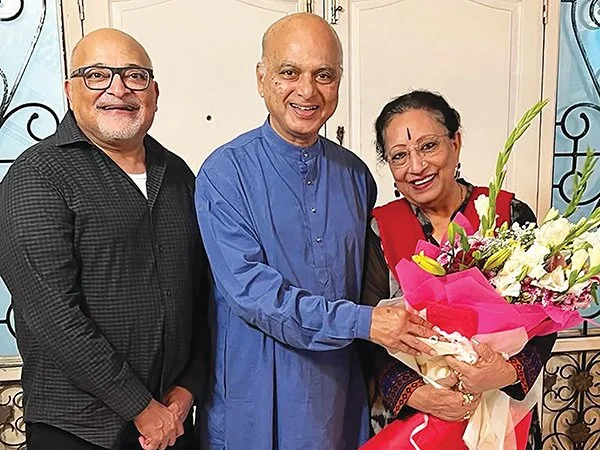
“Don’t be comfortable only in the culture you grew up in.” Mohamed Khaki with Pandit Satish Vyas and Parveen Sultana.
Breakfast at Buddhaditya Mukherjee’s home in Kolkata.
Lunch with Bahauddin Dagar at the gurukul he runs in Panvel, Maharashtra.
Ajoy Chakraborty introducing him to a host of artistes including Omkar Dadarkar.
Meeting Pandit Rajan Mishra’s sons, Ritesh and Rajnish and listening to Ritesh sing the morning raga Desi.
“I’m a devoted fan, I go behind the stage and try to meet the artistes, and this was from before I was president of Raag-Mala. This was how I met Veena Sahasrabuddhe’s husband Hari who invited me to their home in Pune. When I got there, he called out to her. ‘Veena, your guest is here,’ and she emerged from the kitchen with tea. I couldn’t believe I was being served tea by this legend!”
Another anecdote involves Khaki’s own kitchen in Toronto. Arati Ankalikar walked into the kitchen, saw his partner Paul who is a writer, said, “Oh, Paul, I hear you’re a storyteller. I tell stories through my songs,” and burst into song.
“I’m living the retiree’s dream, able to indulge my passion for music,” he laughs. “The beauty of this is that I’m a fourth-generation Indo-African, there are others from different communities and we are able to create an experience with no boundaries.”
Hosting events of this scale comes with its own challenges. Organizing visas and accommodation for visiting artistes, for one.
“I work with people like tabla artiste Sanjay Deshpande in India who organises concert tours and tell him the artistes we want. If they have appeal for other music groups in Calgary, Montreal or Vancouver, it makes it easier for us to bring them, more financially viable for a cash-strapped not-for-profit. We used to have artistes stay at our homes, but there can be surprises there, too. Once Paul and I were expecting three artistes, but a fourth, the student of an artiste who was accompanying his guru, also showed up. Everyone is very accommodating and the artiste said they could share a room, so we set up a sleeping bag and cushions in his room! That student is now a performer in his own right and we hope to bring him over to perform. Now we budget for a two-day stay at hotels for the artistes.”
There are also times when the unexpected throws a spanner in the works, and an artiste announced at the beginning of the season is unable to be present.
Like the time Parveen Sultana, a big draw, had to withdraw at the last moment on her physician’s advice. Jonathan Kay on the esraj and Subhen Chatterjee on the tabla stepped in almost seamlessly.
Or when Arshad Khan, already in town for his concert, had to rush back to India at his father’s passing.
“We had to pivot big time,” recalls Khaki. “Hidayat Khan was able to shift his schedule to fit us in and flew down from New Jersey to perform. This is when our connections come to the rescue. We’ve built a community, an eco system. I’ve always encouraged the rest of the team to form independent relationships. During COVID, we were concerned about how we were going to keep going and I remember I was going into surgery when I got a call about partnering with an organization in India on online concerts! Current president Nishant Parekh and Aliya Ghosh took care of the details. Nishant is constantly in touch with artistes.
“There’s a sense of ownership, of family. We have listeners who are regulars and have attended for years, some of whom now take Wheel-Trans to come. ”
Khaki credits Duncan Holmes and his partner Derek Strachan for helping him initiate strategic planning sessions.
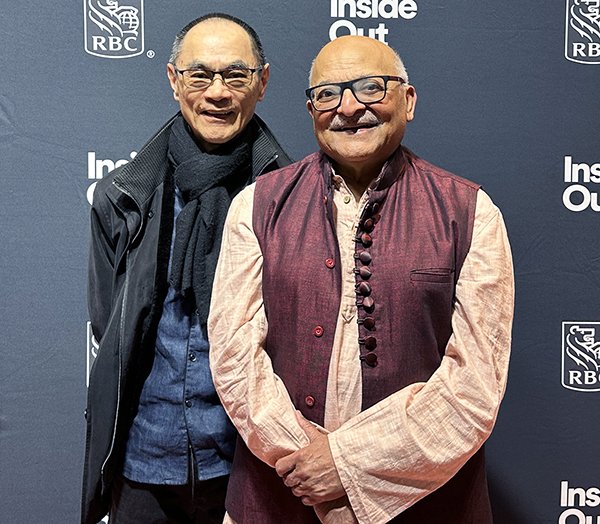
Mohamed Khaki with his partner Paul at Inside Out Festival when Sabar Bonda (Cactus Pears) won the Audience Choice award. Khaki was one of the producers of the film which won the Sundance Festival 2025 Grand Jury Prize, International Films.
The question of how to diversify, bring in larger audiences, comes up at these sessions.
“We want our audiences to have an authentic experience, one that transcends, and we know we can’t cover all genres of raag sangeet. Raag sangeet can be promoted in so many ways, and other groups are doing it. We have to have focus. But I’m aware of the appeal of widening the slate. Even in a pure classical music concert, when Shahid Parvez segued into Mohe panghat pe, there was an appreciative ‘Ah!’ from the audience. So what we have done is work with Harbour-front, Small World Music and Nuit Blanche on concerts with bhajans and qawwalis, etc.”
Khaki recalls growing up in a middle-class, music-filled home in Dar-es-Salaam in East Africa. All India Radio’s music programs were a favourite and he specially loved the short pieces of classical music.
“I was drawn to songs that were raag-based, I discovered Begum Akhtar and adored her music.” he says, and shares that several musicians or artistes we think of as strictly “classical” also created music for movies. Among them, famously, Ravi Shankar for Anuradha.
“Abdul Halim Jaffer Khan played for Hindi movies. I met his son Zunain in Mumbai and we talked about how one can recognize Ustadji’s signature style in several songs.”
Khaki moved to Canada in 1975, after a year in the US where he took some courses at the University of Minnesota. Upon his arrival in Canada, he did the rounds of insurance companies, “slushing through snow” to hand out resumés.
He had a Bachelors in Teaching, but he didn’t see himself as a teacher. He would also have had to retrain to teach in Canada. So he put his degree in Math and Physics to good use and did Level 1 of the Society of Actuaries exam. He passed in May, it took him until September that year to land a job. He became an actuarial analyst and an associate of the Society of Actuaries. He passed subsequent levels, but it took time.
“There used to be one exam, on life contingencies, I failed it six times! But I persisted, and passed on the seventh attempt. I was competing against people who were studying full time while I was doing it while working full time. I passed Level 3 of the Chartered Financial Actuaries Program at the age of 43. They’re hard! But I was tenacious.
“I come from a culture that places emphasis on putting your nose to the grindstone. Your future is determined by your capabilities and work ethic. We are a family of seven siblings and we all got scholarships. I couldn’t have afforded a university degree otherwise.”
During all this, he was attending concerts at Massey Hall and TSO, including Zubin Mehta’s last concert.
“Sometimes with friends, sometimes alone. With the last-minute $5 tickets, hanging from the rafters!”
Indian classical music concerts weren’t organized at the scale they are now, but he’d see signs for house concerts, or baithaks, and go.
When he came to Canada, he knew he didn’t want to live a life of lying. He came out first to his sister Fatima and she was very supportive. He made new friends and met his partner Paul through a friend of a friend. They’ve been together since 1990.
Mohamed Khaki stepped down as President of Raag-Mala, but continues as Programming Director.
“My raag-sangeet yatra, or journey, continues. The trips help cement Raag-Mala’s relationships with organizers and artistes – no Zoom calls can beat face-to-face meetings over 25 rupee cups of hot ‘cutting chai’! I was able to achieve what I did because the universe was working though me.”
He tells newcomers that it can be hard starting out in a new country. There are adjustments to be made at every level.
“Be authentic. Work hard – there’s no substitute for hard work – be creative about how you work. Reach out, don’t be comfortable only in the culture you grew up in. Try different foods, explore different cultures. Expand your horizons.
“I chat with cab drivers and often it’s a struggling immigrant. Some will say I’m lucky I’m set. I agree, I say I am blessed, but it also took effort.”
• Grant’s is proud to present this series about people who are making a difference in the community. Represented by PMA Canada (www.pmacanada.com).