
MY TAKE
STOP APOLOGIZING FOR HAVING A BRAIN
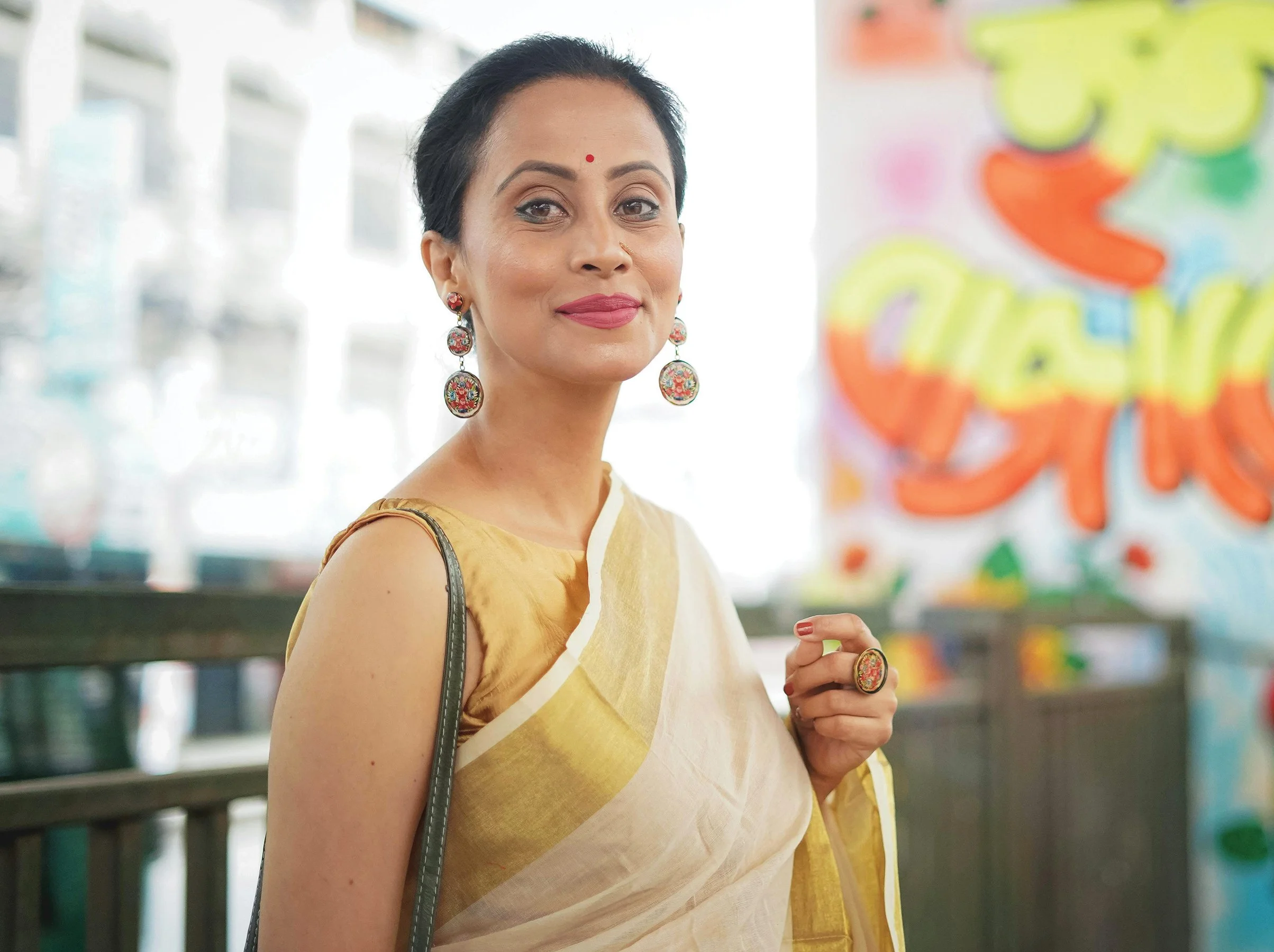
“It actually doesn’t take much to be considered a difficult woman. That’s why there are so many of us.” Image credit: RAJIB AHMED on Pexels.
By SHAGORIKA EASWAR
Why are strong women portrayed as vile, duplicitous creatures in popular movies and shows?
This thought came to me, unbidden, as I watched the play Agnipankh on You Tube recently.
The Marathi stage play by Prabhakar Laxman Mayekar, presented in Hindi by director Ganesh Yadav, is set in India that has just gained independence.
According to its description in Mumbai Theatre Guide, Durgeshwari or Baisaab as she is reverently called, is a wealthy Brahmin lady. Making up for her husband’s inability to look after the family name, she runs her zamindari household with an iron fist. Being a true matriarch, she takes all decisions in the household, including the ones that involve property, finances and even the personal lives of her family members.
I have always liked Mita Vashishth’s work, and she is wonderful as the strong matriarch who will brook no opposition.
She is calm, her voice – which she raises so rarely that when she roars one sits up with a jerk – drips disdain. She is not out to win a popularity contest. Everyone in the household fears and dislikes her, writhing under her control. There are many socially relevant themes in the play, important ones, that are explored in a mature manner, and yet, the one thing that stays with me is how Durgeshwari’s torment is not given the empathetic treatment it deserved. In one scene her husband takes her to task for her overbearing ways and she responds, almost plaintively, what other recourse did she have with a husband more interested in debauchery than in his family or land holdings? What, indeed, for a young bride on whose shoulders fell the responsibility of shoring up the family name, prestige and wealth?
It’s a powerful play about a powerful woman, but one that doesn’t give her due respect.
At least it doesn’t reduce her to a caricature like Khubsoorat did – both versions.
Both had formidable female leads. Dina Pathak in the original and Ratna Pathak Shah (Dina Pathak’s daughter, interestingly) in the newer version.
In the first, Dina Pathak runs her home like an army garrison and in the second, Ratna Pathak Shah does the same for her small kingdom. Both are not likeable in the least as they flounce around, laying down the law. Who can eat what when, who can fraternize with whom and so on.
It takes an irreverent entrant to the household – Rekha in the first and Sonam Kapoor in the second – to bring them to their senses.
In essence, to “humanise” them.
I had enjoyed the first one when I watched it many, many years ago, and enjoyed the second one, too, more out of nostalgia than anything, I think. For on rewatching them, I find so many things problematic. Why is a woman who is responsible for running a household while the rest of the family feel free to swan around leaving everything in her capable hands depicted as lacking in the finer sensibilities? As though being capable, organized, and yes, strong, go hand-in-hand with being a sociopath? Someone hellbent on doing things their way with no regard to the feelings of others?
It’s as though taking on roles traditionally held by men automatically results in all softness and caring traits seeping out of them. And this when the men – at least in these stories – have abdicated their responsibilities.
What choice did the women have? Wait for things to fall apart around them or take things in hand?
One sees this scenario playing out in multiple contexts, not just in families. When strong, intelligent women are rendered speechless in corporate settings. Where the ones that do speak their mind are seen as aggressive.
In Liberty Street, Heather Marshall quotes Jane Goodall: “It actually doesn’t take much to be considered a difficult woman. That’s why there are so many of us.”
So what’s a woman to do?
Speak up! And don’t apologize for having a brain. That would be a good place to start.