
BOOKWORM
20,000 MILES ON A MOTORCYCLE NAMED BASANTI

Free Ride by Noraly Schoenmaker, Atria Books, $39.99. When she discovered that her live-in partner had been having a long-term affair, Noraly Schoenmaker was in her thirties.
She was a geologist living in the Netherlands, travelling the world from Brazil to Indonesia, Kazakhstan and Australia. It was a good life. But the very personal betrayal left her desperately yearning for a new beginning. She quit her job and jetted off to India. Rishikesh? Goa? Benares? A new spiritual awakening? Nope. None of the usual stuff, but Schoenmaker fell quickly and helplessly in love in India.
With a motorcycle.
A Royal Enfield Himalayan BS4. It was love at first sight.
I briefly caressed my motorcycle’s white gas tank, like petting a fat white cat. “Are you ready, Basanti?” I whispered quietly. I’d had a custom name decal made at the very last minute and stuck it on the front mudguard. I’d decided to christen my brand-new bike “Basanti” after the lead character in Sholay.
Her stay in Delhi taught her that while the people were friendly and the food was amazing, she couldn’t be there for long. “If it had been up to me, I never would have stayed there for a full month.” But that’s how long it took to receive a permanent licence plate and registration documents. The terrible air quality in India’s capital had earned Delhi the undesirable title of “most polluted city in the world”. I hadn’t seen a single blue sky the entire month. Every day, millions of people woke up under a gray blanket of heavy smog in this place. I hated it, but I didn’t have much choice.
Schoenmaker was conflicted in her emotions. She loved India and hated the permanent smog. As soon as she could, Schoenmaker headed east. First to Myanmar and Thailand, and then into Malaysia. Rather than satisfy her appetite for the open road, this ride only piqued it.
She shipped her bike to Oman, and embarked on a journey through the United Arab Emirates, Iran, across Tajikistan along its border with Afghanistan, Uzbekistan and Kazakhstan and through Russia into Georgia and over the snowy peaks of Central Asia, and into Europe, all the way back home to the Netherlands. She covered remote and utterly unfamiliar territory, broke down on impossibly steep mountains, and pushed too many miles down empty roads, farther and farther from civilization. But through her travels, she discovered the true beauty of the world, the kindness of its people, the simplicity of its open spaces, and a new and unshakable belief in her capabilities.
Back home in Amsterdam, after travelling the world on a motorcycle, it wasn’t the end of the road. Her YouTube channel, itchyboots.com, where she had been posting video clips of her adventures, was already a viral phenomenon. And the YouTube earnings were good.
The book ends on a note of new beginnings to come – from Patagonia to Alaska, in Africa, and elsewhere. Basanti now has new mates, including Dhanno, another Royal Enfield Himalayan BS4 (and Basanti’s horse in Sholay!).
Roads less travelled. A world waiting to be discovered one mile at a time. A metaphor for life in our uncertain world.
GROUNDED
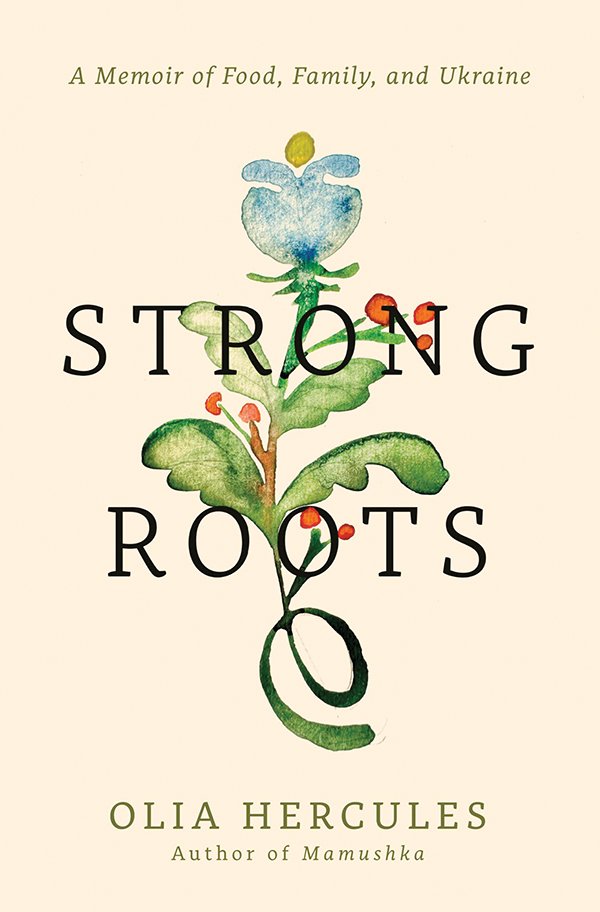
Strong Roots by Olia Hercules, Alfred A. Knopf, $39,99. At family gatherings, Olia Hercules’ grandmother Vera would raise a toast to the absence of war. “The main thing is that there is no war.”
When Russia invaded Ukraine in 2022, award-winning chef and food writer Hercules turned to her grandmothers for solace. I plead with my dead grandmothers in my head. I am sure I am not the only Ukrainian – or human – who does this.
She became an on-the-ground activist, cofounding the movement #CookForUkraine to raise money for humanitarian efforts. The effect on her homeland and loved ones led her to reckon with her personal history and in Strong Roots, she presents a century of family life in Ukraine.
Told through four generations of tenacious women, she shares stories of her grandmother’s deportation under Stalin all the way through to her parents’ flight when their village is occupied in 2022.
It’s an ode to a vast land and its people, to ideas of home and belonging, to family stories and recipes passed down through the generations. Stitched together from memory, and from interviews and voice notes collected from family and friends after the invasion. Also, a comparison of personal accounts of family history with what was written in history books.
On escaping from Ukraine, her parents make their way to her cousin’s holiday home in northern Italy. She can’t find all the ingredients, but Hercules makes a giant pot of borsch to welcome them into a space that smells like home. “Mum should give you some tips,” says her father.
Seeing the meagre belongings they arrive with, she keeps asking her parents if they brought this or that from her childhood home. The sourdough starter? The tomato seeds?
Her brain can’t comprehend what one would take and what would one leave behind when fleeing a home.
What they have brought with them are old family photographs, their letters, and her mother’s embroideries.
Did her mother leave precious things behind hoping she would return one day? “Was it, unconsciously, a talisman?”
She recalls lines from a poem by Serhiy Zhadan, Ukraine’s most famous contemporary poet:
Take only what is most important. Take the letters.
Take only what you can carry...
We will never see our city again.
Take the letters, all of them, every last piece of bad news.
When she wonders why there’s only a word for house in Ukraine, not one for home, or a sense of being home, her cousin answers:
“Olia, it’s because we’ve been moved around so much, unable to settle somewhere, unable to pass anything on, no heirlooms, no houses, in many cases very little history... If you have a house, you cling to it and don’t mess around. The physical and emotional abstract is one.”
But as her mother tells her, if the roots are strong, it doesn’t matter if the wind blows off the pretty petals. “If the roots are strong, it doesn’t matter if a storm breaks a fragile stem. It will all grow back again.”
There are so many elements that desi readers will find familiar – from cultural practices to elements of dress and food.
Clay, manure and hay were mixed and spread across the floors of huts.
There’s mention of traditional “ikaat” clothing – which we know as the quintessential Indian pattern ikat.
The word maidan, which has come to mean public political protest.
And ty znayesh, which sounds so much like tui jaanish in Bangla. Both mean, do you know?
Her father concludes a fun family story with, “It was like a Bollywood movie, Olia”. And I am instantly reminded of a Ukrainian friend who says she watched Hindi blockbusters growing up in Ukraine. She remembers one in particular – “Sita and Rita” (Seeta aur Geeta!).
UNDERCURRENTS

Indian Country by Shobha Rao, Crown, $39.99. Janavi and Sagar were never meant to be married – he was bethrothed to her sister at a very young age in an arrangement between the families.
But in a very Roja twist, they not only end up getting married, they move half a world away to Montana. The independent young woman who found her calling working with street children finds herself unable to work due to visa restrictions, and lonely and resentful, as her hydraulic engineer husband seeks to make a career in a new country.
When Janavi attempts to volunteer at an organization that works with children, she’s dismissed brusquely. “Things are different here. We don’t just hand over our kids to someone trained way the heck over there.”
She was in an unintended country, She had an unintended husband. And the life she’d intended to have? That was gone, and she knew it was gone forever... She realized what she wanted was home. But where was home? In all the years she’d studied English, no one had taught her – no one had even once mentioned – that some words, because of what life will do to them, will lose their meaning. And that that meaning will never be regained.
Making friends is harder, as the two come up against prejudice and hidden undercurrents in the small community. He doesn’t get the “jokes” his colleagues make and the mayor calls him “my boy”.
When a colleague of Sagar’s drowns in the dam he is working to deconstruct, he’s the obvious scapegoat. And all of Janavi’s protective instincts rise to the fore.
Their story starts on the banks of the Ganga in Banaras and plays out along the Cotton River in Montana. Other stories, seemingly unconnected, play out in different timelines along different rivers.
Shobha Rao nails the powers that be over the many, many missing and murdered Indigenous women, or MMIW, both in the US and Canada.
“They didn’t really want to know. The just wanted to look they wanted to know,” a neighbour who was born in Canada tells Janavi.
And a man Sagar meets says, “When it comes to women, you don’t follow no money. You follow the fear.”
A beautiful and brutal book that lays bare racism, prejudice, and explores the history of people of colour paying the price for the white man’s arrogance and expansionism.
One small quibble: A man who refers to a man as alludu-garu or respected son-in-law in Telugu, is unlikely to refer to his daughter as beti.
SOMETHING FISHY

Death at the Lighthouse by Alasdair Beckett-King, illustrated by Claire Powell, CandlewickPress, $24.99. A vacation is just what the world’s greatest detective, Montgomery Bonbon needs. But no sooner that Bonnie and Grampa Banks arrive on the very odd Odde Island, they discover something terribly fishy.
You know you are in for a special treat when a book is dedicated by the author to “my many enemies” and by the illustrator to a “lover of onions and murder”!
OH MY!
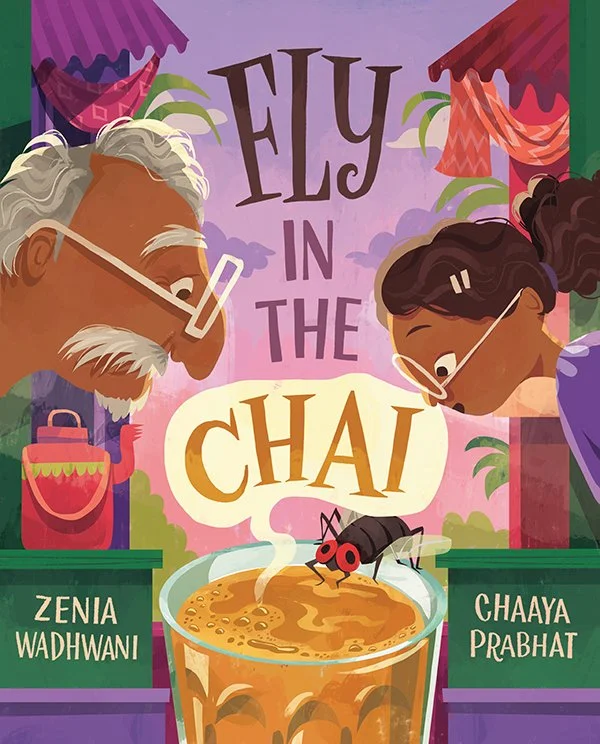
Fly in the Chai by Zenia Wadhwani, illustrated by Chaaya Prabhat, Tundra, $24.99. The story follows Nanu, a lovable grandfather, and his spirited granddaughter on a lively trip to the market.
Just as Nanu settles in with a fresh cup of chai, his granddaughter spots trouble: a pesky fly in his cup. What follows is a hilarious, high-energy battle between Nanu and the determined little intruder as they compete to answer one question: Who loves chai more?
With Nanu and the fly eyeball-to-eyeball, how will the contest end?
A delightful picture book that blends humour, heart, and the comfort of a steaming cup of chai. Bonus: The author’s own family chai recipe!
TEEN REVIEW
By NIHARIKA DILIP
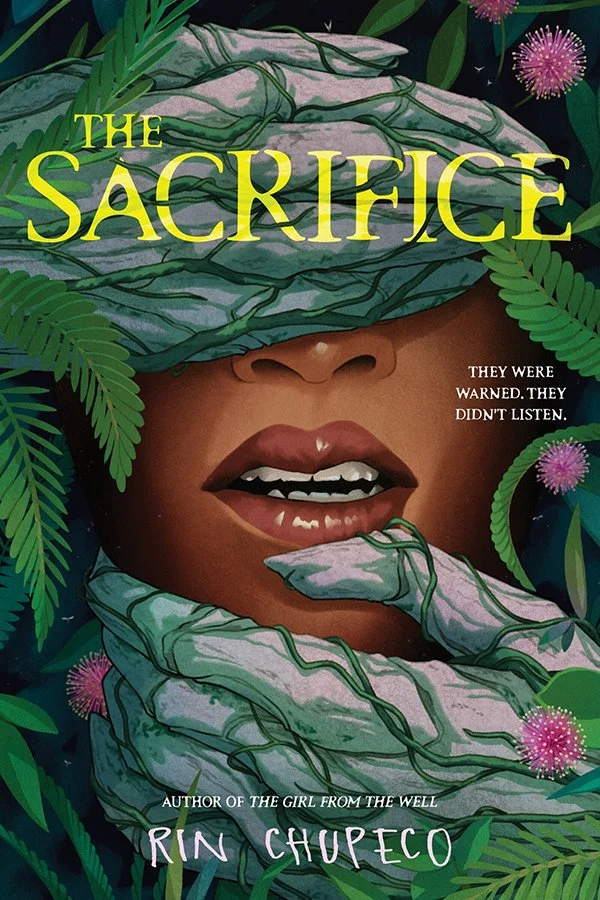
The Sacrifice by Rin Chupeco, Sourcebooks Fire, $16.50. The Sacrifice is a bone-chilling novel that combines horror and Filipino mythology. Set on the remote and cursed Kisapmata Island, the story follows a documentary crew as they investigate the island’s dark legends.
At the centre of the story is Alon, who serves as the crew’s mysterious guide. His connection to the island seems deeper than he lets on, as eerie events begin to unfold. The novel expertly builds suspense, keeping readers on edge with its unsettling imagery and slow-burning dread.
One of its greatest strengths is its immersive setting. Rin Chupeco crafts an atmosphere that feels both enchanting and menacing, filled with ghostly whispers, lurking shadows, and a sense of inevitability that keeps readers hooked. The book explores themes of colonialism, greed, and the dangers of seeking power without understanding its consequences.
The plot may seem to progress slowly, but Chupeco includes moments where you are left wondering what just happened. The unexpected twists and turns make it a page-turner. I would highly recommend The Sacrifice with its combination of folklore, psychological tension, and a haunting atmosphere. The chilling conclusion will leave you hanging on to the edge of your seat.
• Niharika Dilip is a youth volunteer at Brampton Library.