
A ROOM WITH A POINT OF VIEW
WHY ARE PARENTS SUPPLYING TOILET PAPER TO SCHOOLS?
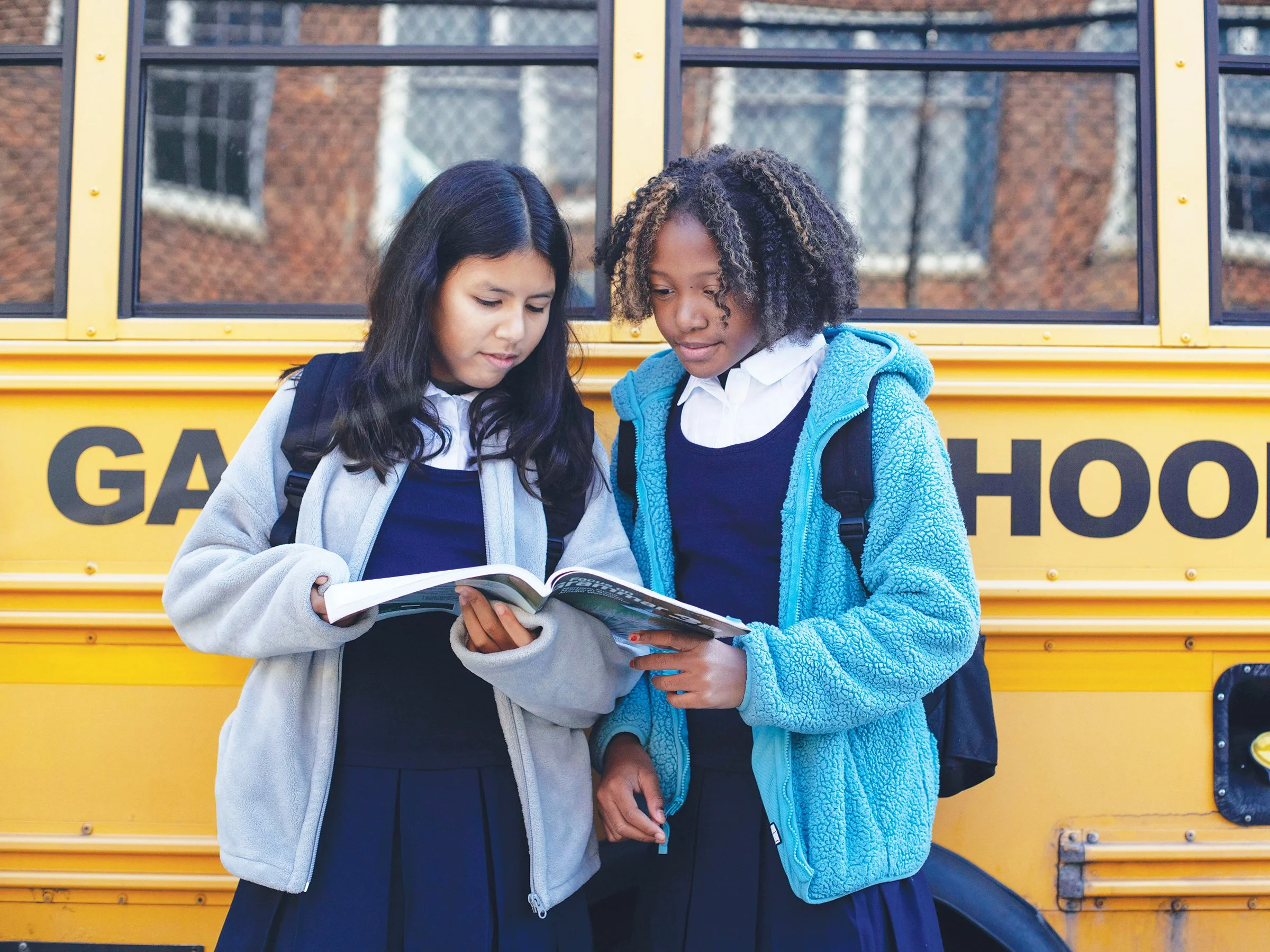
Educators are decrying the cuts to public school funding in Ontario. Are we on the path to diminishing – if not gutting – a robust public school system that has served generations well? Image credit: NEWS CANADA.
By SHAGORIKA EASWAR
On moving to Canada, I was delighted to discover that one could just walk into the neighbourhood school with one’s child – admission was guaranteed.
No waitlists, no interviews, no stress. And so, I used to think of public schools in Canada as the great equalizer, where children from families from all income levels studied together.
Of course there were disparities based on neighbourhoods and the capacity of parents to raise funds for the extras, but by and large, student experience in School A more or less mirrored student experience in School B.
So it was easy to conclude that the ones opting for private schools for their offspring were driven by the disparities between “government schools” and “Convent schools” in the countries they come from. Or by wishing to educate their children in particular religious and cultural values.
A relatively small number. Or so I thought. A report from the Fraser Institute, throws new light on the situation.
“For their children’s education, parents across Canada are increasingly choosing options outside the government-run school system, even though in several provinces – including Ontario – there is no financial support for families that choose independent schools,” said Paige MacPherson, senior fellow with the Fraser Institute and co-author of Where Our Students Are Educated: Measuring Student Enrolment in Canada, 2026.
The study finds that, as a share of all K-12 students, enrolment in independent schools increased from 5.9 per cent to 8.5 per cent – a 45 per cent increase – from 2000/01 to 2023/24, the most recent year of available comparable data. At the same time, K-12 enrolment in government-run public schools decreased as a share of total enrolment from 93.8 per cent to 90.4 per cent.
Across Canada, the share of students enrolled in independent schools in 2023/24 ranged from 13.2 per cent in British Columbia to 1.2 per cent in Newfoundland and Labrador.
B.C., Alberta, Saskatchewan, Manitoba and Quebec partially fund independent schools on a per-student basis, while other provinces offer no financial support.
From 2000-01 to 2023-24, every province outside of Atlantic Canada recorded an increase in its school-aged population, with Alberta having the strongest growth at 38.3 per cent.
In some provinces, the increase in Canada’s school-aged population is a relatively recent phenomenon. Beginning in 2021–22, the total number of immigrants to Canada from other countries more than doubled; many of those arriving were school-aged children.
Education in public schools is the dominant form of education in all 10 provinces, and can take a variety of forms including Anglophone public, Francophone public, Anglophone separate (largely Roman Catholic education), Francophone separate (again largely Roman Catholic), and charter schools.
Alberta is the only Canadian province that allows charter schools. Although those schools enrol a modest number of students as a share of total enrolment (1.6 per cent), absolute enrolment has increased from 2,558 in 2000-01 to 12,780 in 2023-24.
Home schooling remains a relatively small but growing part of the overall education system.
Highlights from the report:
There has been an overall decline since 2000-01 in the absolute numbers of students enrolled in Anglophone public schools. Nine of the ten provinces observed a decline in public Anglophone enrolment as a share of total enrolment between 2000-01 and 2023-24.
All provinces in Canada have independent schools. Independent schools are characterized by alternative approaches to teaching, usually with a distinct academic focus or religious orientation. Alternative academic schools include those using Waldorf or Montessori teaching methods. Most religiously defined schools in Canada are either Roman Catholic (in provinces without a fully funded separate school board) or Protestant Christian, although some provinces are also home to Islamic, Sikh, Jewish, Amish, and other denominational schools.
Interestingly, Ontario, which does not provide financial support for independent schools, has a higher percentage (7.4 per cent) of students enrolled in independent schools than two of the five provinces (Alberta and Saskatchewan) that do. However, past research indicates that Ontario is also the province with the fewest regulations for establishing an independent school.
Some provinces allow parents considerable discretion in their choice to home educate, requiring only a simple notification to the local school board, while others require that a parent’s education plan be approved prior to their child beginning home schooling; these same provinces also require periodic reports on the student’s progress.
So what is driving this trend?
The following report sheds some light on why parents might be turning to private schools – at least in Ontario.
In The Trillium, a Village Media website devoted to covering provincial politics at Queen’s Park, Tina Yazdani writes that Ontario parents say they’re still being asked to donate basic classroom necessities like soap, toilet paper, paper towels.
“The back-to-school shopping list in Ontario includes more than pencils, erasers and binders. In some communities, parents have been creating group chats to coordinate Costco runs for their children’s classrooms – splitting the cost of Kleenex, paper towels, soap, hand sanitizer, and even toilet paper.
“It is an annual back-to-school ritual that predates the Ford government, and it appears to be a widespread issue. Hundreds of parents from school boards across Ontario responded to The Trillium’s callout about whether they are being asked to donate supplies.
“But this year, it has taken on new significance, as the province rolls out a new $750 classroom supplies fund for homeroom elementary teachers – raising fresh questions about what schools are expected to provide, what teachers are expected to buy, and why parents are still being asked to chip in.”
Educators are decrying the cuts to public school funding in Ontario. Are we on the path to diminishing – if not gutting – a robust public school system that has served generations well?