
GRANT'S DESI ACHIEVER
“YOU CAN’T ARGUE WITH PERFORMANCE”
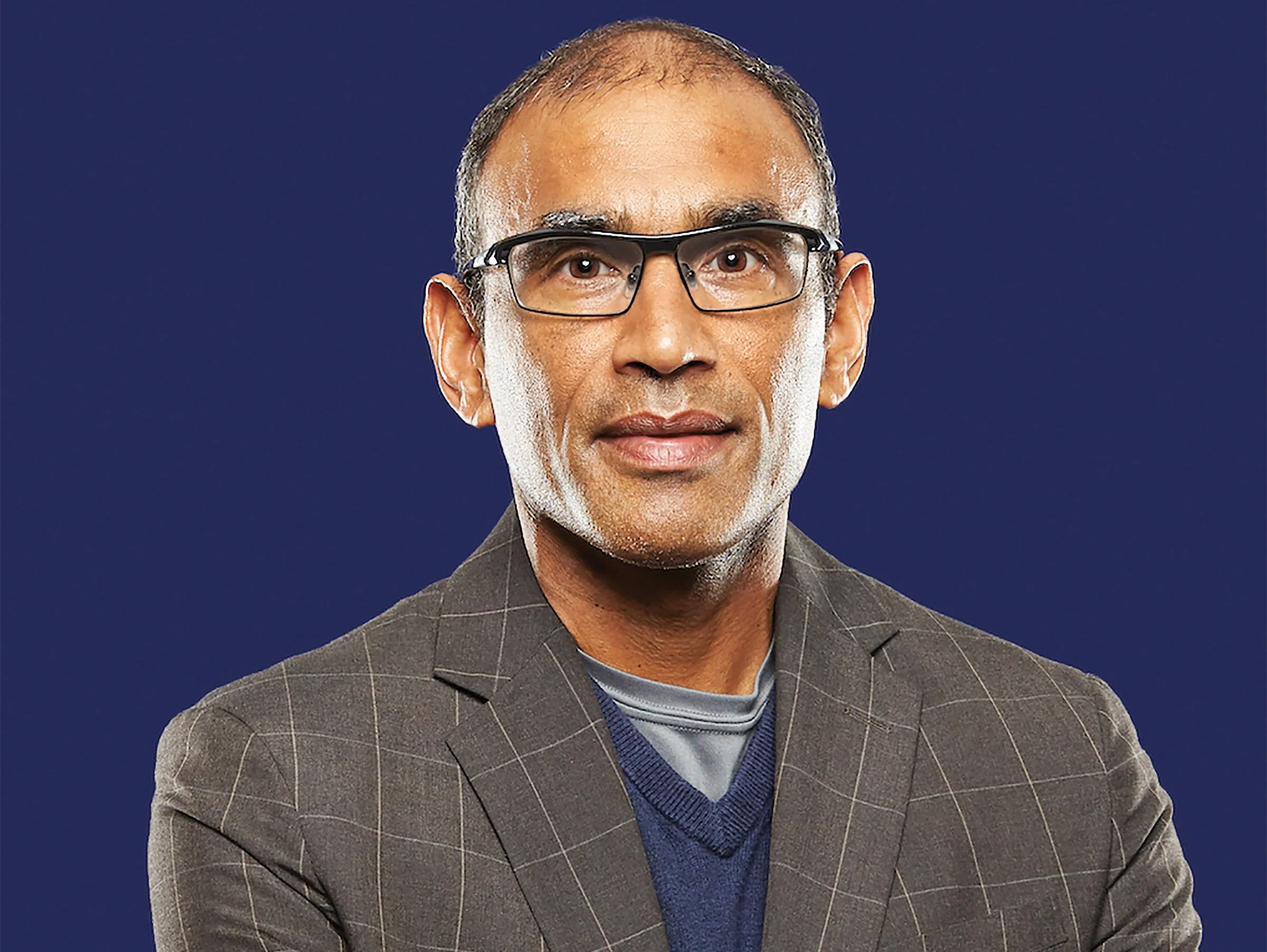
Devashish Paul, founder and CEO, BluWave-ai.
Grant’s is proud to present this series about people who are making a difference in the community.
By SHAGORIKA EASWAR
Devashish Paul makes semiconductors sound exciting. The man recognized as an outstanding leader and innovator by Energy Storage Canada (ESC), describes them as the foundation of all of modern society.
“The same switch is used in 4G systems, the iron dome defence system and in CT scans.”
Paul founded BluWave-ai in 2017 and has built one of the world’s premiere renewable energy and transport electrification companies, based in Ottawa. For the second consecutive year, an ESC Awards first, BluWave-ai was honoured for its innovative approach to grid management using energy storage.
BluWave’s EV Everywhere product is demonstrating how a distributed fleet of electric vehicles can be transformed into a vital, real-time storage asset. It combines AI with real-time data to identify the best times to charge – managing costs, grid stress, and emissions.
While the first two are easy to grasp, how does knowing when to charge manage emissions?
Paul, a World Energy Congress Smart Grid Category Winner, explains – in simple language! The state of the grid is not always the same. Sometimes there’s more hydroelectric energy, sometimes more wind/solar, and sometimes coal. It fluctuates.
“We don’t know if we’re using more clean or more dirty energy,” he says. “With the BlueWave platform, we can instantaneously tell you the percentage of each, the electricity load overall. We know what amount of charge the owner needs before he departs for a specific destination. We can choose to take more now and less later, taking the guesswork away from consumers.”
While some refer to advanced intelligence instead of artificial intelligence – perhaps to allay fears about a fleet of driverless cars running rogue like in Leave the World Behind – Paul says at the end of the day, it’s all AI-based. Using data to predict outcomes.
“From our side, we’re not worrying. AI-related automation will become part of every industry to some degree. The companies – and countries – that use AI will have brighter prospects.”
On turning what is seen as a drain on the grid into a storage asset, Paul says, “There are times when there is abundant energy and nowhere to put it. On the flip side, when solar or wind energy is added to the grid, it fluctuates based on nature. But households and industries need a stable source. What we are able to do is match it.”
He has been quoted as saying the EV market is projected to grow to 5M vehicles by 2030.
“I expect it to keep growing, technology will evolve, new emerging players will take lead,” he says. “In China, nearly 50 per cent of all vehicles are EVs; in Albania, over 70 per cent; and in Nepal, 90 per cent. A lot of jurisdictions with hydropower are realizing the benefits of onboarding their own clean energy, using local energy instead of importing. China and India, for instance, are not oil producing nations. If they move energy load from oil generated to local to power their economies, the unit economics significantly surpass legacy technology.
Prior to founding BlueWave, Paul had an extensive career focused on supercomputing, AI, and networking. During his 20-plus years in the tech world, he led successful innovations in a diversity of markets at Canadian start-ups, Toronto Stock Exchange-listed, and Silicon Valley public companies. He has grown businesses in Europe, Asia, and North America from the startup level to $110M annual revenue.
In industry leadership roles, he ran the High Performance Computing Group in the Open Compute Project (started by Facebook) to create open industry computing platforms for low-latency workloads and served as an advisory board member for the CERN Open Lab.
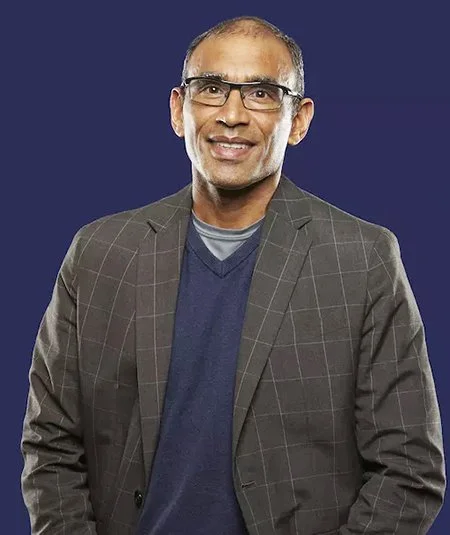
A life-long cyclist and nature enthusiast using human powered energy for personal transportation to explore the world, Devashish Paul is a 31-time Ironman triathlon finisher. He has coached master athletes to 100-plus finishes, was a coach for 14 years with the Kanata Nordic Ski Club, and has raced for Canada in 10 world championships
The journey from there to launching his own company goes back to semiconductors. The semiconductor company he was working for in San Jose purchased a Canadian company, and won contracts for everything from Erikson and Nokia to Siemens, Huawei, Panasonic.
“We won all the OEMs (original equipment manufacturer), the wireless network was connected with the chips we designed. That was in 2014. I was looking at the early stages of AI. I realized it would soon be democratized. Platforms in the cloud would be available for everyone to use. But I wasn’t interested just in social media or search engines, but in something more intense. In smart agriculture, drilling, in efficiencies in grid. I looked around at who was doing this and there weren’t many.”
And so Paul launched BlueWave-ai. In the beginning there was just him, before he brought in early cofounders. He put in his own money, with some borrowed from family and friends and some from a network of angel investors, raising capital as they grew. They were awarded clean technology funding from Ecofuel. Begun with an investment of $1.3 million, BlueWave-ai now has an annual turnover of $5 million.
He has taken AI concepts to live working systems from Asia to Europe to North America, onboarding new customers worldwide and growing the team with an international employee group from 15 different countries, and is an inventor on several of the company’s patents. With 49 international filings and 11 granted, at last count.
Before all this, he was an aerospace engineer who served in the Royal Canadian Air Force.
“When I was a kid, I wanted to build planes,” he shares. “Not so much fly planes, but build them. I felt the heart of aviation was in the computer and worked on the simulation facilities on the CF18 program in the early 90s.”
During the first Gulf War, Paul helped prepare the fleet, ensuring it was software-compatible with the US Navy for joint combat missions. He led the team that worked on Canada’s first airborne imaging system.
“After that, I joined the commercial world – that was always the plan, to gain experience and apply it to develop products with a wide application.”
His father came to Canada from India in 1965 with an engineering degree, and settled in Vancouver. Paul was born soon after and the family moved to Montreal, “the centre of all the action in the 70s”. His mother had wanted to teach and did just that when Paul and his sister were a little older. She continued as a supply teacher after retirement, and was teaching until the age of 81, last year.
Looking back at his formative years, Paul says immigrants coming today are well-informed. They can look up job opportunities, know who is on their street before they move in. They can video call family back home.
“In my parents’ time, international calls were very expensive, and in any case, most families back home didn’t have a phone. They wrote a letter and waited for weeks for a response. They were basically on their own and had to figure things out on the go. They talk about how they looked for people with Bengali last names in the telephone directory at the hotel they first stayed in and called them to ask where to source groceries, etc. There were no Indian restaurants.
“It was like being thrown in the deep end in a new society. Now when I think about what my parents went through compared to newcomers, I believe their integration was better, faster. They had no access to Indian news, entertainment, sports, no way of watching a cricket match between India and the West Indies. So they immersed themselves in local news, local sports, learnt the ways of the people here. My mother learnt French and taught at a French school. As my dad says, you had to think like a Canadian. If you didn’t, you couldn’t succeed like one.
“Also for us, my sister and I didn’t have South Asian friends – we had Italian-Canadian friends and German-Canadian friends, Irish-Canadians and Chinese Canadians. We didn’t think of ourselves as different, it ended up being an advantage. I joke that my brain works like a white guy’s, though I don’t look like one! An Indian friend of mine, settled in England, is very English. But says that’s true only until you’re not cheering for England in a cricket match between India and England! My parents, however, specially my mom, felt more Indian in Canada and more Canadian in India. And the way I walk, or something in my body language immediately identifies me as ‘not from here’ when I visit India.”
Paul is married to Roxanne McNeill, who was in publishing and sales.
A life-long cyclist and nature enthusiast using human powered energy for personal transportation to explore the world, Paul is a 31-time Ironman triathlon finisher.
He has coached master athletes to 100-plus finishes, was a coach for 14 years with the Kanata Nordic Ski Club, and has raced for Canada in 10 world championships. He is also a world traveller who loves connecting with people in diverse cultures both for personal interests and driving BluWave-ai’s goal to become the premier global renewable energy AI company.
He says one of the most important lessons he imbibed from his parents was that you are only as good as your performance.
“This was reinforced through my career. People get by with talking and networking, but in the end, it pays to be the doer, not the talker. It’s important for people to know what you’ve done, but put your head down, get the results first, then talk.”
He tells those who seek his guidance on how to succeed in Canada that he dresses down for work.
“No one knows what my team looks like when we ship our code. What matters is, does the code work? You can’t argue with performance. I aced Math tests at school, I was a top athlete. Those are tangible results. Specially for immigrants, if you get to the point where no one can argue with your results, people have to believe in you.”
And he tells them not to give up.
“I have people who worked at Walmart or Starbucks to pay their bills. A guy volunteered to work for us for free outside of his Walmart hours when a director of ours didn’t offer him a position. Today, he’s one of our top guys.”
• Grant’s is proud to present this series about people who are making a difference in the community. Represented by PMA Canada (www.pmacanada.com).
