
GET GROWING!
WEEKEND GARDENING: HOW HARD CAN IT BE, REALLY?
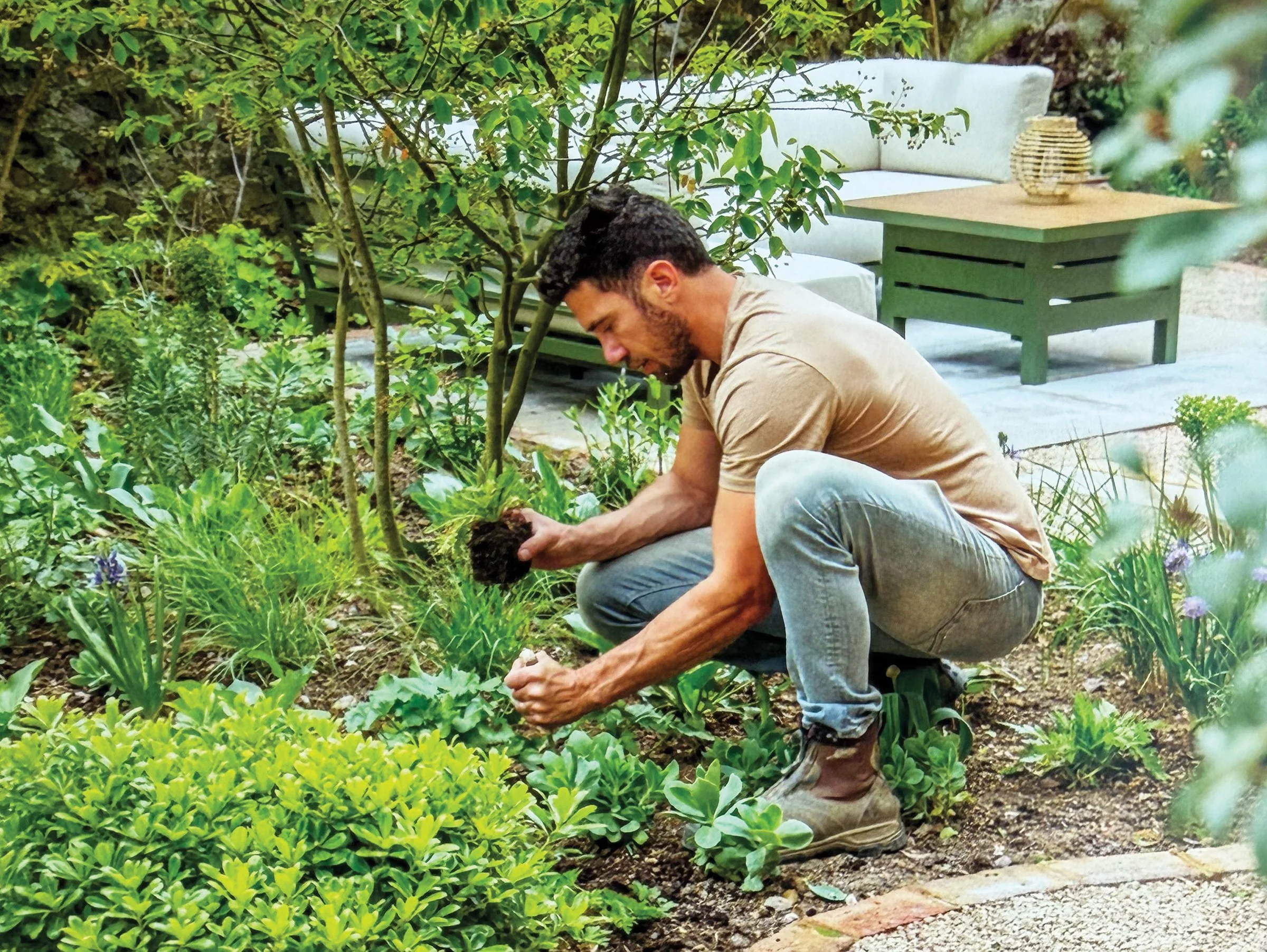
Henry Agg’s journey in gardening and landscaping began when he received a “seemingly extortionate” quote for what he believed to be two weeks’ worth of work in the home he had just moved into. Image credit: THE WEEKEND GARDENER/DK.
By LADYBUG
We’ve all received ridiculous quotes for jobs around the house at one time or another, but not everyone turned that “Whaat?!” moment into a learning opportunity and creative outlet.
Henry Agg’s journey in gardening and landscaping began when he received a “seemingly extortionate” quote for what he believed to be two weeks’ worth of work in the home he had just moved into.
How hard can it be? he asked himself and decided to teach himself the basics by reading books, watching YouTube videos and learning from his mistakes.
From this starting point, he successfully completed his first two landscaping projects – while working full time in his corporate job, Monday to Friday.
Welcome to weekend gardening!
Agg takes readers along on this journey, demonstrating that “you don’t need qualifications, years of experience, or even lots of time – you just need some determination and free weekends!”
But when he lists the essential steps in planning for a project, I quickly realize he means serious business. His top five tools are also a sure giveaway – they include a cement mixer! But the hori hori knife is also included on the list.
Mine, a gift from my friend, is a trusty tool and favourite of mine. Like Agg, I use it to weed, plant bulbs and small perennials, cut roots and so on.
As a novice gardener seduced by visions of drifts of blooms, I gave little thought to soil type or drainage, and topography and levels didn’t even figure in “the plan”. As for microclimate, I came to understand just how important that is after trial and error – lots of trials and lots of errors.
Agg’s tips are practical, for any skills level. For instance, for those who aren’t confident of creating a scaled plan – that would be me – he suggests using a tape measure and a long hose for marking curves in the actual space. “Once you’ve marked the areas out, you can use spray paint to mark the ground,” he suggests in what he calls the PE teacher approach.
There are sections on budgeting – your money and your time. The ones for time include planning longer projects around long weekends and also “bookending” your days, or starting and ending the day with a task you can complete.
Then there’s this: “My advice to you is, if you’re not happy with something, redo it – later on, your trained eye will always see that slightly uneven slab or wonky brick when your space is complete. Do it nice or do it twice is my motto!”
It’s not all landscaping and fences, patios, retaining walls and steps, or raised beds and borders, as Agg moves onto plant supports with obelisks, arches, trellises and lattices.
And now we’re all ready to plant! But by then you know it’s not your garden variety dig-a-hole-and-drop-in-a-plant. Agg shows how to factor in structure or the skeleton of the garden – how will it look when everything dies back over winter? His tips on movement in plants, creating a rhythm, injecting colour (finally), layering the planting, grouping plants and creating seasonal interest have me seeing my garden in a whole new light.
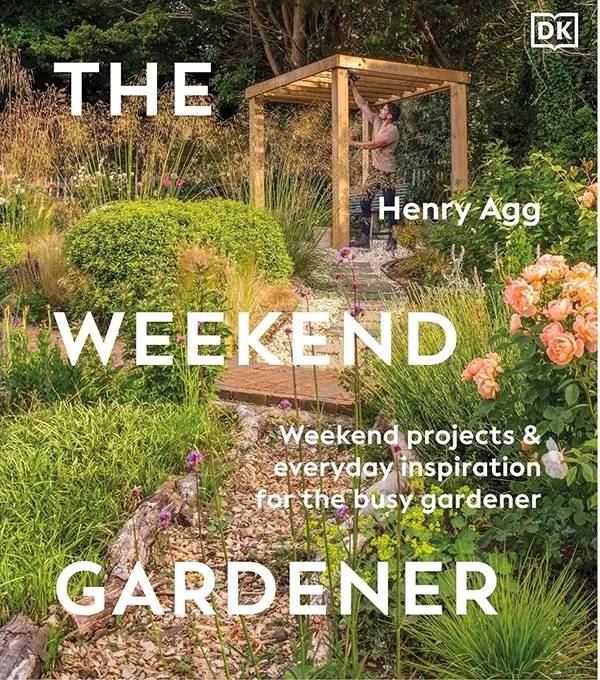
The Weekend Gardener by Henry Agg is published by DK, $33.99.
When it comes to planting styles, I find it hard to decide where I land.
Cottage garden: An informal planting plan consisting of a broad range of trees, shrubs, herbaceous perennials, climbers and annuals. When I think of cottage garden planting, I think of delphiniums, foxgloves, and hollyhocks, with rustic sweet pea supports up throughout the border – there’s something very charming and magical about this look.
That’s my style, I exclaim happily. Until I see his notes on a jungle or tropical garden and naturalistic garden. Both have elements that appeal to me.
I consider attempting to rein in my tendency to plant everything everywhere, but then the chapter on Agg’s favourite plants has me wanting more. And I am delighted to note we share a preference for asters, penstemon, rudbeckia, hydrangeas, and iris, among many others.
With helpful tips on how to plant and also layering, cuttings and dividing, this is a book that I will return to.
And now I am waiting for the weekend!