
SPOTLIGHT
HE SPEAKS THE LANGUAGE OF RAAG
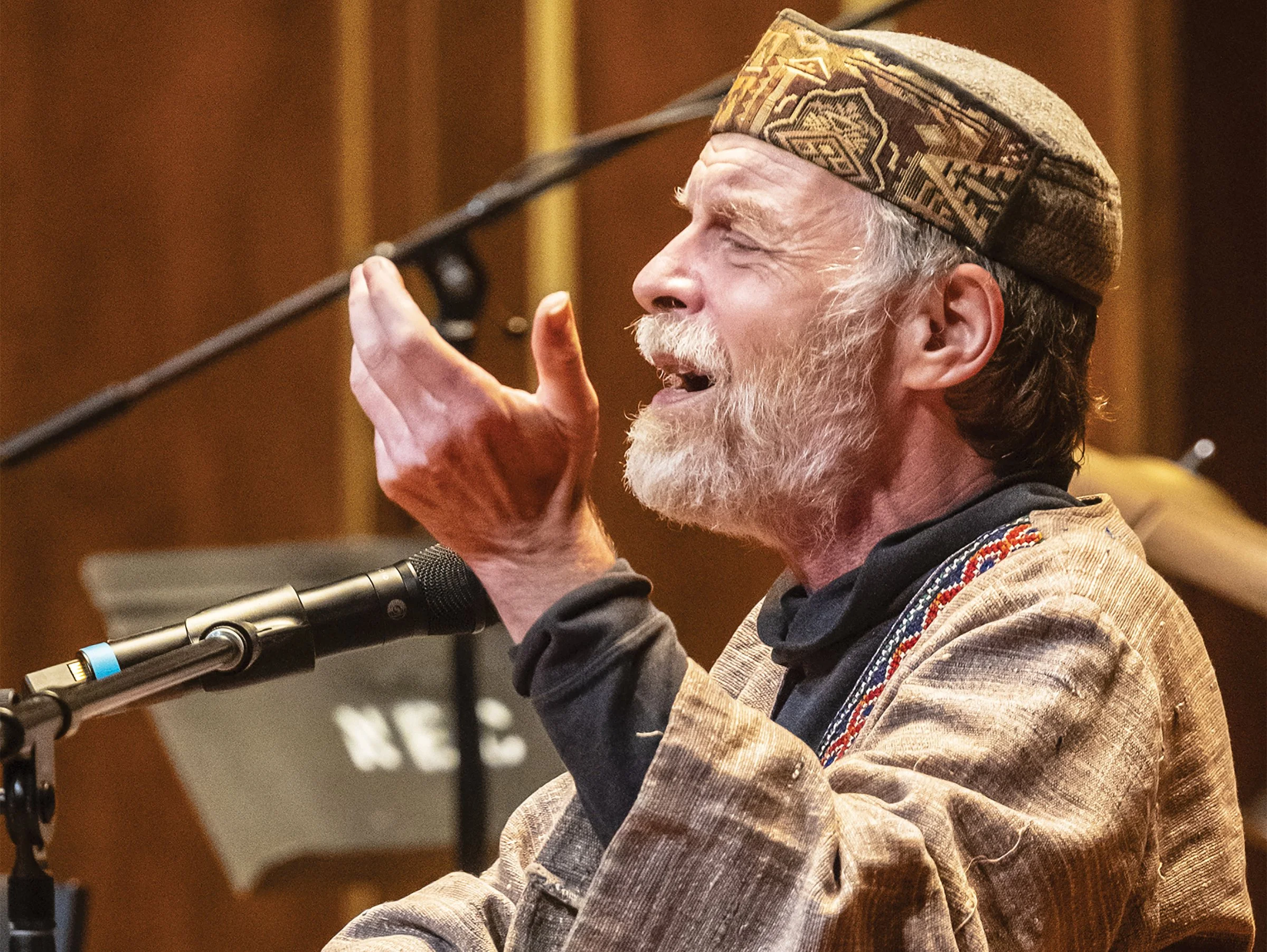
Warren Senders is widely recognized as a leading interpreter of khyal, a complex and expressive style of North Indian classical singing.
By MOHAMED KHAKI
Over many years, I have posted quick reviews on Facebook of films (hard to do during TIFF, on days when I might see up to four films), books and music. These form a personal scrapbook – albeit quite a public one! – that I can easily go back to, as I did when writing this article.
Warren Senders has a long-standing relationship with Raag-Mala Toronto, having presented a lecture-demonstration (or lec-dem, in common parlance), followed by a performance, in 2013. Here is what I wrote after Senders’ lec-dem and performance at the Aga Khan Museum in September 2016:
“To listen to Warren Senders speak about Indian classical music is a real treat. He is able to explain a very complex art form in simple, everyday language, free from jargon, but also in a hugely entertaining manner. In the course of an hour, he talked about the nuances of raag music and how one could extract pleasure from listening to a raag. And, with input from the audience, he spontaneously ‘created’ a raag, which he fittingly dubbed Aga-Shree – to honour the location, as well as the notes’ proximity to the well-known evening raag Shree.”
Senders’ distinctive approach to speaking about raag music comes from years of training under various gurus, beginning with Kalpana Mazumder, with whom he studied for eight years in Boston. In September 1985, a fellowship took him to Pune to study with Pandit Bhimsen Joshi – his first extended period of musical study in India.
Senders has said that he admired Panditji’s gayaki immensely; as a teacher, however, Joshi was not ultimately the teacher he needed. While I could find no public source recording the much-revered Pandit’s assessment of Senders as a disciple, Pandit S. G. Devasthali, a senior disciple of Pandit Gajananrao Joshi, proved to be the guru Senders needed.
Senders considers 1986, when he met Devasthali, the point at which his life as a student and khyal singer began in earnest. He has described Devasthali as his “true teacher” and their meeting as transformative. The training was extraordinarily intensive: lessons could last several hours a day and were accompanied by many more hours of practice. Through Devasthali, Senders encountered a musical inheritance rooted principally in Gwalior but enriched by elements of other traditions, including Agra, Jaipur-Atrauli and Bhendi Bazaar.
Layered on top of this is Senders’ engagement with other musical traditions. His biography on the New England Conservatory website describes decades of involvement with the artistic and pedagogical traditions of India as well as Western, African and African-American music. His work as an educator has explored ways of integrating music from different cultures into the teaching of subjects ranging from poetry and history to art.
Senders brings to all this an engaging personality and wit which, coupled with his long engagement with music, have made him one of the most loved artistes among Raag-Mala audiences.
With input from Amirali Alibhai of the Aga Khan Museum and Raag-Mala Toronto, Senders and the Museum’s Technical and Education departments have developed a five-part online course, Entering the World of Raga.
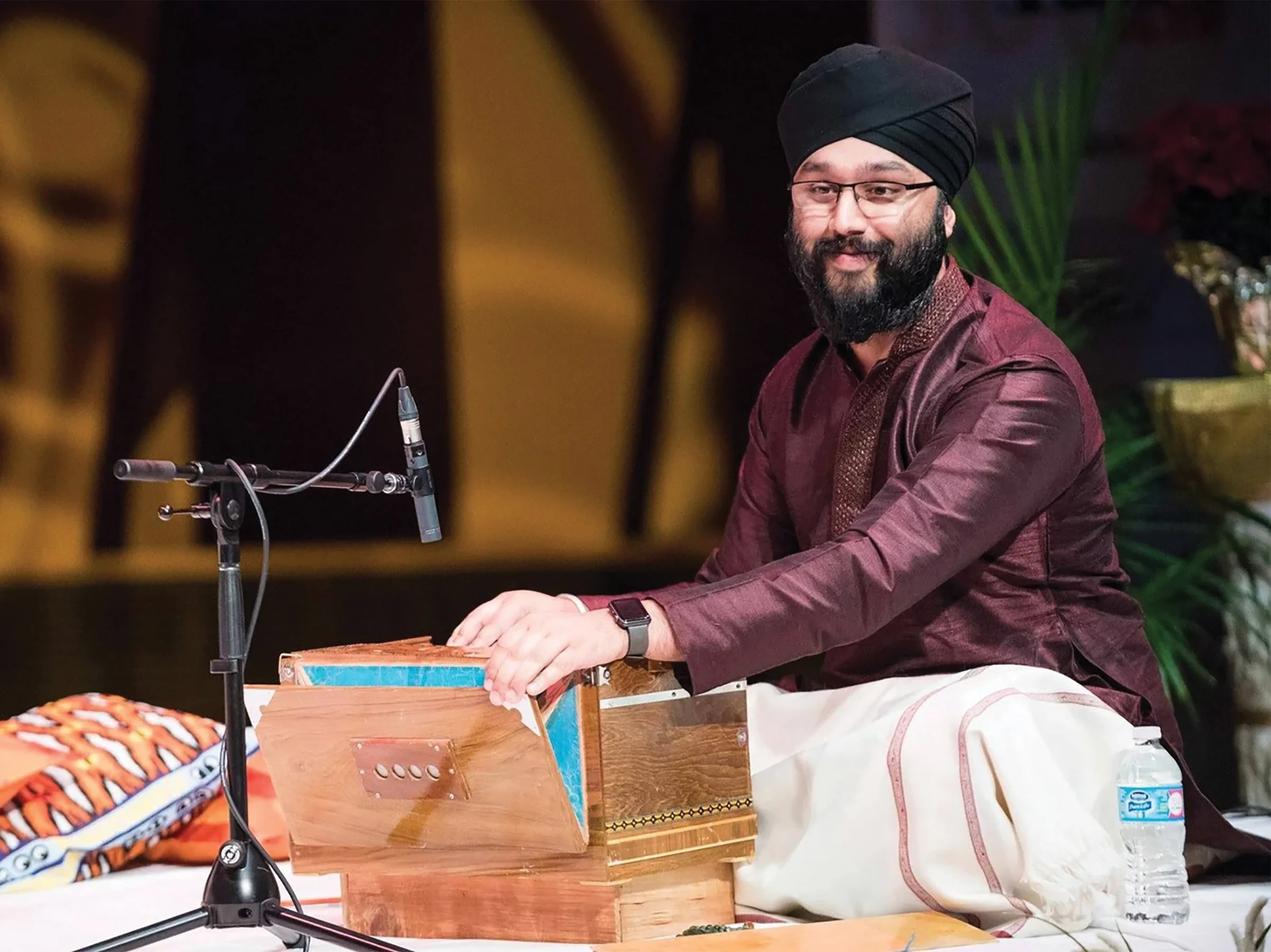
Hardeep Chana on harmonium.
The course will be launched on September 19 with a moderated discussion, preceded by a recital of several raags by Senders. Warren will be accompanied by Toronto-based Hardeep Chana on harmonium and Kiran Morarji on tabla.
Immersed in a musical atmosphere from an early age, Chana began learning within his family. He later sought guidance from Professor Ranjit Singh and studied taus, also known as mayuri veena. He continues his studies as a harmonium accompanist under the acclaimed Pune-based harmonium player Tan-may Deochake.
Chana has accompanied many distinguished artistes, including Pandit Anindo Chatterjee, Pandit Yogesh Samsi and Kaushiki Chakraborty. He also accompanied Senders during the video recording of the course.
Morarji is a Toronto-based tabla artiste of the Punjab gharana and one of the city’s most active performers. He began studying tabla at the age of eight and, over more than two and a half decades, has been a disciple of Ustad Zakir Hussain, whose guidance has profoundly shaped his musical voice and artistic philosophy. He continues his training with Pandit Yogesh Samsi, senior disciple of Ustad Alla Rakha.
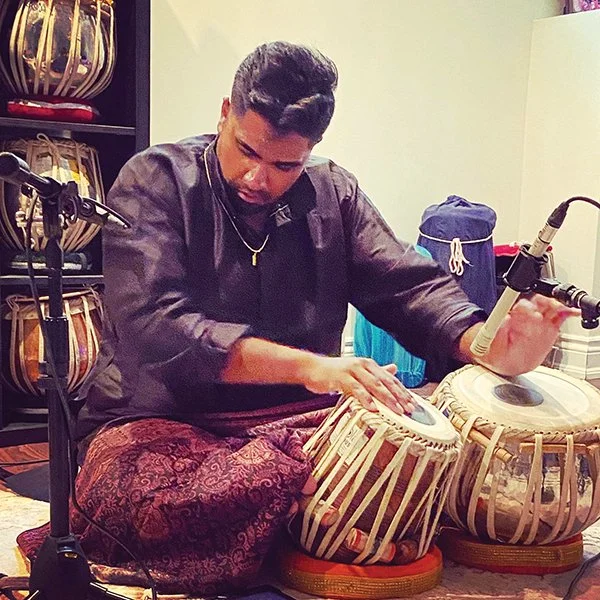
Kiran Morarji on tabla.
Morarji has performed extensively across Canada, the United States and internationally, accompanying respected instrumentalists, vocalists and Kathak dancers, including performances alongside his gurus.
This will be the first time the three artistes perform together. We look forward to seeing you there.
• Mohamed Khaki is Programming Director at Raag-Mala Toronto.
When and where: September 19, Nanji Family Foundation Auditorium, Aga Khan Museum, 77 Wynford Drive Tickets: agakhanmuseum.org.